

Vintage Wooden Book Rack
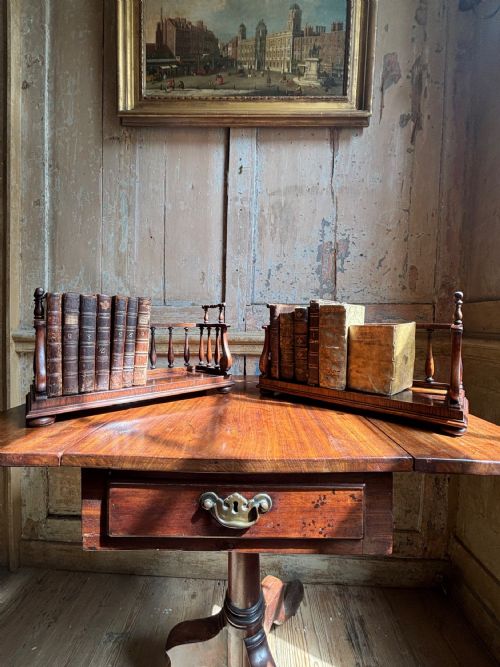
A vintage wooden book rack organises volumes upon a desk or shelf, bringing solid timber and period craftsmanship to everyday reading spaces.
Vintage Wooden Book Rack
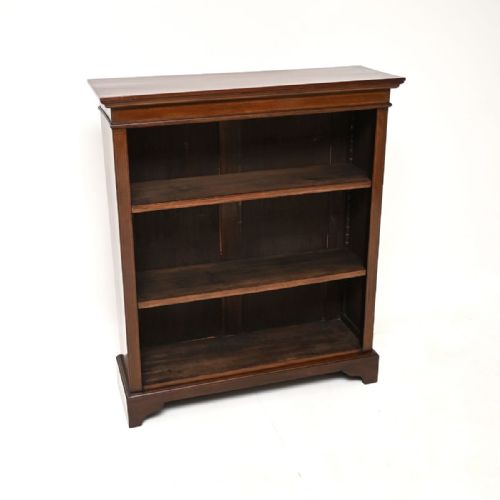
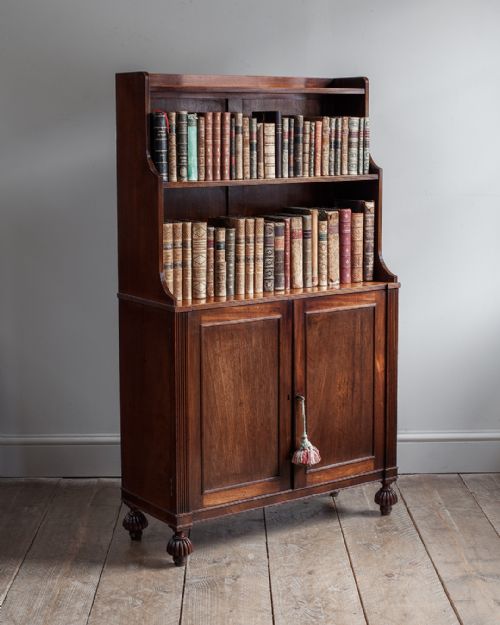
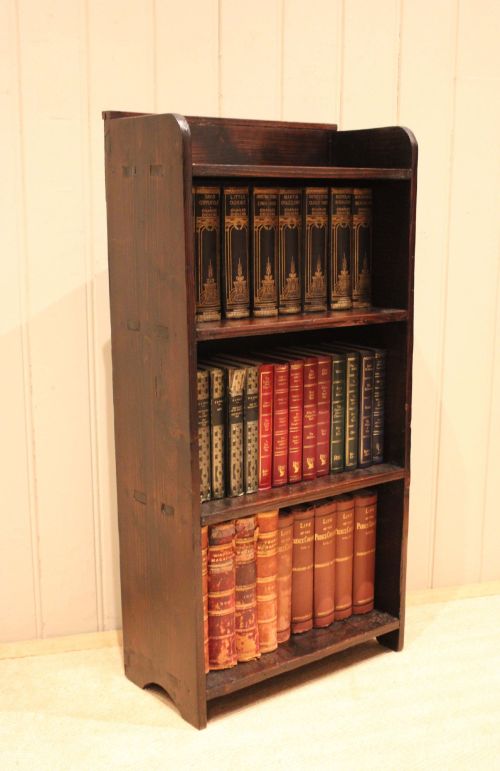
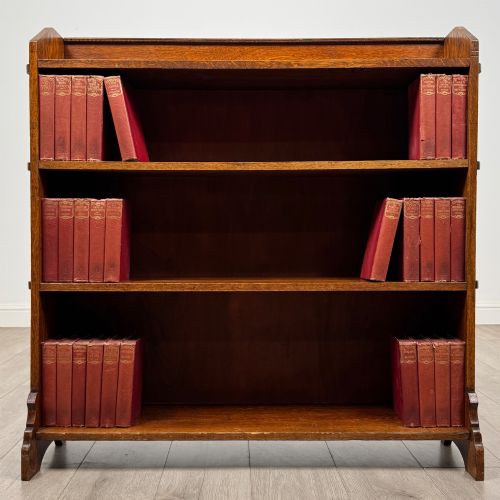
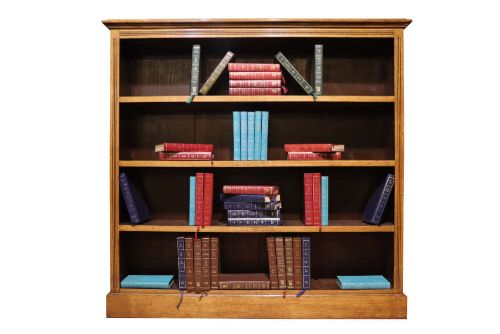
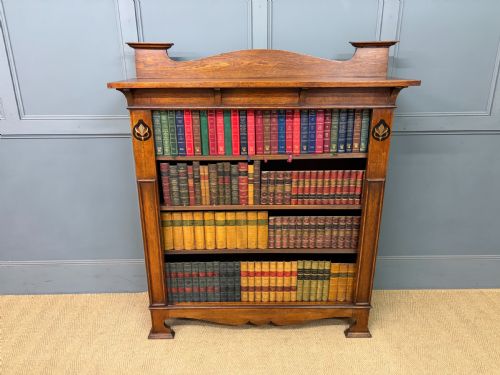
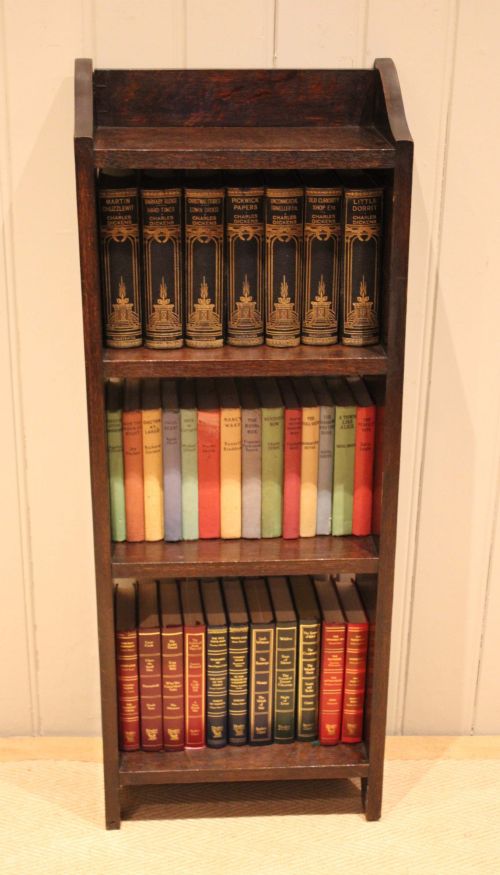
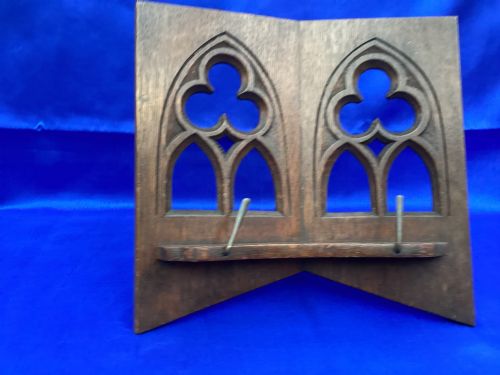
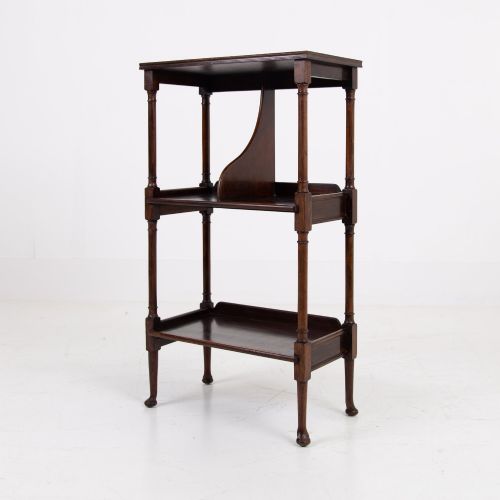
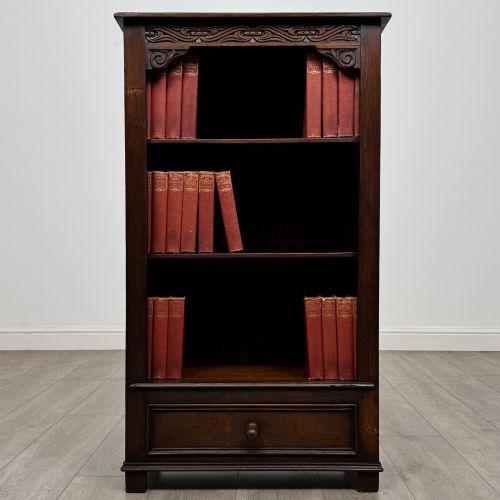
When searching for a vintage wooden book rack, buyers encounter a variety of practical library items designed to hold volumes upright. These pieces range from extending book slides and desktop book stands to freestanding open bookcases, library book troughs and wall shelves.
The selections on this page span several centuries and styles, though Edwardian and twentieth-century oak examples appear most frequently alongside Victorian walnut and mahogany pieces. Makers constructed these items for desks, studies and drawing rooms to keep working volumes close at hand.
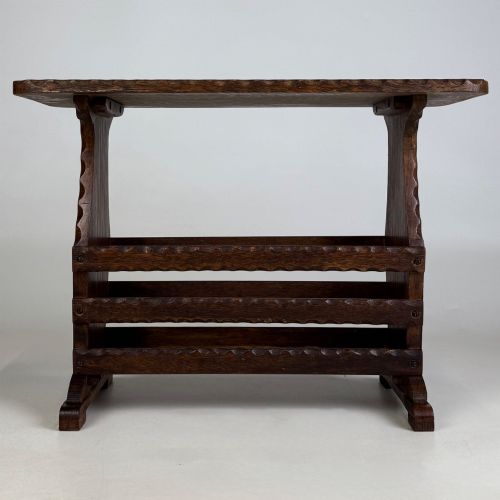
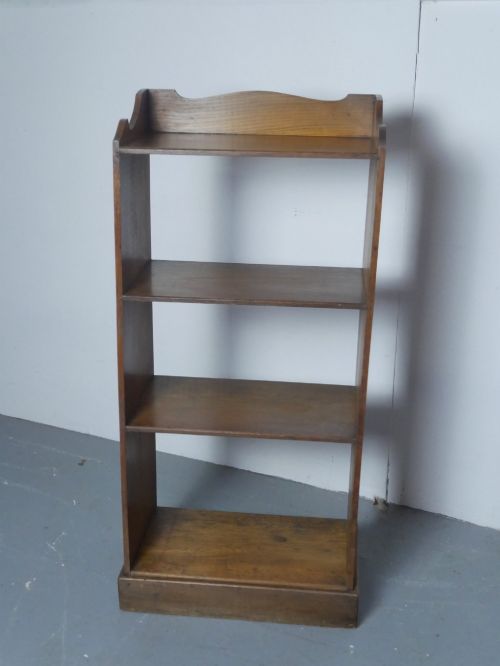
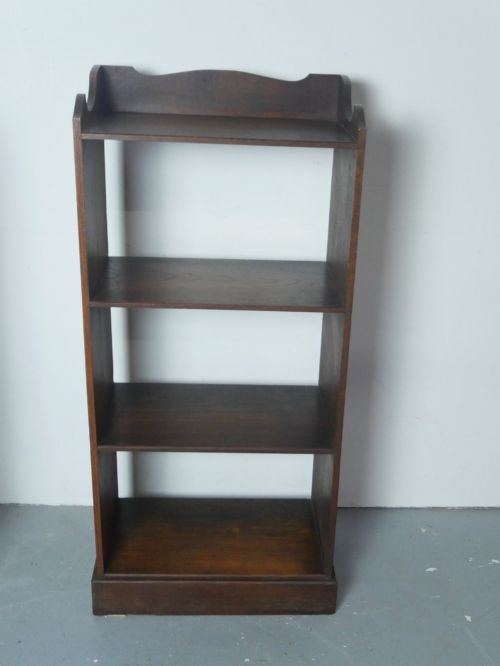
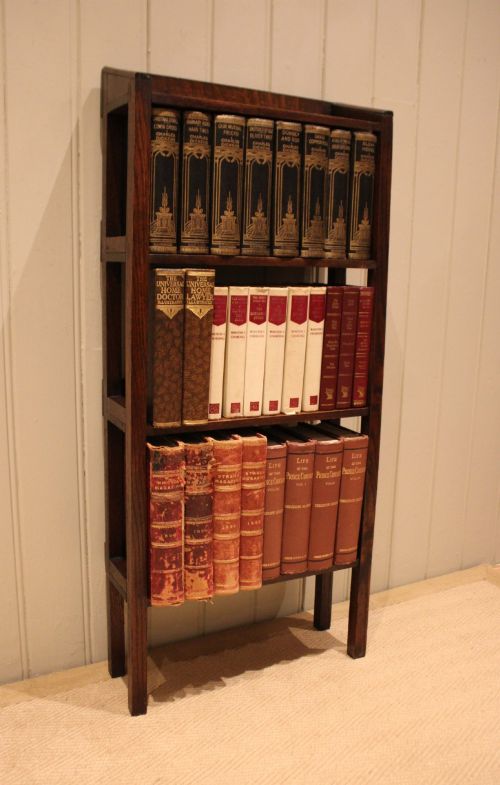
Forms vary from simple rustic pine troughs to decorative inlaid mahogany bookstands and carved Arts and Crafts designs. Buyers find both compact tabletop slides that expand to fit growing collections and taller open shelves intended for floor placement.
Materials and Construction Methods
Cabinetmakers utilised a range of dense hardwoods and decorative timbers, with oak, mahogany and walnut forming the backbone of the selection. Workshops frequently incorporated contrasting materials such as brass mounts, mother-of-pearl inlay and satinwood banding to embellish the surfaces.
Construction techniques rely on traditional joinery suited to the function of holding heavy volumes under pressure. Extending book slides often feature scissor actions or hinged mechanisms, while stationary troughs and bookcases utilise sturdy pegged or dovetailed joints to support the weight of paper and leather bindings.
Vintage Wooden Book Rack Retail Price Guide 2026
Typical asking prices for vintage wooden book rack among the pieces listed under this phrase on Sellingantiques today, from the lower quarter to the upper quarter. They describe what is for sale here now, not the wider market.
Certain Victorian items doubled as novel rests, offering readers an adjustable wooden slope to hold texts at a comfortable viewing angle.
Distinctions in Quality and Finish
Quality in these pieces rests upon the selection of timber and the precision of the joinery rather than mere scale. Superior examples display figured grain patterns, such as flame mahogany or quarter-sawn golden oak, combined with crisp hand-carving or delicate marquetry inlay.
The integrity of the mechanics separates standard items from the finest examples, particularly in extending slides where smooth operation and robust brass scissor actions matter. Finer pieces retain their original patination and uncompromised structural rigidity despite decades of handling.
The Vintage Wooden Book Rack Glossary
- Book slide
- An adjustable desktop stand with sliding ends designed to hold a small row of books upright. It expands to accommodate more volumes as a collection grows.
- Book trough
- A V-shaped or open-topped container meant to sit upon a table or desk for holding books with their spines facing upwards for easy reading.
- Marquetry
- The art of applying pieces of veneer to a structure to form decorative patterns and pictures. Craftsmen often utilised contrasting woods to create floral or geometric motifs.
- Quarter-sawn
- A method of milling timber that produces a distinctive grain pattern known as medullary rays. This cut offers enhanced dimensional stability for furniture and desk accessories.
- Whatnot
- A piece of open shelving with multiple tiers used for displaying books and ornaments. These slender stands became popular during the Victorian and Edwardian periods.
Vintage Wooden Book Rack: Frequently Asked Questions
How do I use a book slide?
Place the expanding wooden base on your desk and position your volumes between the two upright ends. Adjust the sliding sections inward to grip the books securely and keep them upright without slipping.
These pieces suit heavy reference books or daily reading materials, keeping them organised within arm's reach while adding timber character to a workspace.
Where were these racks placed?
Victorian and Edwardian households placed these items on library tables, study desks, mantelpieces and sideboards. Compact troughs and slides sat wherever working volumes needed management.
Taller open shelves and bookcases stood against walls in studies and drawing rooms to house larger collections of literature.
How do I distinguish Edwardian from Victorian oak?
Victorian pieces often display heavier proportions and darker finishes, frequently incorporating rich carving or elaborate brass and mother-of-pearl embellishments. Edwardian items tend to embrace lighter golden oak tones and simpler Arts and Crafts lines.
Examining the construction methods and secondary woods inside helps clarify the period of manufacture.
What is an Anglo-Indian book piece?
Anglo-Indian pieces reflect nineteenth-century craftsmanship produced in India for the British domestic market, often featuring exotic timbers and intricate hand-carved ornamentation. They combine traditional British furniture forms with local carving traditions.
These items stand out through dense floral motifs and regional wood varieties.