



Vintage Windsor Seating
Vintage windsor seating brings solid timber vernacular tradition into domestic spaces through sturdy chairs and stools.
Vintage Windsor Seating
Vintage windsor seating encompasses armchairs, dining chairs, stools, and children's chairs created across the eighteenth, nineteenth, and early twentieth centuries. These pieces emerge from English country and regional vernacular traditions, spanning styles from Arts and Crafts to mid-century utility.
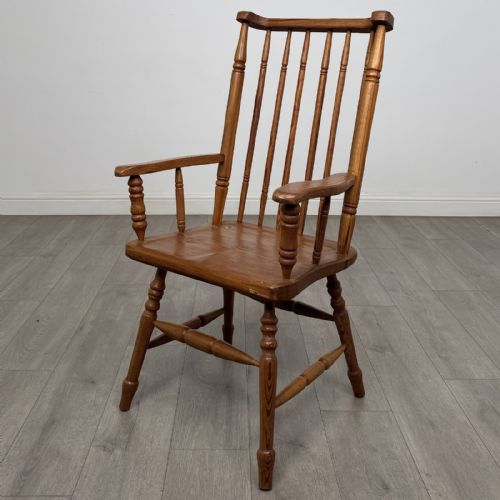
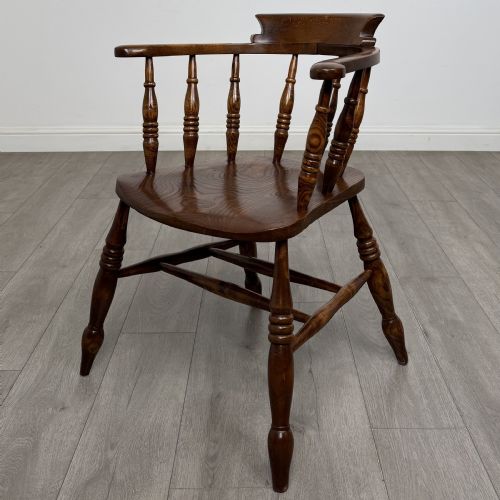
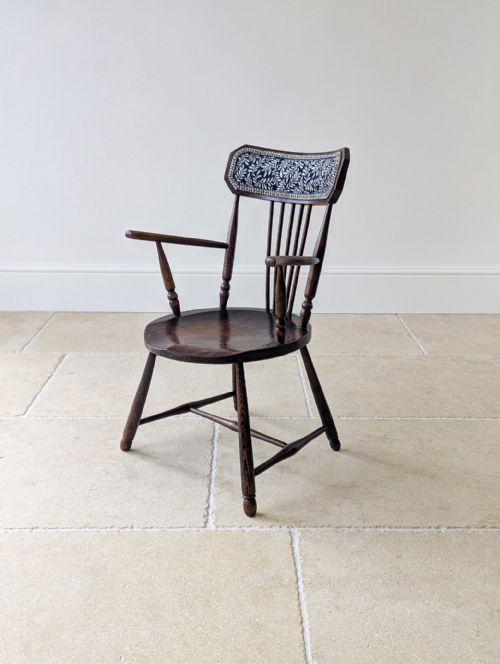
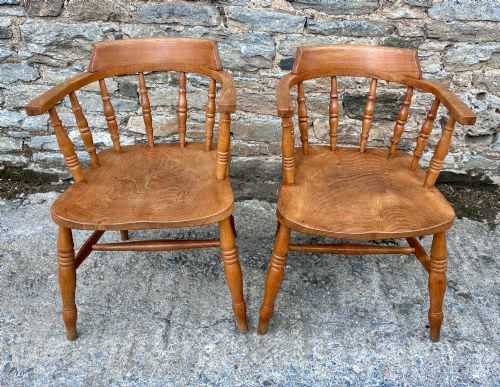
Armchairs and carvers appear frequently alongside sets of dining chairs and low back designs. Buyers also encounter captain's chairs, smoker's bows, and child's stick-back armchairs shaped by regional makers.
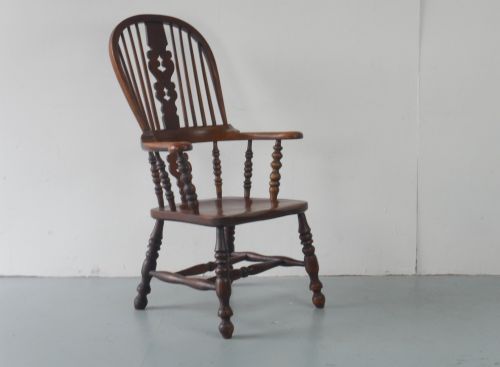
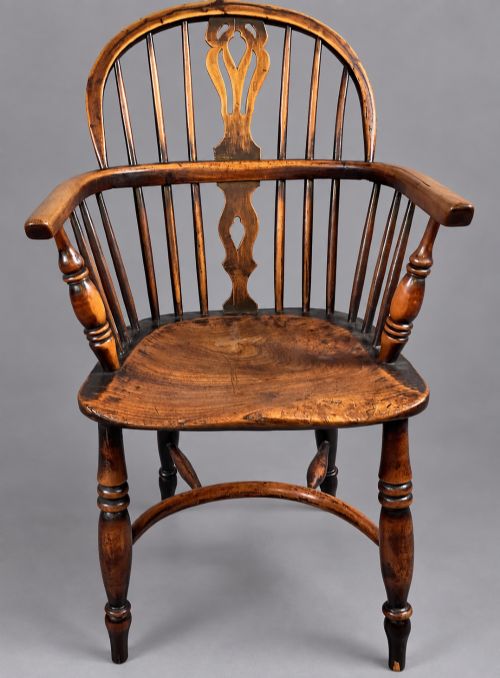
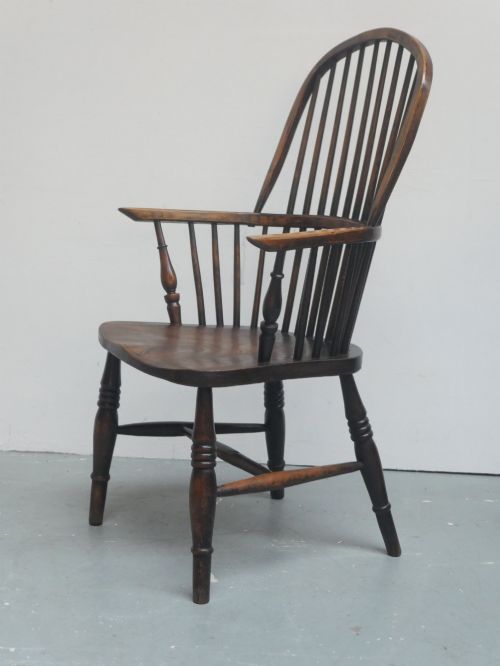
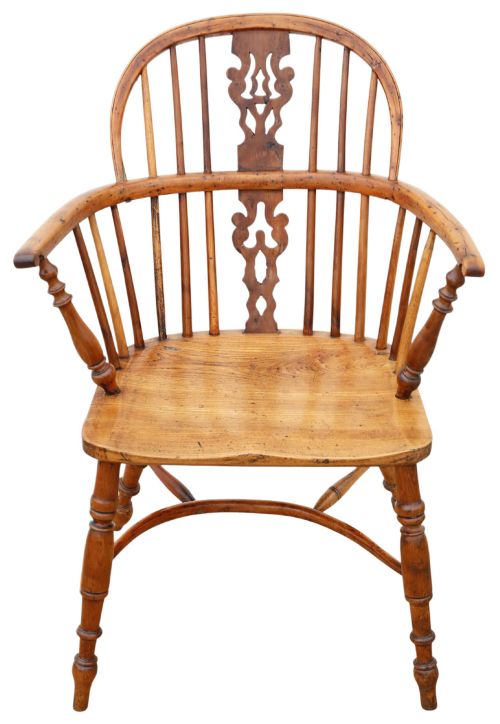
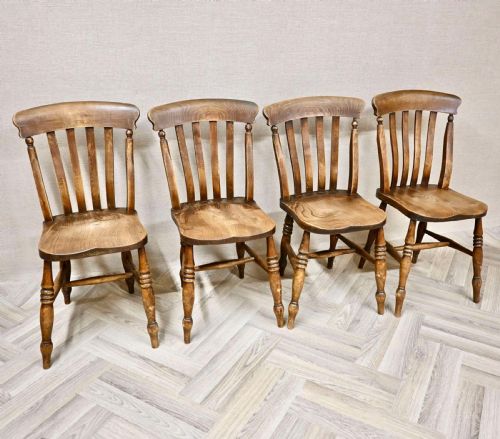
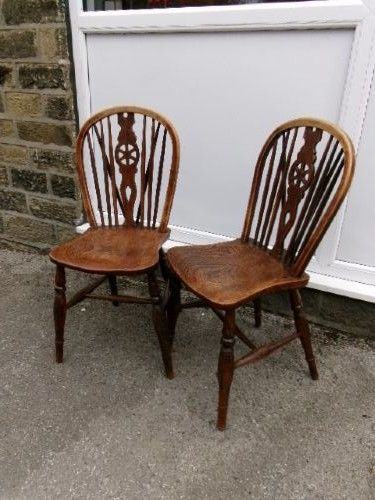
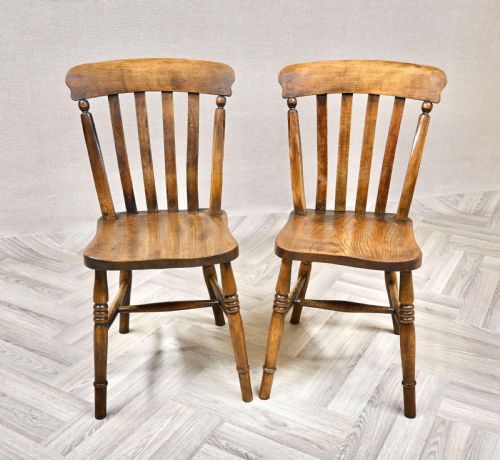
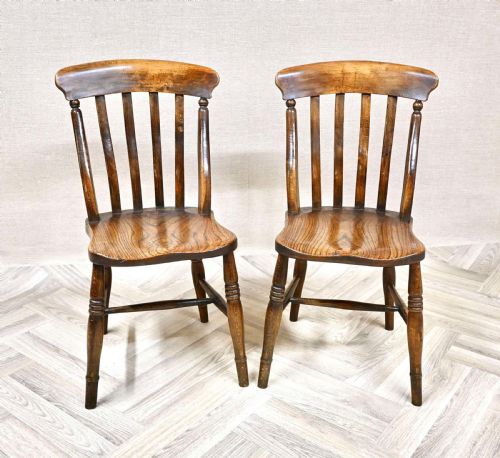
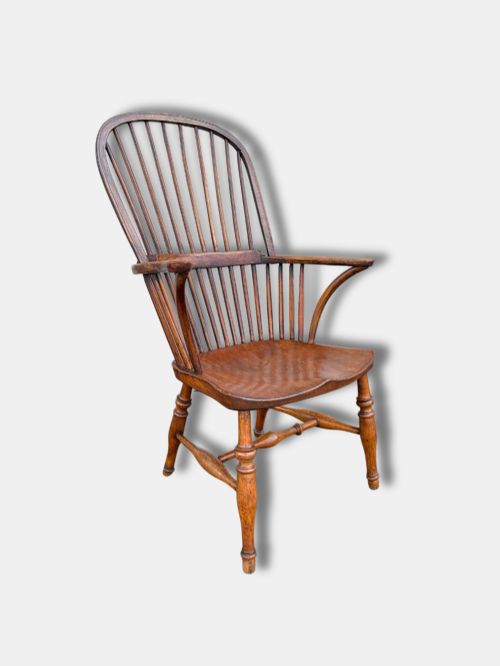
The construction relies on distinct seating forms including oval seats and crinoline stretchers. Hoop back, lath back, wheelback, and spindle and lyre back variations dominate the available examples.
Materials and Construction
Makers utilised timber combinations selected for structural strength, pairing elm seats with ash, beech, or oak for spindles, legs, and bentwood elements. Yew and yew wood appear in select high-back armchairs.
The traditional method involves inserting spindles and legs directly into a solid carved wooden seat rather than joining them with a conventional frame. Steam bending forms the curved hoop backs and arm bows that define the typology.
Vintage Windsor Seating Retail Price Guide 2026
Typical asking prices for vintage windsor seating among the pieces listed under this phrase on Sellingantiques today, from the lower quarter to the upper quarter. They describe what is for sale here now, not the wider market.
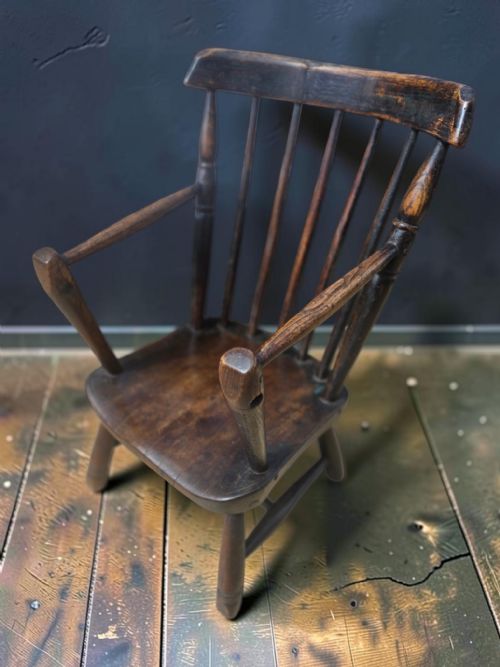
Children's Windsor armchairs scale down adult vernacular forms precisely, complete with miniature saddle seats and tiny turned spindles.
Quality Variations in Timber and Joinery
Quality rests in the selection and figuration of the timber, particularly the grain depth in elm seats and the matching of turned components across sets. Superior examples maintain crisp turning on the legs and spindles without excessive replacement parts.
Structural integrity depends on the tightness of the wedged tenon joints where legs and backs meet the seat slab. Finer pieces demonstrate careful proportioning in the comb or hoop and balanced comfort in the saddle-shaped seat.
The Vintage Windsor Seating Glossary
- Windsor chair
- A chair built with a solid wooden seat into which the legs and back spindles are directly dowelled. This construction gives the chair its distinct skeletal strength.
- Smoker's bow
- A low-backed Windsor armchair with a continuous curved arm rail, often used in domestic smoking rooms and country pubs.
- Crinoline stretcher
- An arched underframe connecting the legs of a Windsor chair to provide extra rigidity. It resembles the shape of a crinoline skirt.
- Lath back
- A chair back featuring a wide central flat wooden slat, or lath, inserted between the seat and top rail. This design provides robust support.
- Wheelback
- A Windsor chair variation featuring a pierced splat carved or shaped in the outline of a wheel. These chairs appear commonly in nineteenth-century dining sets.
Vintage Windsor Seating: Frequently Asked Questions
How do I identify a regional Windsor chair style?
Regional attribution relies on specific turning patterns, back configurations, and timber combinations characteristic of locations like the Thames Valley or Nottinghamshire. Local makers utilised materials accessible in their immediate woodlands.
Examining the seat saddle depth and the curvature of the arm bow also reveals the workshop traditions of particular English counties.
Were Windsor chairs used for dining or occasional seating?
Windsor seating served multiple domestic functions, appearing around farmhouse kitchen tables in sets of four or six, as well as single armchairs by the hearth. Stools and child's armchairs provided movable seating throughout the home.
Their robust construction made them suitable for daily utilitarian use in country kitchens and vernacular settings.
What timber combinations are typical for these chairs?
Traditional makers paired elm for the solid carved seat because its interlocking grain resisted splitting under downward pressure. Ash, beech, and oak provided the necessary tensile strength for steam-bent hoops and slender turned spindles.
Yew wood appears in higher-status vernacular armchairs, offering rich figuring alongside structural resilience.
How should I care for a vintage wooden seat?
Maintain the timber by applying natural beeswax sparingly to nourish the dry wood surface and preserve the historic patina. Avoid placing chairs near direct heat sources or rapid temperature shifts that cause timber shrinkage.
Regular dusting with a soft cloth prevents accumulation in the turned joints and carved crevices.