


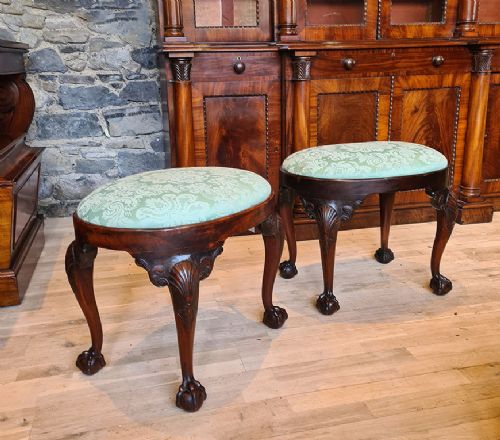


Vintage Window Bench
A vintage window bench brings low, linear seating and period character to a light-filled bay or narrow hall.
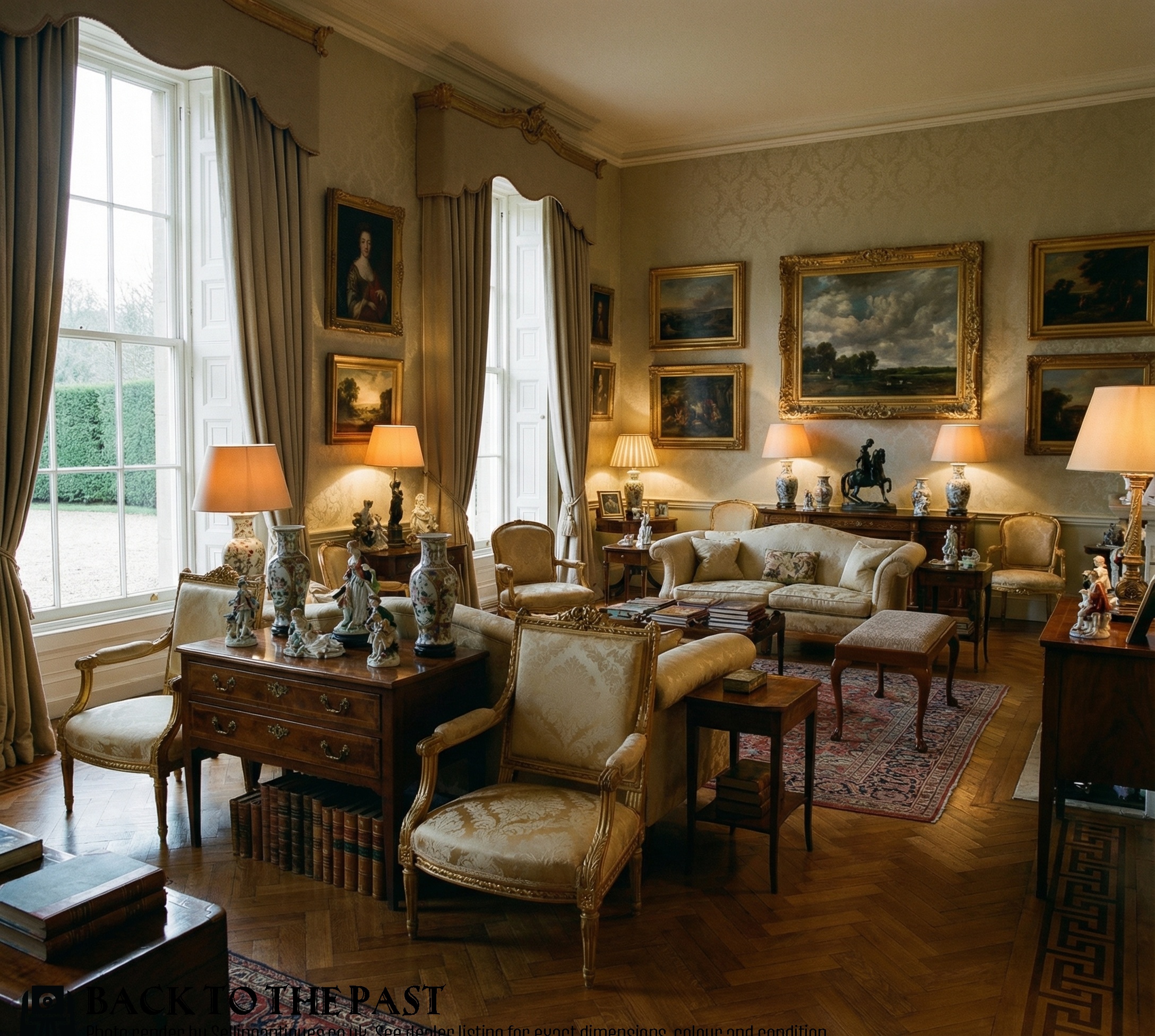
Vintage Window Bench
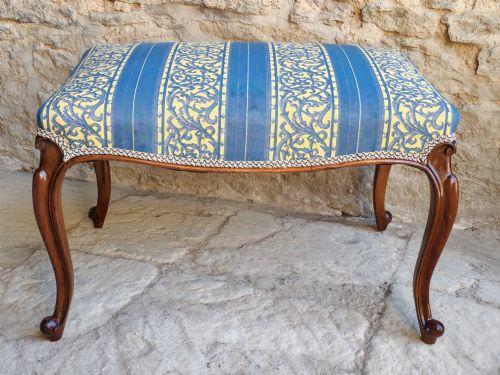
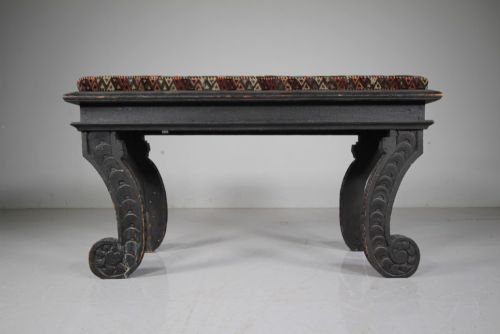
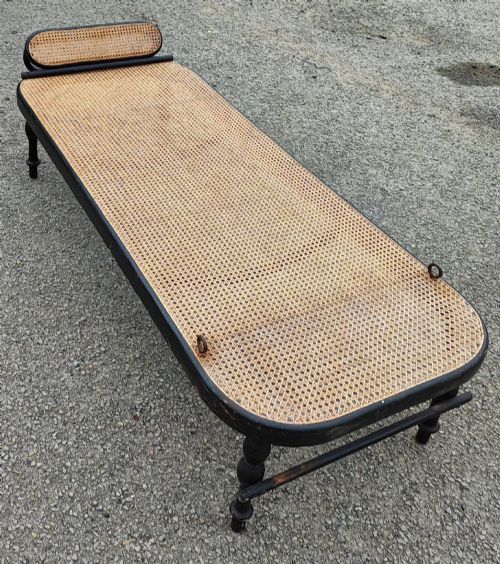
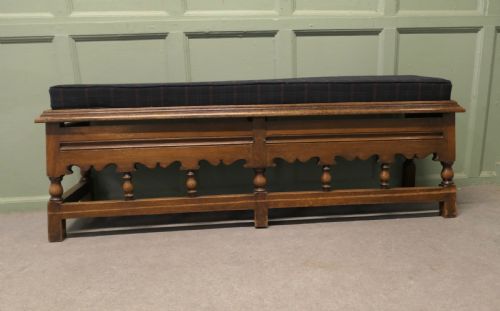
A vintage window bench spans several forms, appearing as traditional window seats, long footstools, duet stools, day beds, and narrow hall benches. These pieces occupy low profiles designed to sit beneath sills without blocking natural light, often doubling as storage ottomans or end-of-bed seating.
The selections here draw primarily from Edwardian and nineteenth-century periods, alongside pieces styled after Regency, Victorian, and French designs. Makers and workshops utilised timber frames ranging from mahogany and walnut to painted pine and oak.
Surviving examples frequently show dual purposes, such as combination boot stores or magazine tables. Buyers encounter both fully upholstered tops and frames fitted with cane work, leather, kilim, or modern textiles.
Materials and Construction
Frames rely on solid hardwoods like mahogany, walnut, oak, and beech, frequently shaped with hand-carved details, turnings, or subtle inlay. Joinery methods of the period ensure structural rigidity across long spans without excessive bulk.
Upholstery techniques incorporate traditional webbing, springs, and stuffing beneath top coverings of leather, textile, tapestry, or cane work. Painted finishes on pine and beech surfaces utilise historic pigments that wear down through patination rather than modern synthetic cracking.
At least one nineteenth-century bench arrives complete with carved elephants, proving that Victorian makers possessed a wonderfully eccentric sense of interior design.
Assessing Craftsmanship and Condition
Quality rests in the integrity of the timber frame and the depth of carving, where sharp hand-cut details contrast against softer, later machine profiling. Joints that remain tight without movement indicate superior initial joinery and careful subsequent handling.
The treatment of secondary materials dictates overall fidelity, from closely woven natural cane panels to robust upholstery webbing that supports weight evenly. Original surface patination on polished mahogany or aged paint adds considerable character compared to stripped or heavily reworked timber.
Hallett & Sons·Morris & Co.
The Vintage Window Bench Glossary
- Window Seat
- A long, narrow seating form specifically built to fit the recess of a window. These pieces generally lack high backs to maintain unobstructed outside views.
- Duet Stool
- An extra-wide stool designed to seat two people side by side, frequently associated with piano playing or shared dressing tables.
- Canework
- A seating surface woven from peeled cane strips in an intricate mesh pattern. This technique provides flexible, breathable support within open wooden frames.
- Kilim
- A flat-woven textile produced in the Middle East or Eastern Europe, often repurposed as durable upholstery on nineteenth-century footstools and benches.
Vintage Window Bench: Frequently Asked Questions
Where should I place a window bench?
These low benches fit naturally beneath bay windows, at the foot of a bedroom bed, or along narrow hallways where depth is restricted. Their compact height keeps sightlines open.
Positioning one near an entryway also provides a convenient spot for removing shoes, especially if the base incorporates built-in boot storage.
How do I identify an Edwardian window bench?
Edwardian examples often feature light mahogany frames, sometimes decorated with subtle string inlay or satinwood banding. Proportions tend to be neat and restrained compared to heavier Victorian counterparts.
They frequently date from around the turn of the twentieth century and reflect a revived interest in classical furniture shapes.
Can I use a footstool as a window bench?
Many long footstools and duet stools share the exact dimensions and height required for window seating. Their stable proportions make them suitable for sitting as well as resting feet.
Checking the upholstery foundation ensures the piece can comfortably support body weight rather than just light items.
What is a day bed stool?
A day bed stool combines the extended length of a low bench with the versatility of occasional resting furniture. These pieces often feature ebonised frames or integrated cane panels.
They serve as narrow seating options during the day and accommodate short periods of reclining in smaller rooms.