


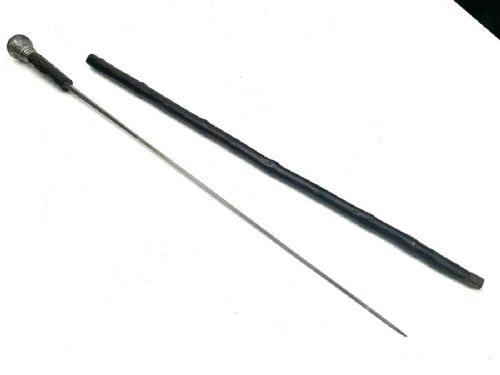

Vintage Weapon Walking Stick
A vintage weapon walking stick combines everyday gentleman's support with a hidden blade, offering both discretion and utility from the nineteenth and early twentieth centuries.
Vintage Weapon Walking Stick
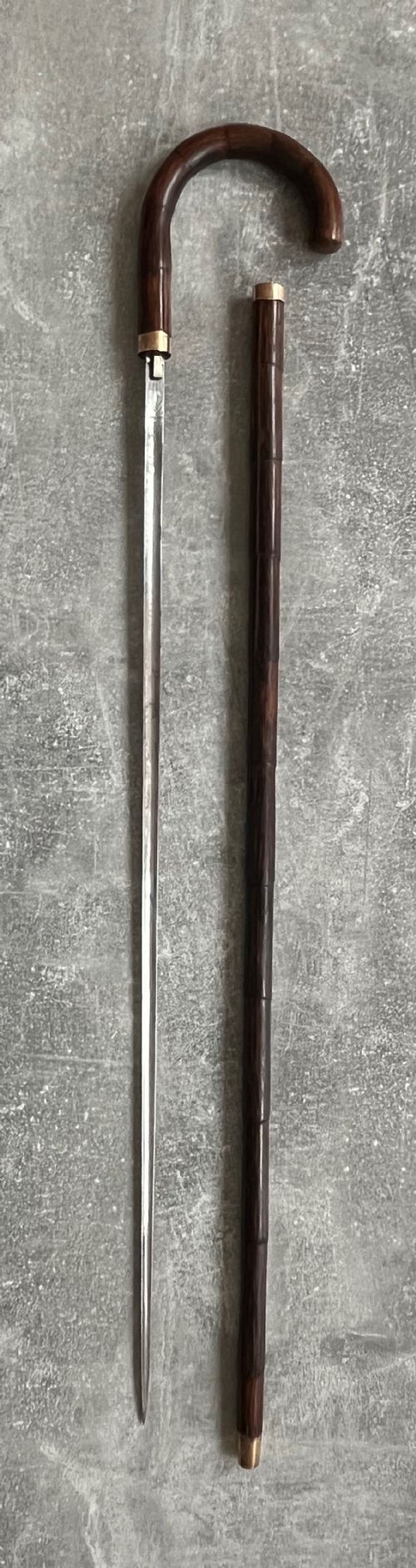
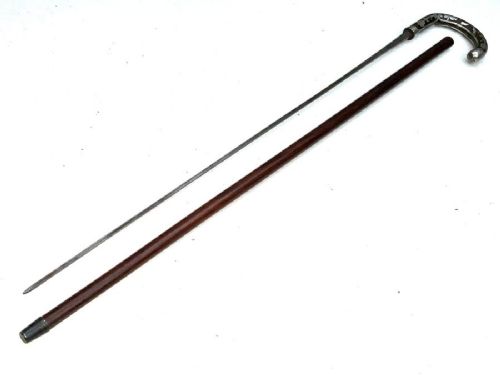
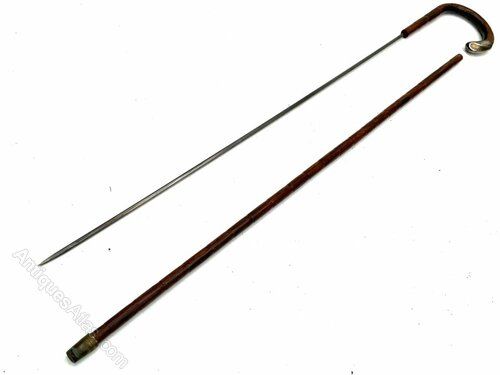
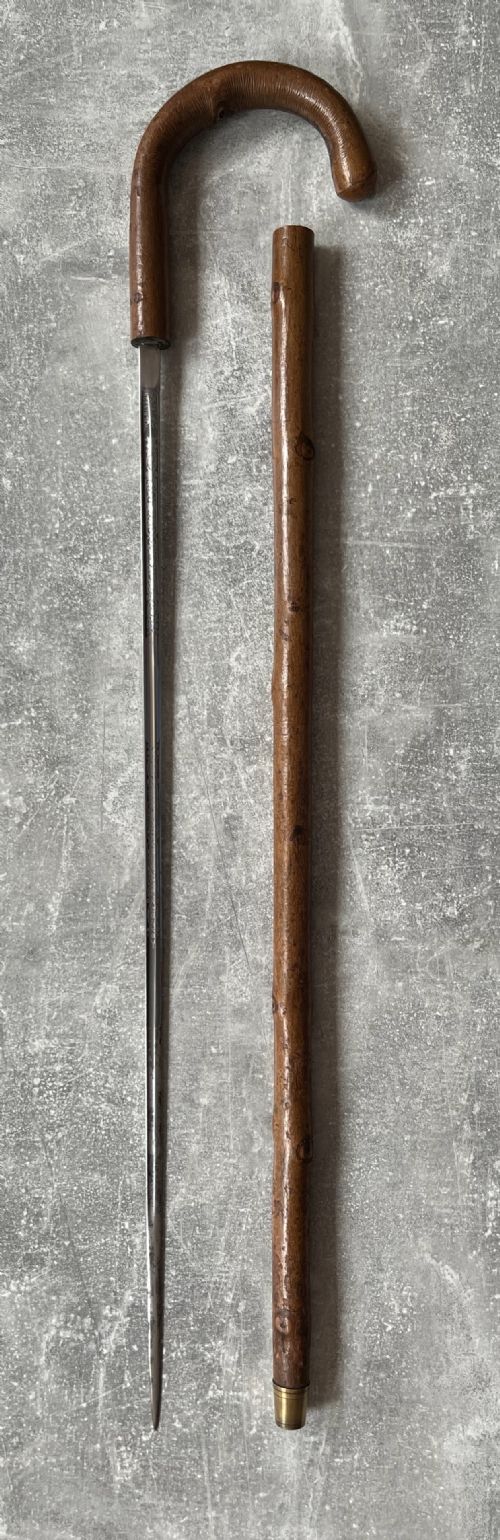
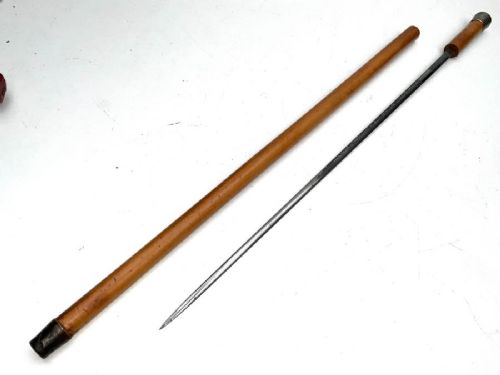
A vintage weapon walking stick is primarily designed as a disguised sword stick or club, emerging mostly from the Victorian era up to the nineteen-twenties. These pieces take the outward form of ordinary walking canes while concealing steel blades or serving as stout throwing clubs.
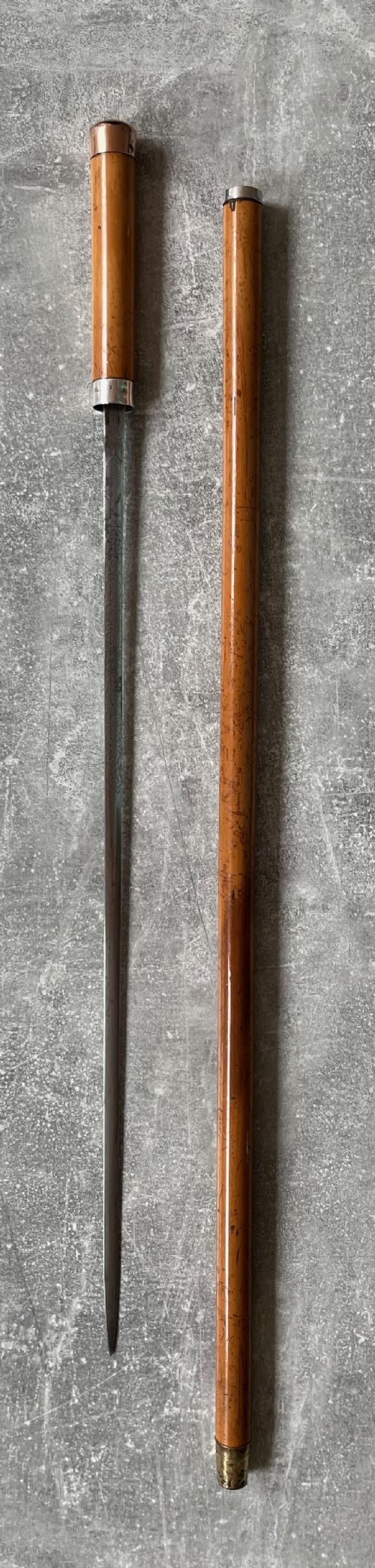
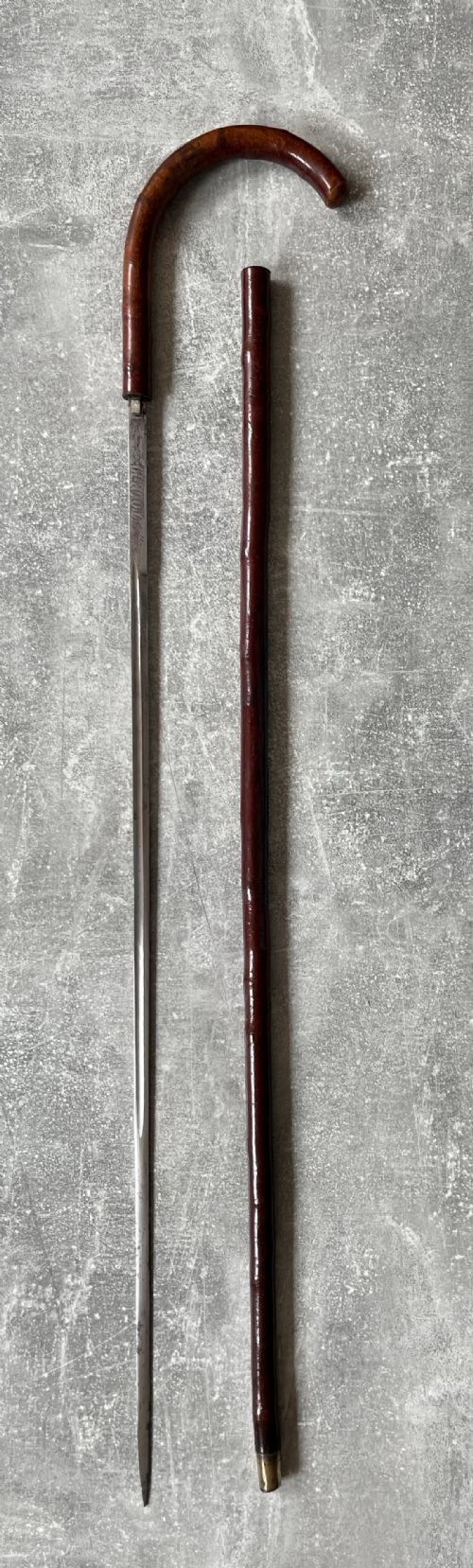
The versions most commonly met on this page utilise traditional shafts made from malacca, bamboo, or various hardwoods, topped with hooked, crook, or root-ended handles. Inside these shafts lie concealed blades originating from Toledo or makers such as Wilkinson, secured by button releases or simple friction fits.
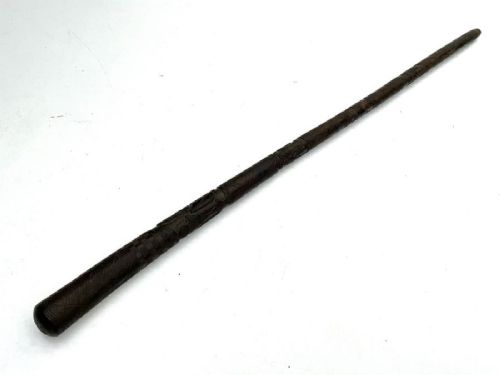
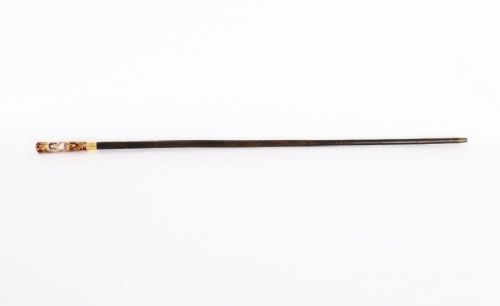
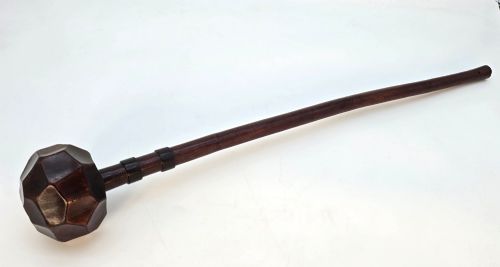
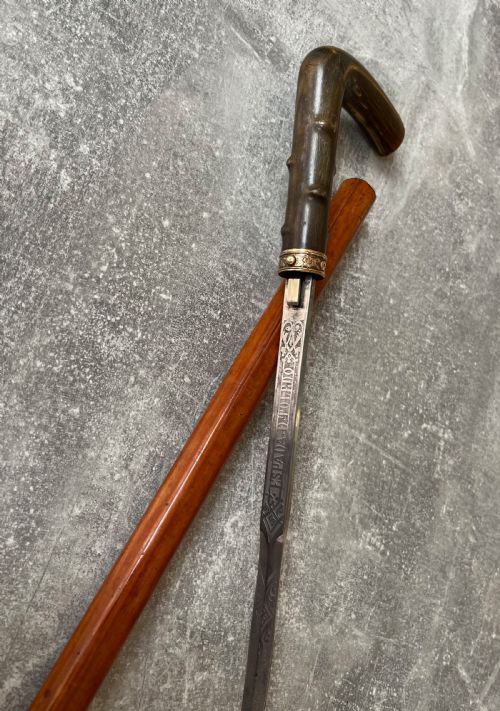
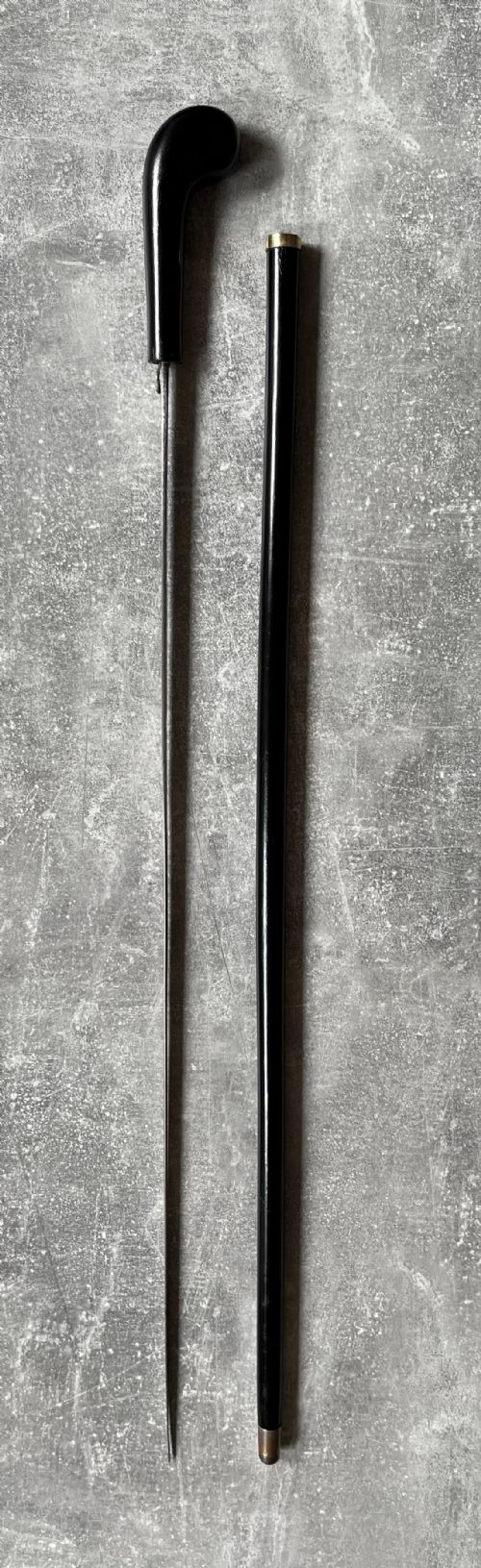
Beyond standard timber shafts, examples include specialised forms like the Zulu knobkerrie throwing club, ebonised pieces, and French designs featuring horn, antler, or porcelain detailing. Each piece reflects the gentleman's desire for personal protection during late nineteenth and early twentieth-century urban and rural transit.
Materials and construction methods
Makers constructed the shafts of a vintage weapon walking stick from resilient natural materials including malacca cane, bamboo, hazel, cherrywood, partridge wood, holly, rosewood, and blackthorn. These timbers provided the necessary straightness and structural integrity to house an internal steel blade without warping.
The concealed blades inside these sticks frequently relied on high-grade steel produced in Toledo or forged by makers such as Wilkinson, often featuring etched details. Artisans fitted these internal weapons with brass, silver, or gold-coloured collars and mounts, employing leather, snakeskin, or ebonised finishes on the outer haft.
Factors of distinction
The refinement of a vintage weapon walking stick rests upon the quality of its concealed blade and the precision of its closing mechanism. Pieces featuring signed Wilkinson or etched Toledo steel blades, paired with secure button releases, represent a higher standard of manufacture than those with basic friction fittings.
Artisanal detail on the handle and mounts dictates the upper tier of these pieces. Hand-carved root handles, genuine horn, antler, or porcelain grips, and hallmarked silver mounts elevate a utilitarian cane into a refined gentleman's accessory.
BRIGG·Wilkinson·KASHI JAPANESE MASTERS
The Vintage Weapon Walking Stick Glossary
- Sword stick
- A walking cane containing a concealed blade housed within the shaft. It was carried by gentlemen in the nineteenth century for discretion and personal defence.
- Knobkerrie
- A traditional southern African wooden throwing club with a heavy rounded head. Examples from this tradition appear alongside European concealed blade canes in ethnographic collections.
- Toledo blade
- A steel blade forged in the Spanish city of Toledo, renowned for its strength and flexibility. Many nineteenth-century walking sticks utilise these imported blades.
- Malacca
- A rattan cane imported from Southeast Asia characterised by its brownish skin and dark rings. It was widely favored for walking stick shafts due to its lightness and resilience.
- Ebonised
- Wood treated to imitate ebony through staining and polishing. This dark, uniform finish is frequently seen on Victorian walking stick shafts.
Vintage Weapon Walking Stick: Frequently Asked Questions
How do I release the hidden blade?
Most pieces utilise a simple button release mechanism located near the collar, or rely on a secure friction fit between the handle and the shaft.
Pulling firmly or pressing the release allows the internal blade to slide smoothly out of the wooden housing.
What woods were used for the shafts?
Makers utilised a variety of dense and resilient timbers, including malacca cane, bamboo, hazel, cherrywood, partridge wood, holly, rosewood, and blackthorn.
Softer woods were generally avoided to ensure the shaft could withstand daily support while housing a steel blade.
Are all these sticks Victorian?
While a significant portion originates from the Victorian period and the nineteenth century, the selection also spans the Edwardian era up to the nineteen-twenties.
Dates are determined by the specific style of the mounts, the hallmarks on the silver, and the overall manufacturing fashion of the decade.
How should I display or store them?
These pieces are best stored upright in a traditional umbrella stand or displayed horizontally on specialised wall brackets.
Keep them away from direct heat sources and excessive moisture to protect the natural timber shafts and any silver or brass mounts.