


Vintage Water Ewer
When you handle a vintage water ewer, you touch centuries of domestic utility raised to an art form through copper, ceramic, and glass.
Vintage Water Ewer
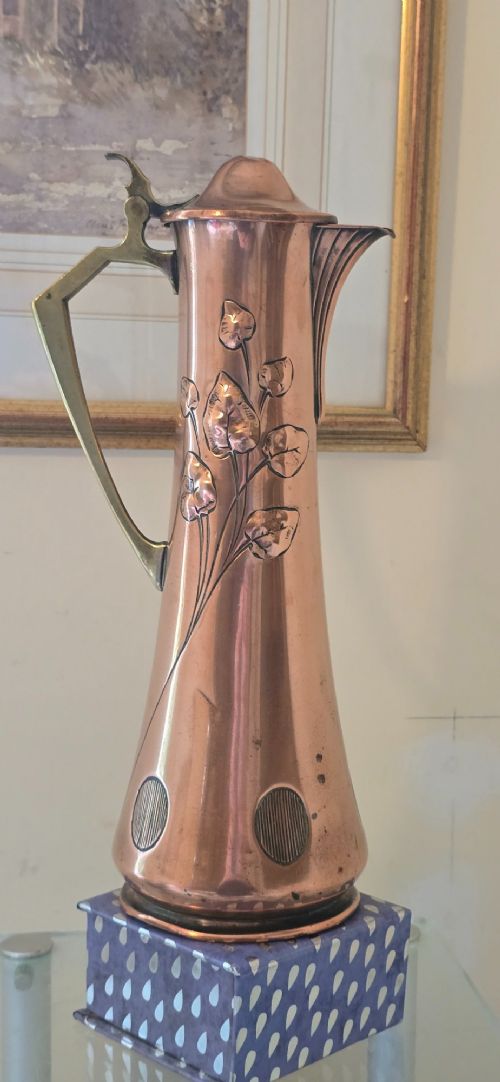
A vintage water ewer encompasses vessels designed for pouring water, ranging from grand decorative showpieces to practical wash set components and table jugs. When searching for a vintage water ewer, you encounter domestic items spanning the Georgian, Victorian, and Edwardian eras, alongside pieces shaped by Art Nouveau and Arts and Crafts ideals.
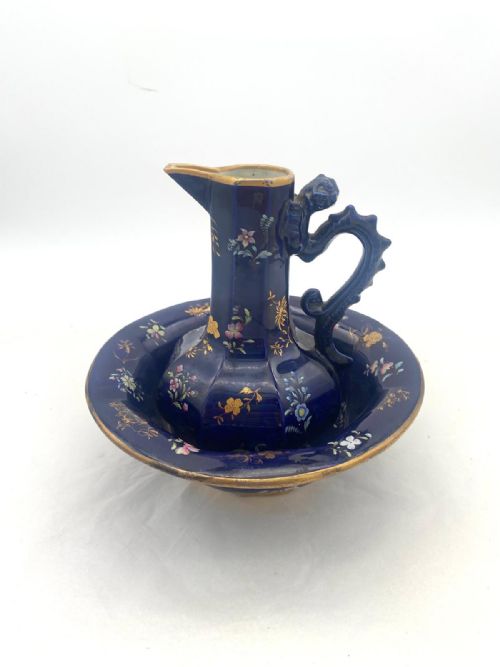
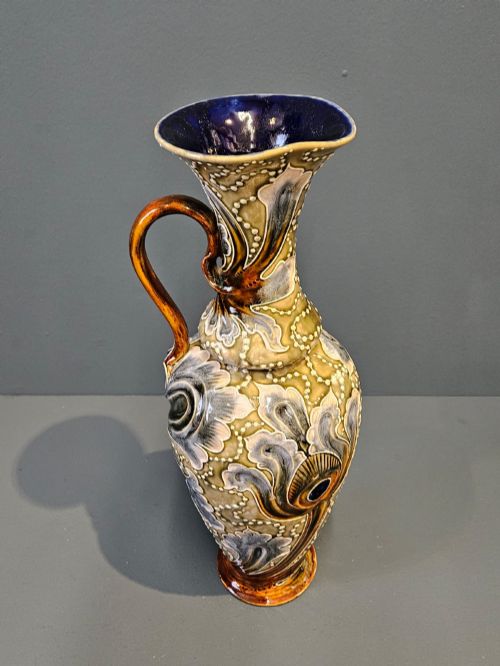
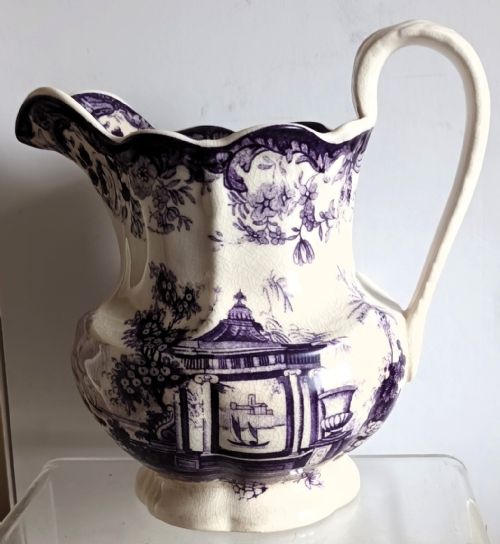
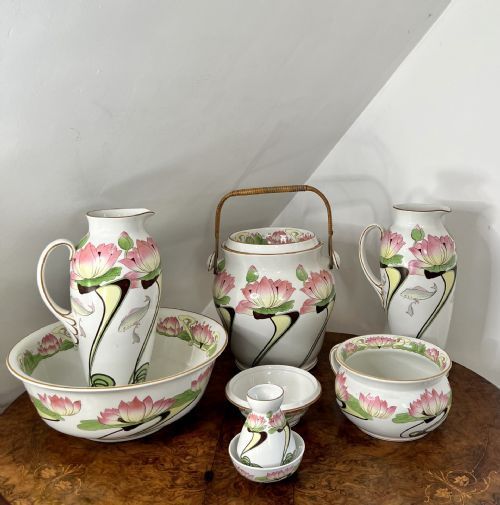
The selections on this page draw heavily from nineteenth-century British earthenware, stoneware, and copper work, often appearing as part of larger bathroom sets or as standalone decorative pitchers. You find heavy copper water jugs alongside delicate ceramic pieces bearing transfer prints or hand-painted botanical motifs.
Origin and form vary widely across these items, taking in English porcelain alongside Middle Eastern metalwork and continental glass. The functional root remains the same, whether the vessel sat on a washstand or served at a dining table.
How they were made
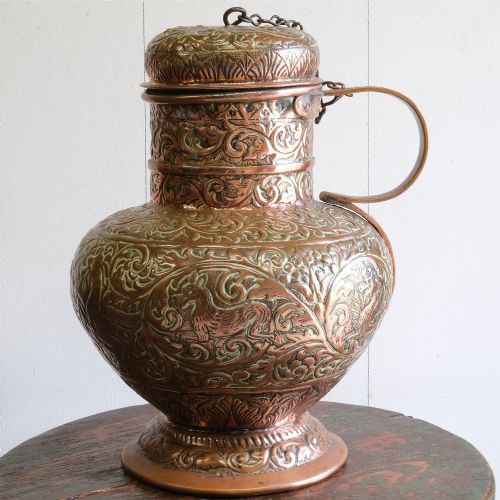
Metal vessels rely on hand-beaten copper, cast brass, and silvered pewter, often shaped with applied handles and detailed relief decoration characteristic of late nineteenth-century metalwork. Artisans hammered sheets of copper into deep bodies or cast brass and bronze components before finishing them by hand.
Ceramic examples combine earthenware, stoneware, and ironstone bodies finished with coloured glazes, transfer printing, or hand-painted details. Factories such as Minton, Doulton Lambeth, and Mason's utilised specialised moulds and kiln firings to produce durable jugs with complex profiles.
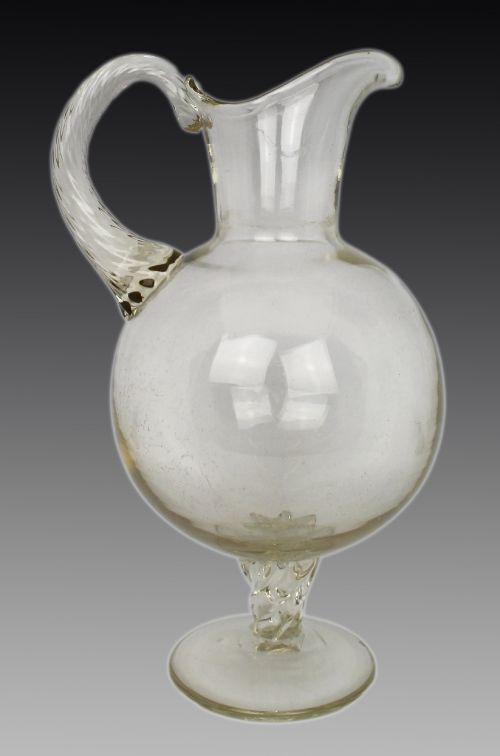
Glass ewers demonstrate hand-blowing and cutting techniques, producing footed vessels and cordial ewers with crisp facets or enamel painting. Craftsmen manipulated molten glass to form slender necks and applied handles before cutting decorative patterns into the cooled surface.
Some ewers feature mythical creatures for handles, including Indian brass vessels shaped with sea-monster makara grips.
What varies in quality
The distinction between ordinary utility ware and top-tier pieces rests on the crispness of the modelling, the weight of the metal or ceramic body, and the ambition of the design. Master modellers and prominent firms achieved balance and proportion that elevate a simple water container into a sculptural object.
Surface finish dictates much of the appeal, separating flat, commercial production from pieces with deeply struck relief, rich glazes, or careful hand-chasing. Where a lesser jug relies on plain stamped decoration, a superior example shows deliberate craftsmanship in every soldered joint, handle attachment, and painted line.
Condition and originality govern desirability, particularly for items that suffered heavy use in nineteenth-century households. Intact gilding, original metal patination, and matching basin sets preserve the integrity of the piece far better than later repairs or replacements.
WMF·Masons·Doulton Lambeth·Minton·Royal Worcester·H F Fearncombe And Co·Spode
The Vintage Water Ewer Glossary
- Ewer
- A large jug with a wide spout and a curved handle, traditionally used for holding water. In antique contexts, ewers frequently served decorative purposes or formed part of a washstand set.
- Ironstone
- A type of durable earthenware patented in the nineteenth century to imitate Chinese porcelain. It offers high resistance to chipping and provides a smooth surface for transfer printing.
- Transfer printing
- A method of decorating ceramics by applying an engraved copperplate design onto paper and transferring the ink onto the unglazed or bisque ceramic body before firing. This technique allowed intricate patterns to be produced in volume.
- Aftaba
- A traditional metal water vessel with a long spout and handle, originating in the Middle East and South Asia. These ewers are often cast in bronze or brass with chased ornamentation.
- Glaze
- A glassy coating fused to a ceramic body through firing, which seals the porous clay and provides colour or decoration. Glazes range from clear salt-glazes on stoneware to rich coloured enamels on porcelain.
Vintage Water Ewer: Frequently Asked Questions
What was a water ewer used for?
These vessels held water for personal washing before indoor plumbing became standard in domestic homes. They stood on washstands alongside large basins to form complete bathroom sets.
Beyond the bedroom, smaller versions served at the dining table for pouring water or wine during meals. Many surviving examples transitioned quickly into purely decorative objects due to their striking forms.
Are ceramic ewers safe for holding fresh water?
Many antique ceramic and glass vessels remain water-tight and functional for everyday use. However, hairline cracks or historic repairs inside the body can weaken the structure.
It is safest to use these pieces for display or dried floral arrangements rather than active daily service. Thermal shock from hot water can also damage nineteenth-century glazes.
How can I tell a Victorian ewer from an Edwardian one?
Victorian pieces tend to feature heavy, elaborate decoration, deep colours, and robust proportions influenced by historic revival styles. You often find rich floral reliefs or dark transfer prints on these items.
Edwardian examples frequently display lighter pastel palettes, simpler geometric lines, and the influence of Art Nouveau or cleaner neoclassical revivals. The forms become slightly more restrained as domestic tastes shifted towards airier interiors.