



Vintage Washstand Ceramic Jug
These vintage washstand ceramic jug pieces are functional vessels from earlier domestic interiors, offering period character and classic ceramic craftsmanship.
Vintage Washstand Ceramic Jug
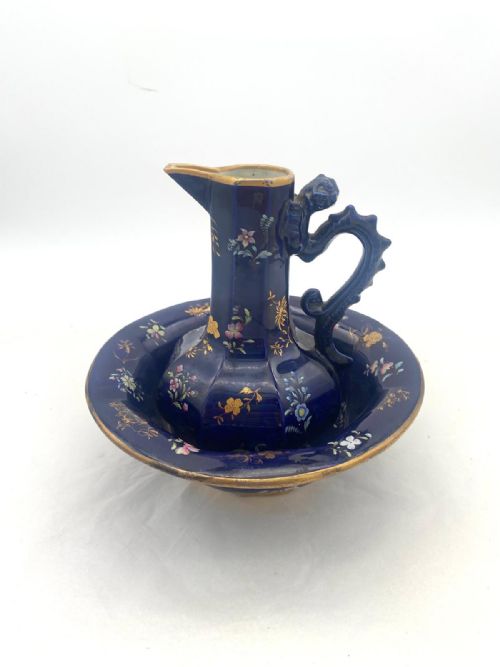
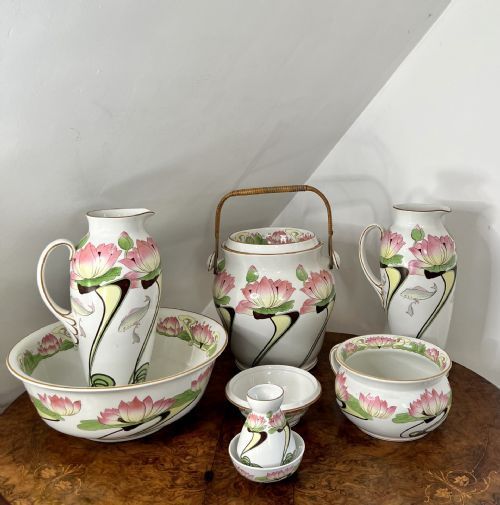
A vintage washstand ceramic jug is typically encountered as part of a larger washstand set, jug and basin set, or bathroom set dating from the nineteenth and early twentieth centuries. These pieces span Victorian, Edwardian, and Art Nouveau periods, reflecting the domestic hygiene and chamber set traditions of those eras. Most examples listed here originate from the 1880 to 1930 timeframe, including specific Edwardian bathroom sets and Victorian wash sets.
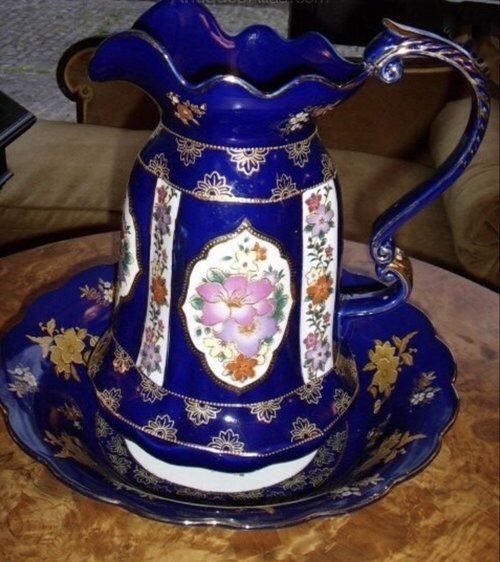
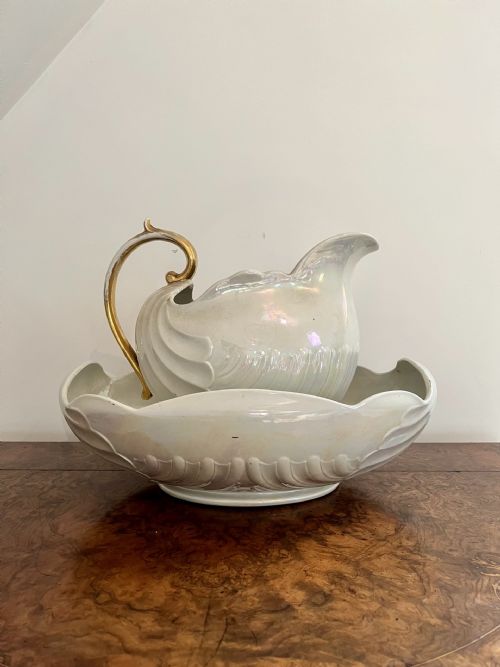
The primary forms include water jugs, wash basins, and complete washstand sets designed to sit upon dedicated wooden washstands or furniture. Makers such as Masons, Minton, Doulton Burslem, and Shelley produced these ceramic pieces in earthenware, ironstone, and porcelain. Buyers searching for a vintage washstand ceramic jug will find standalone water jugs as well as paired jug and bowl sets featuring blue and white decoration, cobalt blue glaze, flower designs, or marbled effects.
Distinctions in quality and execution
Quality in a vintage washstand ceramic jug rests on the crispness of the moulding, the evenness of the glaze, and the precision of any hand-painted or transfer-printed decoration. Finer pieces demonstrate careful control during the firing process, resulting in smooth surfaces without warping or excessive kiln blemishes.
The reputation of the maker also marks a division, with established potteries like Doulton Burslem, Masons, and Minton achieving superior clarity in their ironstone and porcelain bodies. Additionally, the survival of matching basins and the intact presence of gold leaf or gilt highlights elevate the standing of a wash set.
Several wash sets include dedicated shaving stands, proving that nineteenth-century grooming involved just as much splashing as modern routines.
Masons Ironstone·Minton·Doulton Burslem·Shelley·mark Jones & Sons
The Vintage Washstand Ceramic Jug Glossary
- Ironstone
- A patented type of heavy earthenware developed in the nineteenth century to imitate porcelain. It is known for its durability and resilience in domestic settings.
- Earthenware
- Porous pottery fired at lower temperatures and subsequently covered in a vitreous glaze to render it waterproof. It forms the body of many traditional washstand jugs.
- Transfer printing
- A decoration technique where an engraved metal plate transfers a design onto paper, which is then stamped onto the ceramic surface before glazing. This method allowed for consistent, detailed patterns on large bathroom sets.
- Washstand
- A piece of furniture designed to hold a water jug and basin for personal washing before indoor plumbing became universal. They frequently incorporated marble tops or wooden surrounds.
Vintage Washstand Ceramic Jug: Frequently Asked Questions
How were washstand jugs used?
These jugs held water for washing hands and face before the widespread installation of indoor running water and bathrooms. They stood alongside matching basins on bedroom washstands.
Servants filled them daily from kitchen boilers or pumps, providing the household with a practical supply of fresh water for morning routines.
How do I style a ceramic jug today?
Many people display these jugs as decorative accessories on sideboards, shelves, or dry washstands. They also function well as large vases for dried grasses or seasonal flowers.
Pairing a jug with its original basin creates a striking focal point in a hallway or traditional bedroom setting.
How can I tell Victorian from Edwardian pieces?
Victorian jugs often feature heavier ironstone bodies with bold transfer prints, rich cobalt blues, or generous gilt highlights. They tend to have robust, functional forms designed for mid to late nineteenth-century interiors.
Edwardian pieces frequently lean towards lighter porcelain or refined earthenware, sometimes displaying softer floral patterns or Art Nouveau influences as domestic design evolved.
What is the difference between ironstone and porcelain?
Ironstone is a dense, heavy earthenware designed to resist chipping while maintaining the appearance of more expensive tableware. It was widely used for sturdy domestic wash sets.
Porcelain is finer, thinner, and vitrified throughout, allowing for more delicate vessel walls and a smoother, more translucent finish.