





Vintage Washstand Bowl
A vintage washstand bowl brings period character to a room, offering functional ceramic form rooted in late Victorian and Edwardian domestic routines.
Vintage Washstand Bowl
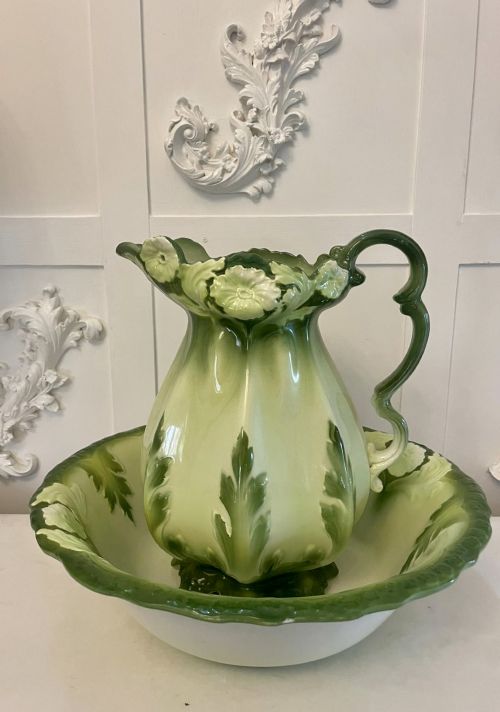
When you search for a vintage washstand bowl, you encounter ceramic basins, jugs, and complete sets designed for domestic hygiene before indoor plumbing became universal. These vessels range from utilitarian earthenware to decorative porcelain made for bedroom washstands.
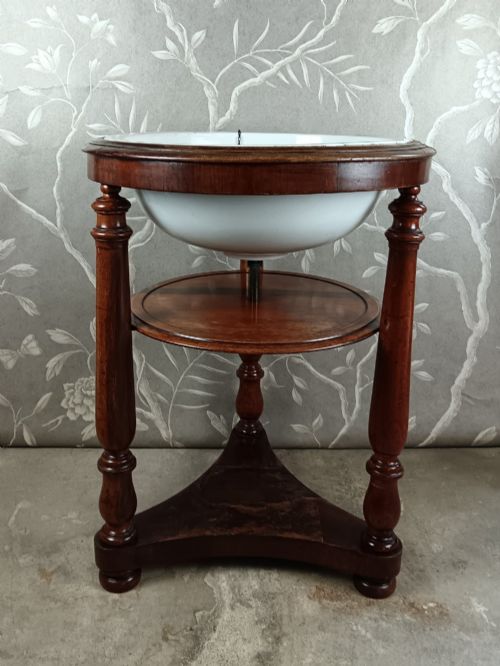
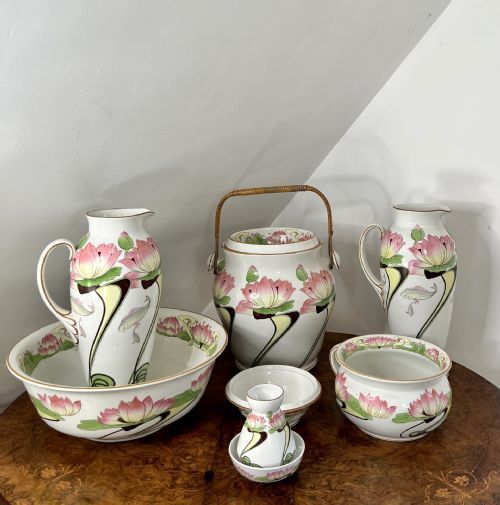
The pieces on this page span the nineteenth century through the early twentieth century, including Victorian and Edwardian examples alongside Art Nouveau designs. Forms include large basins, matching jugs, chamber pots, and occasional stands made from mahogany or bentwood.
How they were made
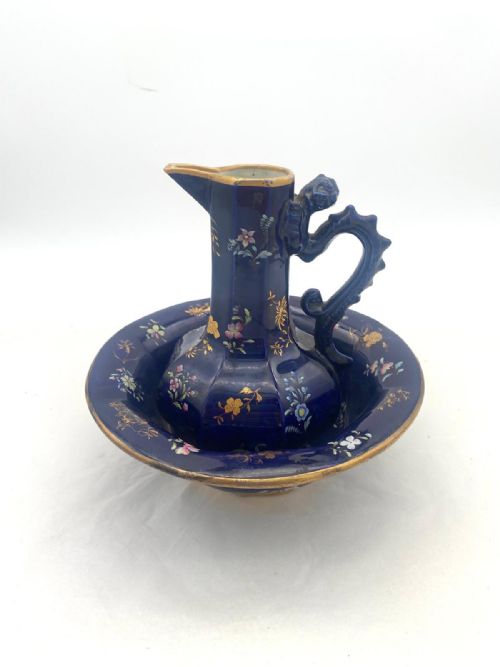
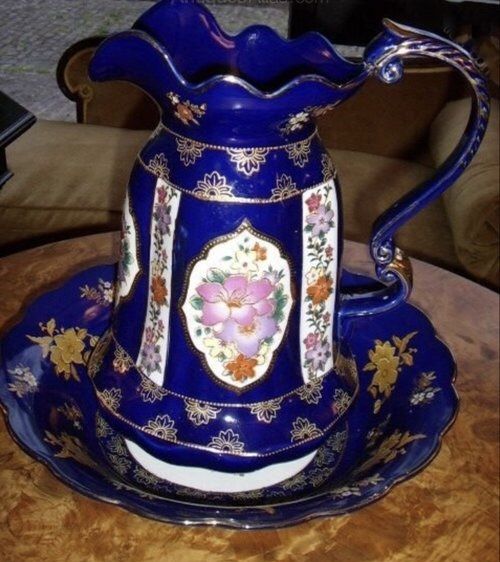
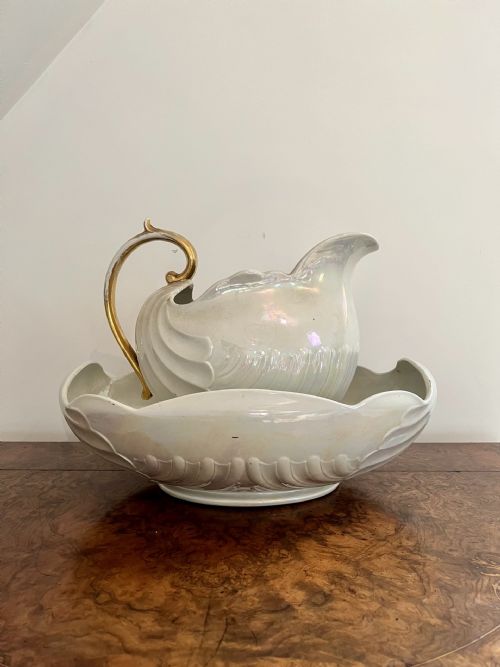
Potters shaped these vessels from ceramic, earthenware, ironstone, and porcelain, applying coloured glazes and sometimes gold leaf highlights. Ironstone provided a heavy, durable body suitable for daily washing, while porcelain allowed for finer, more delicate walls.
Decoration involved blue and white transfer printing, floral patterns, and hand-painted Chinoiserie motifs under clear or cobalt blue glaze. Cabinetmakers built accompanying stands from mahogany and brass fittings to hold the ceramic bowls securely.
Vintage Washstand Bowl Retail Price Guide 2026
Typical asking prices for vintage washstand bowl among the pieces listed under this phrase on Sellingantiques today, from the lower quarter to the upper quarter. They describe what is for sale here now, not the wider market.
Victorian households relied on these bowls for morning ablutions, meaning your wash basin once started someone's day before coffee was even poured.
What varies in quality
Quality rests in the crispness of the transfer print, the depth of the glaze, and the weight of the ceramic body. Mass-produced utilitarian basins differ significantly from heavily decorated matching sets intended for high-status bedrooms.
The presence of maker marks from established potteries elevates a piece, as does the survival of an entire matching jug and basin set rather than a single stray bowl.
Mason’s Ironstone·Doulton Burslem·Mark Jones And Sons·Shelley
The Vintage Washstand Bowl Glossary
- Ironstone
- A dense, durable type of earthenware patented in the nineteenth century. It resists chipping better than standard pottery and forms the body of many large wash basins.
- Chinoiserie
- European decorative style imitating Chinese artistic traditions. It appears on ceramic bowls as blue and white painted or printed landscape and floral scenes.
- Transfer printing
- A technique for applying detailed patterns to ceramics using engraved copper plates and tissue paper. This method allowed factories to produce intricate designs consistently across large sets.
- Chamber pot
- A ceramic vessel kept in a bedroom for nighttime use before modern bathrooms. They share materials and glazes with washstand basins but serve a different domestic function.
Vintage Washstand Bowl: Frequently Asked Questions
What is a vintage washstand bowl used for today?
Today these bowls function as decorative planters, umbrella stands, or standalone decorative objects in hallways and bathrooms. They bring historic ceramic texture into modern interiors without needing their original wooden washstands.
Many collectors also display complete jug and bowl sets on sideboards or use individual basins as fruit bowls in traditional kitchens.
How do I distinguish Victorian from Edwardian bowls?
Victorian washstand bowls often feature heavier ironstone bodies with deep cobalt blue transfer prints, rich Chinoiserie motifs, or bold floral patterns. The forms tend to be robust and deeply curved to handle heavy daily use.
Edwardian examples frequently lean towards lighter porcelain, softer pastel palettes, and flowing Art Nouveau botanical designs. The overall aesthetic feels slightly more refined and less dense than mid-nineteenth-century equivalents.
Were these bowls always sold with matching jugs?
Potteries produced them as matching sets comprising a large basin, a tall water jug, a soap dish, and sometimes a chamber pot. However, centuries of household separation mean many bowls now survive entirely on their own.
Finding an intact set with matching patterns and maker marks remains less common than encountering individual stray bowls.
How should I clean my ceramic wash basin?
Wash the ceramic gently using warm water and mild washing-up liquid with a soft cloth or sponge. Avoid abrasive scouring pads that can scratch the aged glaze or damage transfer-printed patterns.
Take extra care around areas with gold leaf decoration, as harsh scrubbing will wear away the metallic highlights over time.