
Vintage Walnut Tallboy Drawers
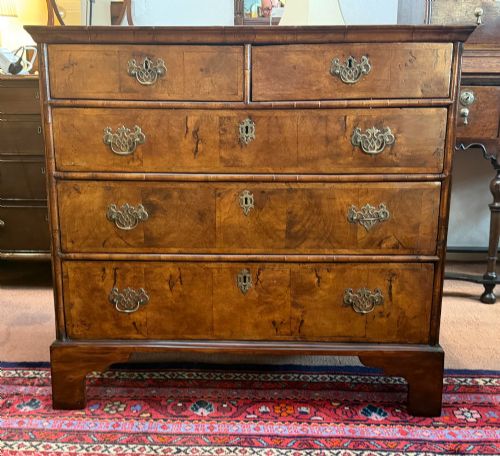
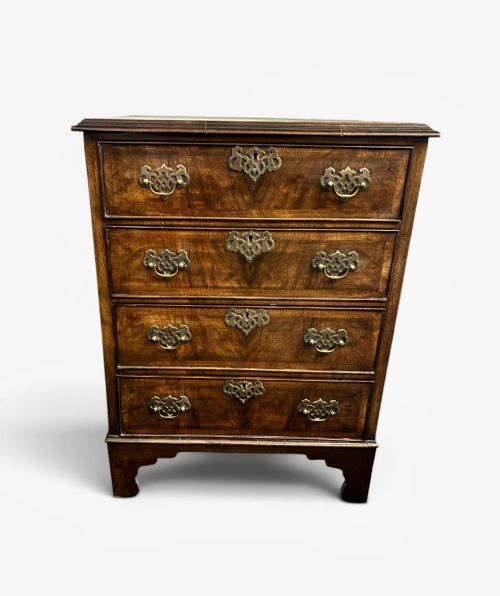
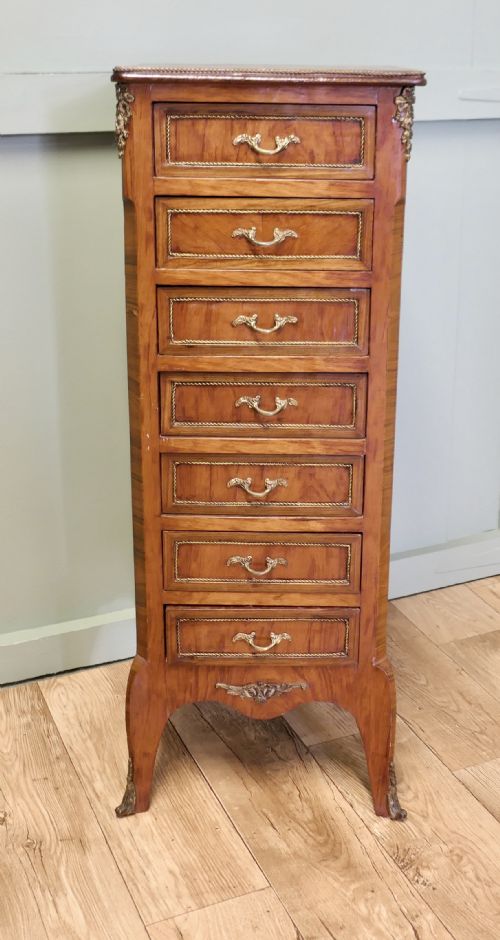
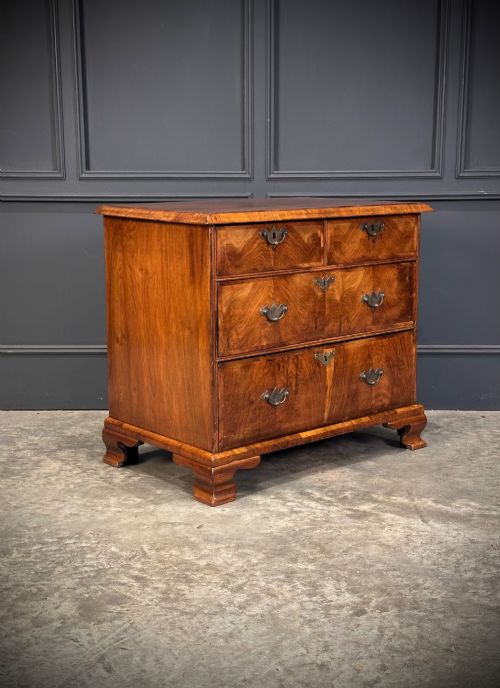
Vintage walnut tallboy drawers bring vertical storage and rich wood figures into a room, offering practical height alongside historic character.
Vintage Walnut Tallboy Drawers
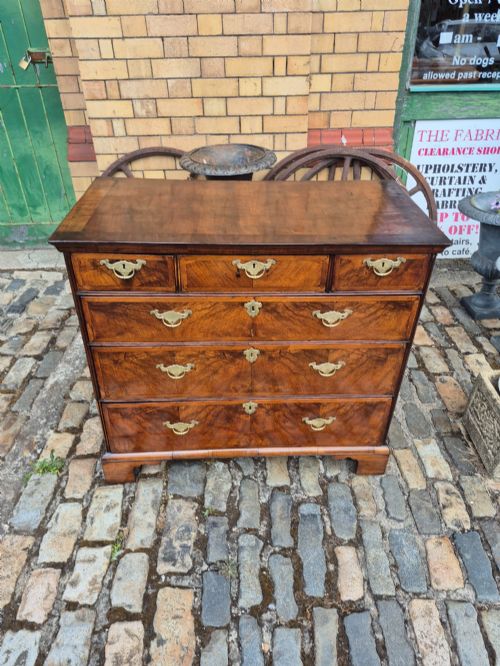
When you search for vintage walnut tallboy drawers, you encounter a specialised form of tall storage designed to maximise vertical space without claiming a large floor footprint. These pieces range from early eighteenth-century examples to later twentieth-century iterations influenced by Art Deco design and earlier revival styles.
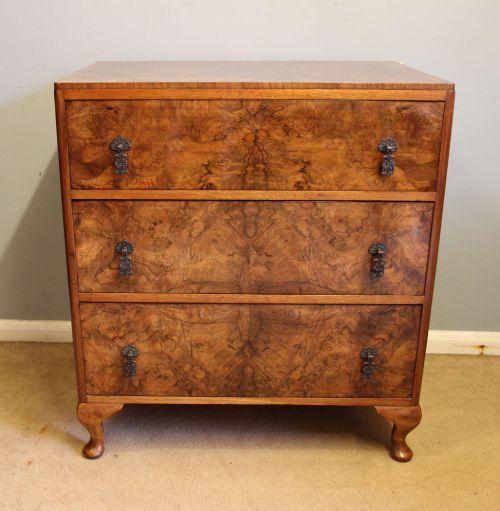
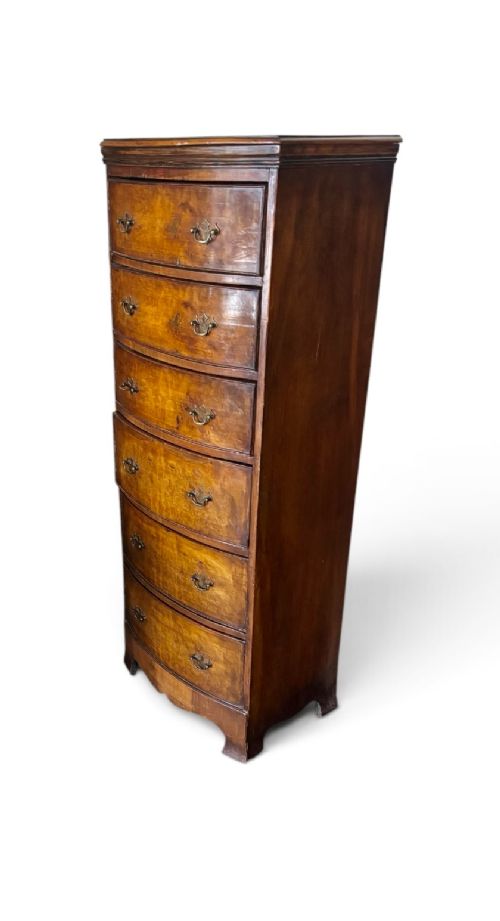
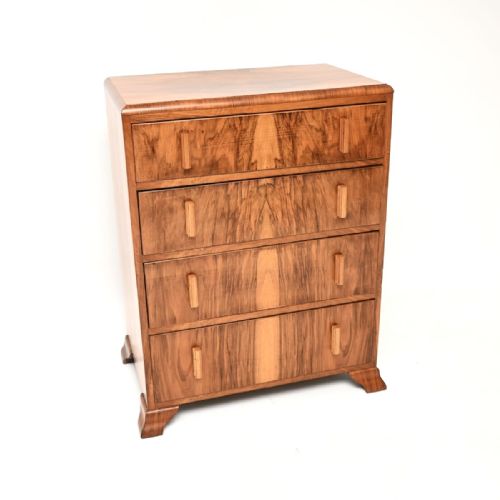
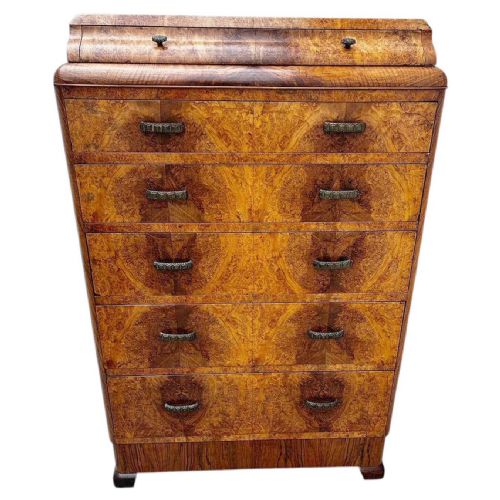
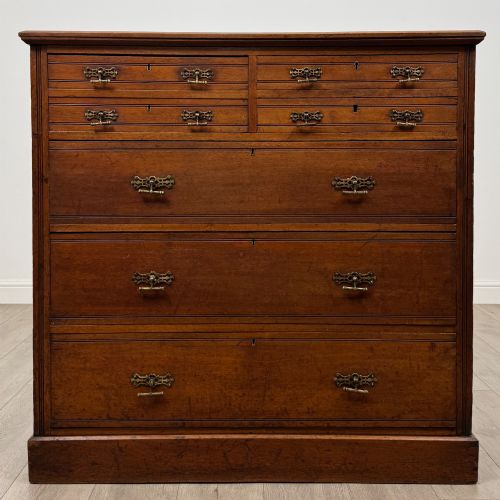
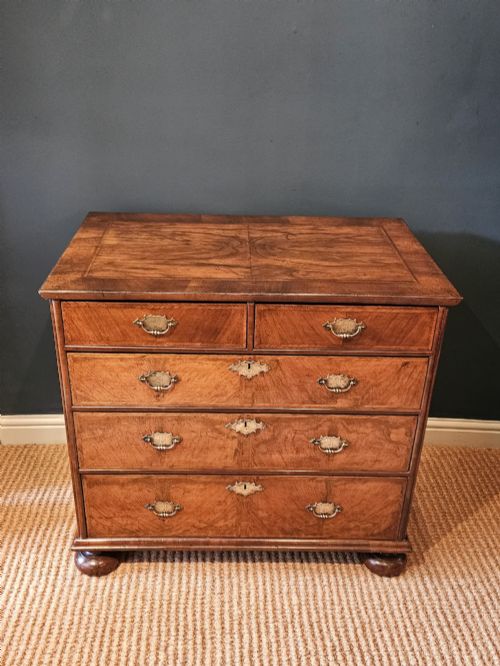
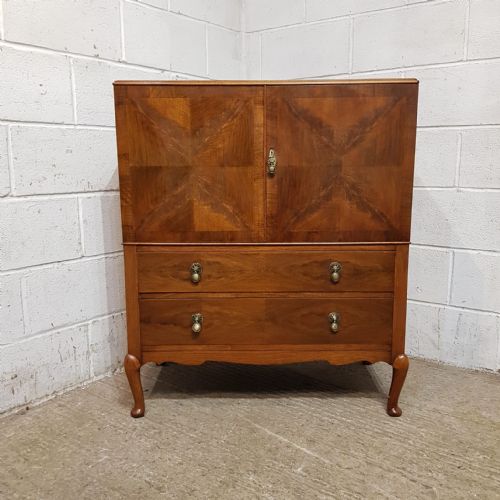
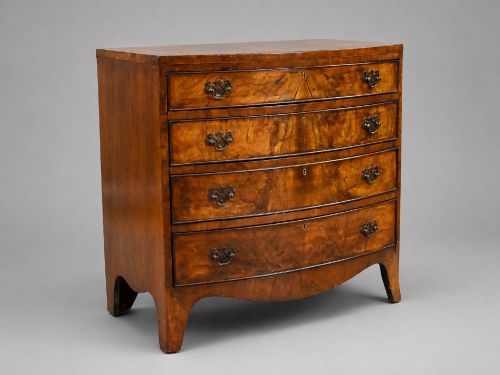
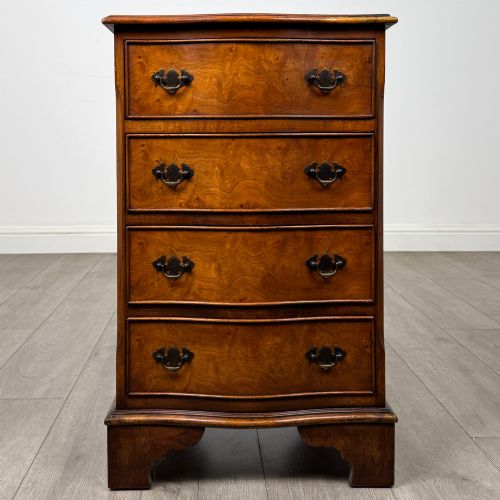
The selections on this page lean heavily towards twentieth-century interpretations, including distinct Art Deco pieces and compact Edwardian or 1930s variations. Alongside traditional tallboys and chests on stands, you find related forms such as bow front chests, serpentine designs, and tall chests of drawers.
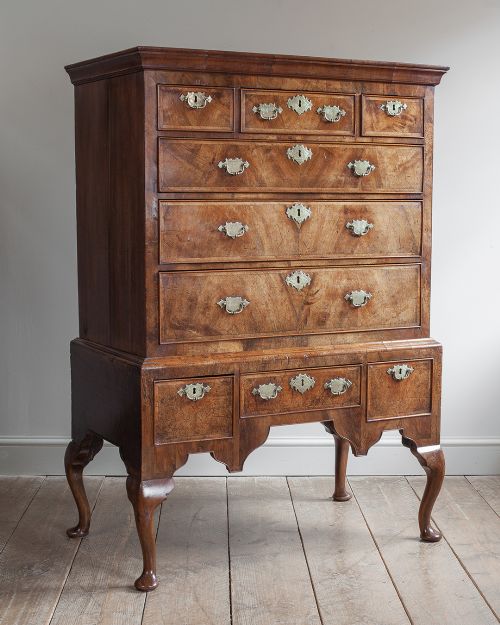
Origins span formal Georgian craftsmanship up to twentieth-century workshop production, bringing together distinct regional interpretations of classic proportions. Buyers encounter variations that include traditional two-piece tallboys, chests on stands, and compact multi-drawer configurations suited to modern domestic spaces.
What varies in quality
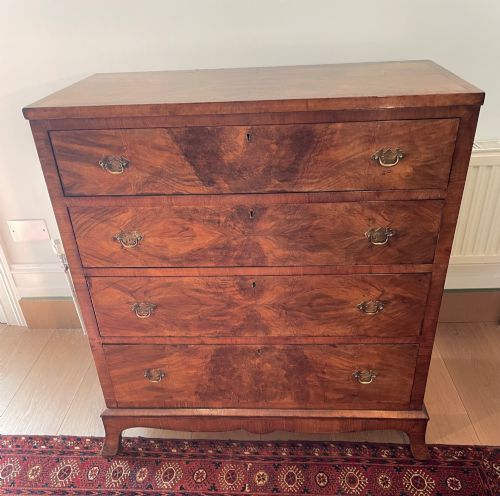
The selection of the timber veneer dictates much of the visual depth, with highly figured burr walnut creating a more dramatic finish than plain walnut surfaces. Uniformity of grain matching across multiple drawers distinguishes more considered cabinet making from simpler commercial production.
Structural integrity depends on the precision of the drawer construction and the stability of the timber over time. Original brass hardware and intact banding add to the structural and visual coherence of the piece.
Listings span from the 17th century through the Georgian and Victorian eras into 1930s Art Deco.
Jas Shoolbred
The Vintage Walnut Tallboy Drawers Glossary
- Tallboy
- A tall chest of drawers, often constructed in two sections with a smaller chest sitting upon a larger base. This form maximises storage capacity while maintaining a modest floor footprint.
- Burr walnut
- Timber taken from a growth on a walnut tree, yielding intricate, swirling grain patterns. Cabinet makers prized this figured wood for veneering prominent surfaces.
- Herringbone banding
- A decorative inlay border formed of small strips of veneer arranged in a V-shaped pattern. It frames drawer fronts on finer Georgian and revival pieces.
- Chest on stand
- A form where a drawer unit rests on a separate supporting framework with legs. This elevates the storage section and lightens the overall visual mass of the furniture.
- Serpentine
- A curved furniture front featuring a convex centre flanked by concave ends. This shaping requires advanced woodworking skill to execute cleanly in walnut veneer.
Vintage Walnut Tallboy Drawers: Frequently Asked Questions
What is a tallboy?
A tallboy is a tall chest of drawers designed to hold maximum clothing or linen within a compact floor area. The form typically stacks storage vertically, sometimes in two separate sections.
Historical examples range from eighteenth-century pieces to twentieth-century interpretations influenced by earlier revival movements.
How do I style a tallboy?
A tallboy functions well in bedrooms or dressing rooms where floor space is at a premium but vertical storage is required. Its height makes it suitable for balancing lower furniture pieces in a room.
Allow the figured walnut grain to act as a focal point by keeping surrounding decor relatively simple.
What is burr walnut?
Burr walnut comes from a specialised tree growth that produces highly decorative, swirling grain patterns. Cabinet makers slice this wood into thin veneers to apply across drawer fronts.
This material choice creates a striking visual texture that defines many mid-century and antique pieces.
How do I date a walnut tallboy?
Dating relies on examining the construction methods, secondary timbers like oak, and overall stylistic markers such as bracket feet or Art Deco lines. Earlier pieces show hand-cut joinery and specific banding techniques.
Twentieth-century iterations incorporate period-specific finishes, hardware, and stylistic revivals of Queen Anne or Georgian forms.