
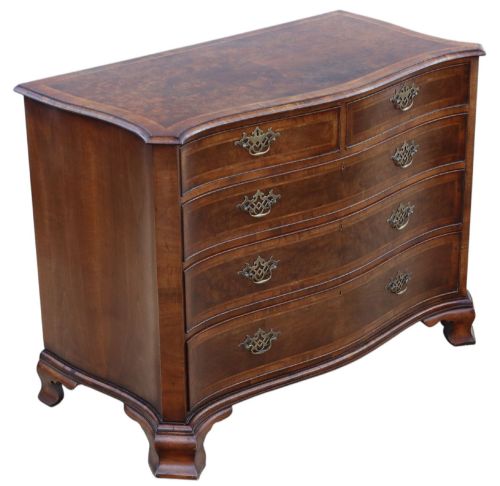
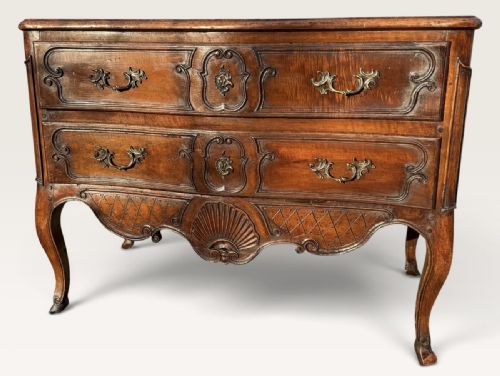
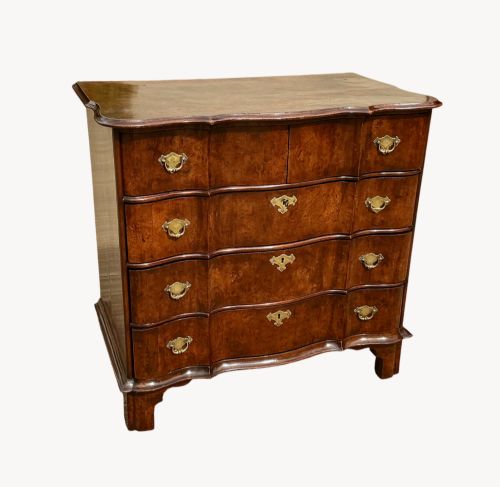
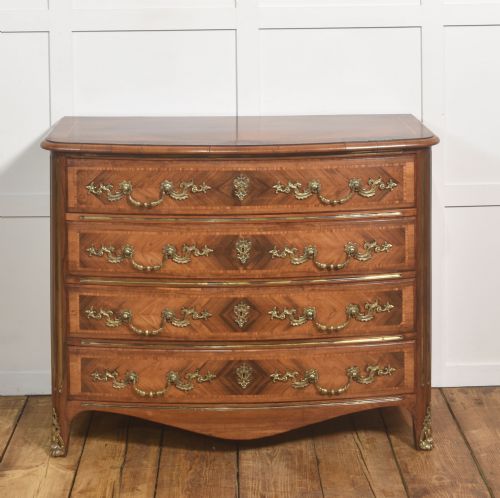
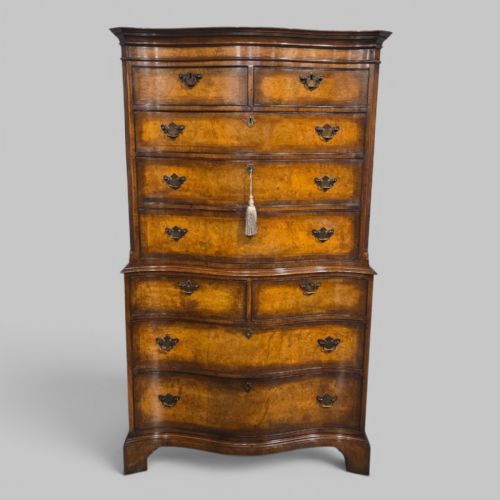
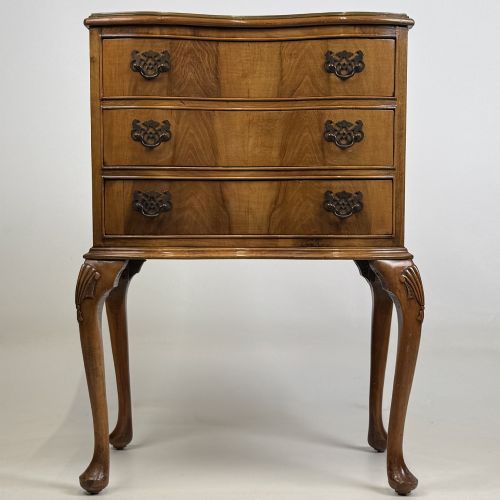
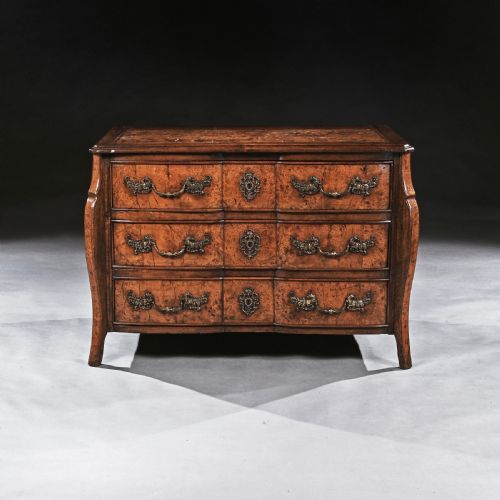
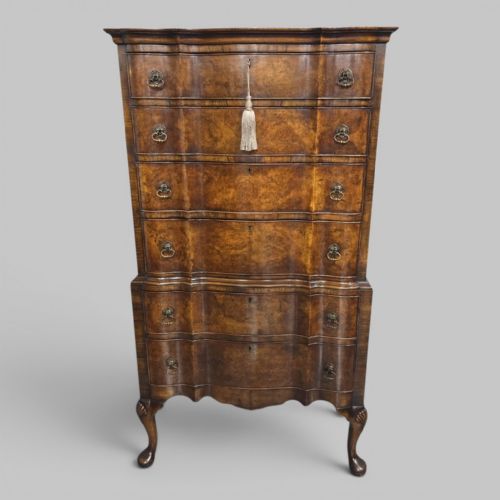
Serpentine Front Walnut Chest
A serpentine front walnut chest brings undulating lines and rich figured timber together in a grand storage piece.
Serpentine Front Walnut Chest
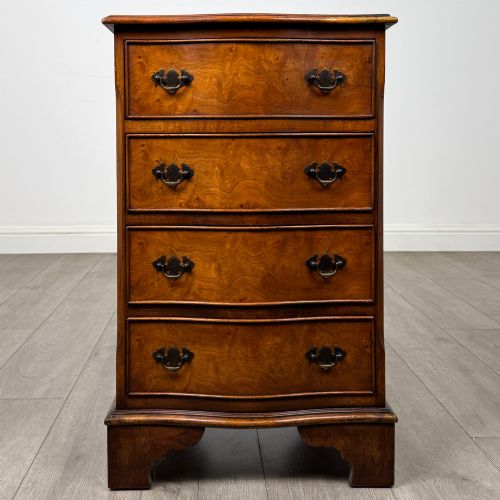
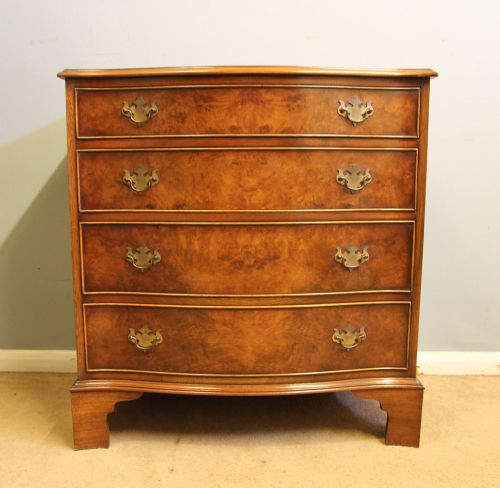
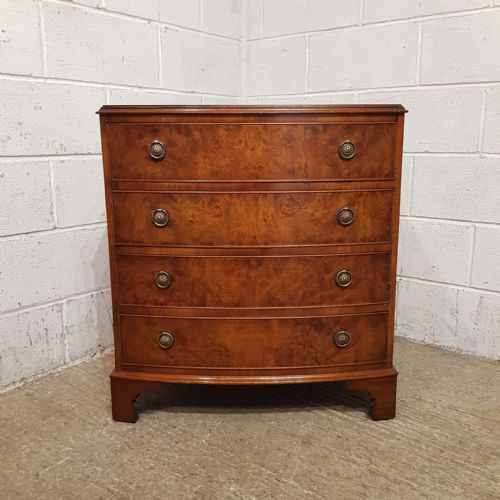
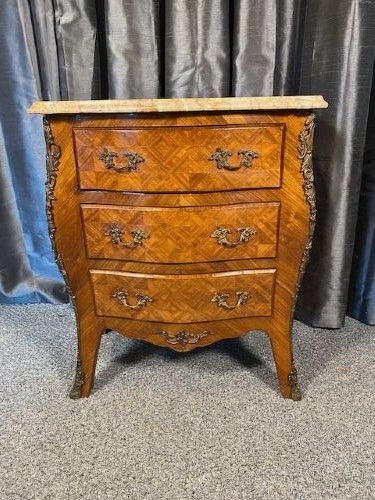
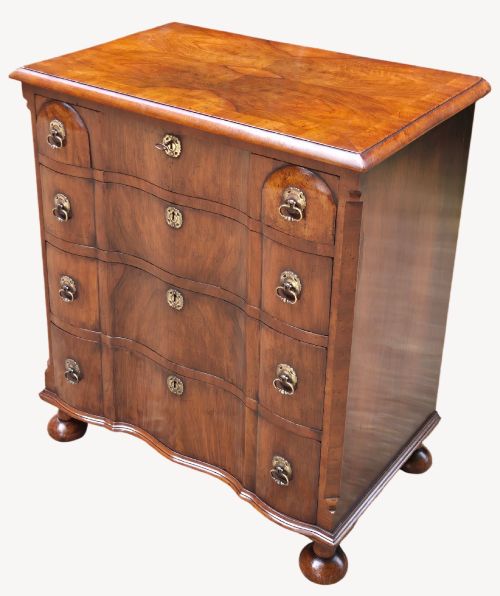
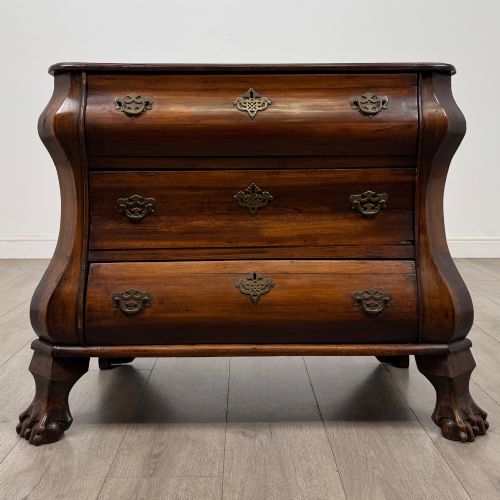
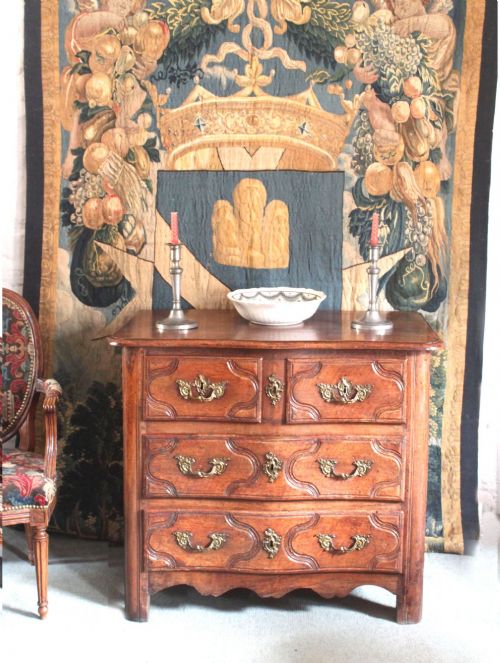
A serpentine front walnut chest presents a distinctive undulating curve across its drawer fronts, combining practical storage with sculptural elegance. These pieces appear in forms ranging from compact bedside cabinets and commodes to towering chest on chest designs.
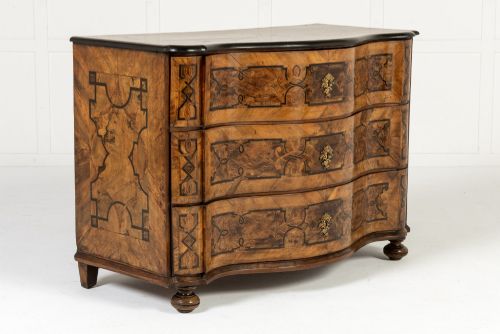
The selections span several centuries, with examples originating from eighteenth-century workshops across Britain, France, Germany, and Italy, alongside later revivals from the Edwardian era and the early twentieth century. Walnut and burr walnut dominate the construction, often enhanced by marquetry, parquetry, or crossbanding.
Buyers seeking this phrase frequently encounter commodes and chests featuring shaped marble tops or elaborate brass mounts, reflecting both provincial domestic utility and continental baroque or rococo influences.
Materials and construction methods
Cabinetmakers constructed these chests using solid timber frames overlaid with highly figured walnut or burr walnut veneers, which were carefully selected to create symmetrical patterns across the curved drawer fronts. Secondary woods such as oak, fruitwood, and ash frequently form the interior drawer linings and structural carcases.
Shaping the signature serpentine profile required precise hand-sawing and planing of both the drawer rails and the solid wood or veneered fronts. Ormolu mounts, brass handles, and occasionally inset marble tops were then fitted to complete the detailed exterior.
Miniature chests offered master cabinetmakers a chance to demonstrate their precision to prospective clients.
Distinguishing craftsmanship and material depth
The quality of a serpentine front walnut chest rests primarily on the grain selection of the burr walnut veneer and how seamlessly it wraps around the undulating curves. Superior pieces display continuous, book-matched veneer patterns that follow the complex contours without interruption or patching.
Joinery detail and drawer construction further separate standard items from finer examples, with hand-cut dovetails and well-fitted internal secondary timbers indicating skilled workshop production. The integration of bronze or ormolu mounts and the precision of inlaid parquetry or marquetry add further layers of distinction.
The Serpentine Front Walnut Chest Glossary
- Serpentine front
- A furniture front characterised by a central convex curve flanked by two concave curves, or the reverse.
- Burr walnut
- Timber taken from a growth on a walnut tree, prized for its swirling, highly figured grain patterns.
- Commode
- A low chest of drawers or cabinet, often of French origin, standing on relatively tall legs.
- Marquetry
- Decorative veneer work forming pictures or geometric patterns using various woods, metals, or shells.
- Crossbanding
- A border strip of veneer laid around the edges of a panel so the grain runs at right angles to the central piece.
Serpentine Front Walnut Chest: Frequently Asked Questions
How do I care for a walnut chest?
Keep the wood away from direct sunlight and steady temperature fluctuations to prevent the walnut veneer from drying out or splitting. Gentle dusting with a dry cloth maintains the finish without stripping the historical surface.
A light application of quality beeswax once or twice a year nourishes the timber and preserves the depth of the grain. Avoid modern silicone-based polishes entirely.
Were these chests used in bedrooms?
These pieces served multiple domestic functions depending on their scale, appearing in parlours, hallways, and private chambers alike. Smaller commodes and bedside cabinets functioned primarily for night storage or displaying decorative items.
Larger chest on chest formats and tallboys provided essential wardrobe storage for clothing and linens in principal rooms. Their decorative fronts ensured they remained visible items of status throughout the home.
What is a brushing slide?
A pull-out wooden shelf integrated into the upper section of the chest just below the top surface. It provided a clean, horizontal writing or sorting surface without requiring a dedicated desk.
Cabinetmakers concealed this feature behind the upper mouldings or drawer rails so it remained invisible when closed. Users could slide it out effortlessly during daily dressing routines.
How do I distinguish eighteenth-century pieces?
Early pieces display hand-cut dovetails, native oak or pine secondary woods, and construction methods characteristic of pre-industrial cabinetmaking workshops. The patination on the walnut timber develops a deep, warm tone over centuries of handling.
Revival pieces from the Edwardian period or the twentieth century often utilise more uniform machine-cut elements and standardised internal fittings. Examining the backboards and drawer interiors reveals the primary clues to the manufacturing date.