


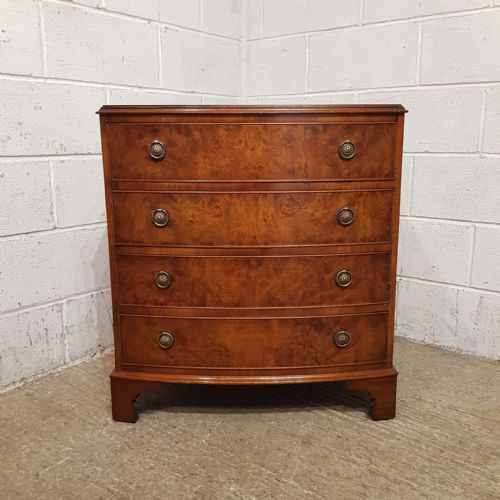
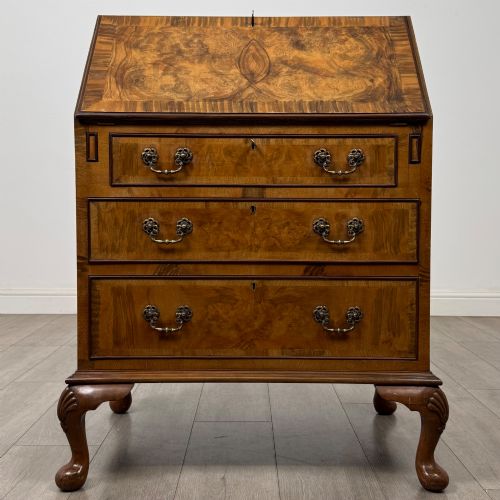
Burr Walnut Bureau Drawers
Burr walnut bureau drawers combine swirling timber grain with functional writing compartments, offering timeless storage and writing surfaces for the home.
Burr Walnut Bureau Drawers
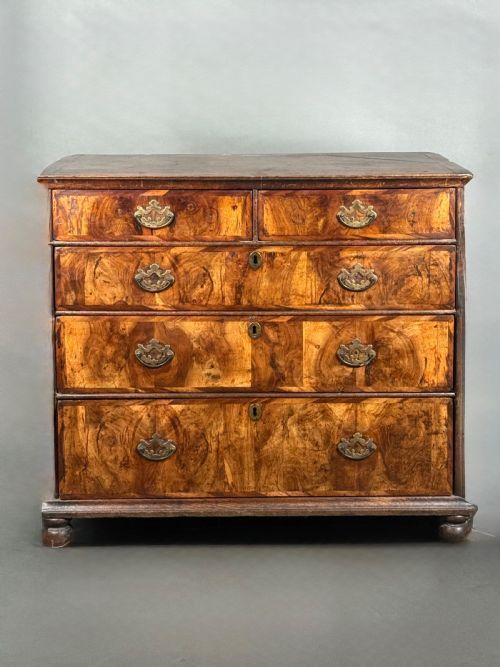
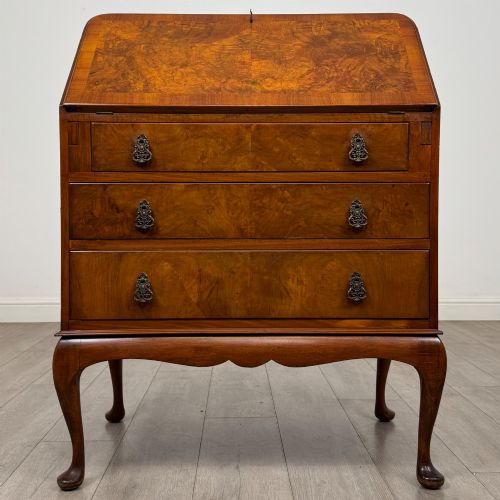
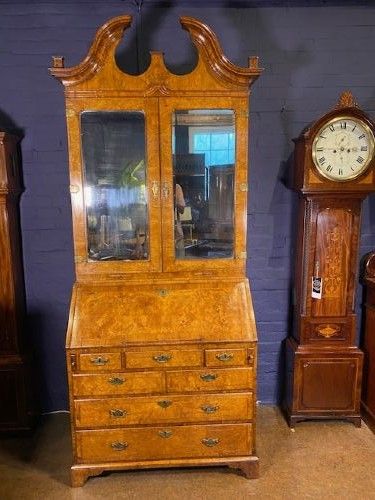
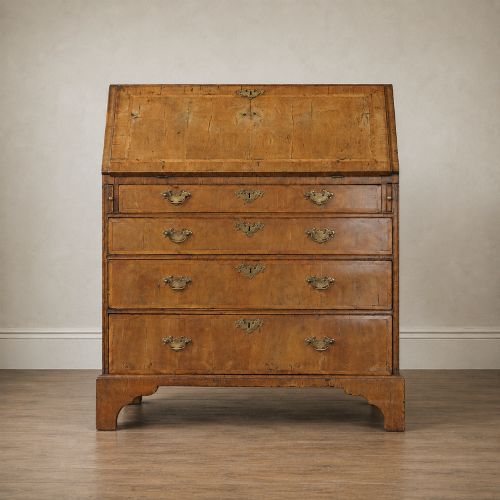
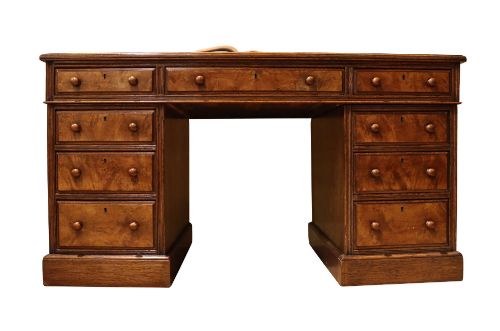
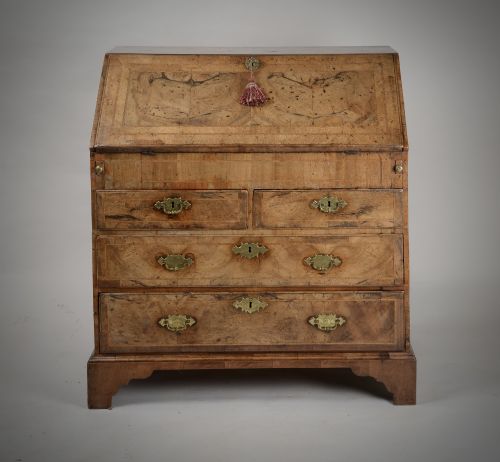
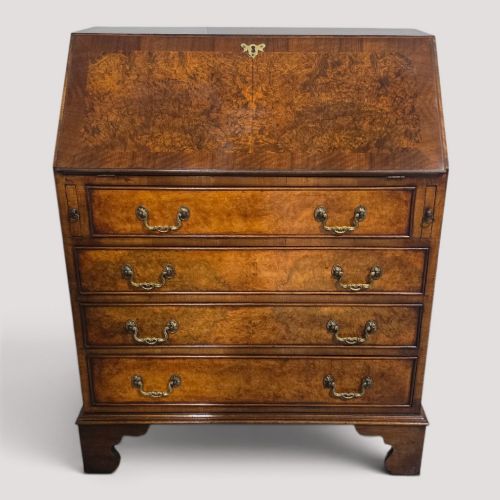
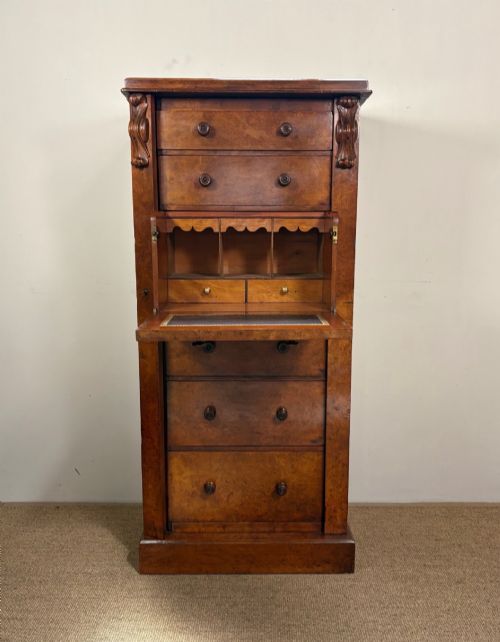
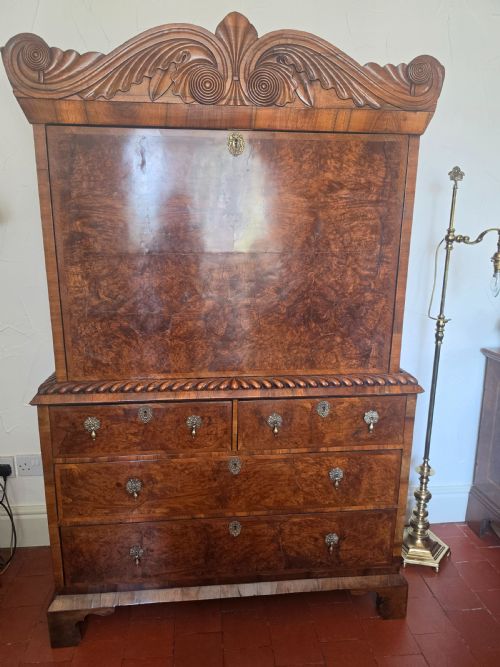
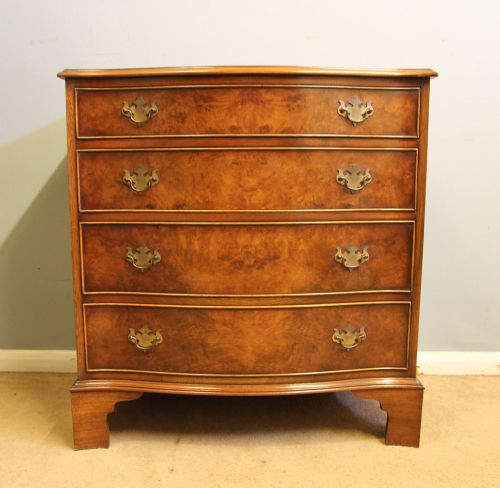
When seeking burr walnut bureau drawers, collectors encounter a range of forms including slope-front writing desks, multi-drawer chests, and pedestal tables originating from various periods. These pieces serve as practical writing surfaces while concealing clever internal compartments for letters and papers.
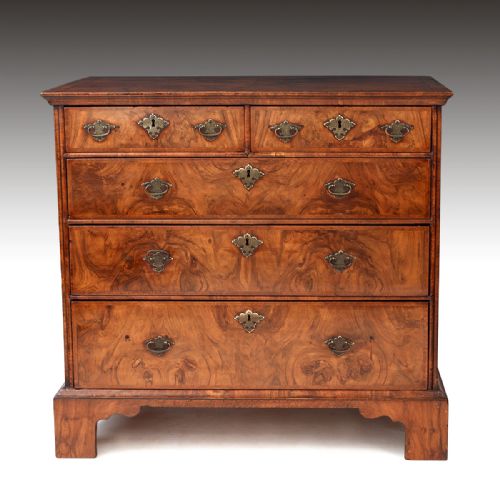
Early examples often display distinctive Queen Anne or George II stylistic traits, such as bracket feet and herringbone banding. Later Edwardian and vintage iterations adapt these traditional silhouettes for more compact domestic spaces while retaining the characteristic mottled grain.
Materials and construction methods
Cabinet makers utilised fine burr walnut veneers applied over secondary timbers such as oak or pine, creating rich and swirling decorative patterns across the primary surfaces. Solid walnut framing and cockbeading provided structural stability around the moving drawer fronts and fall-front writing flaps.
Brass was commonly employed for drop handles, escutcheons, and hinges, offering a crisp metallic contrast to the dark, warm tones of the timber. Selected writing surfaces incorporated fitted leather inserts to provide a durable and tactile platform for correspondence.
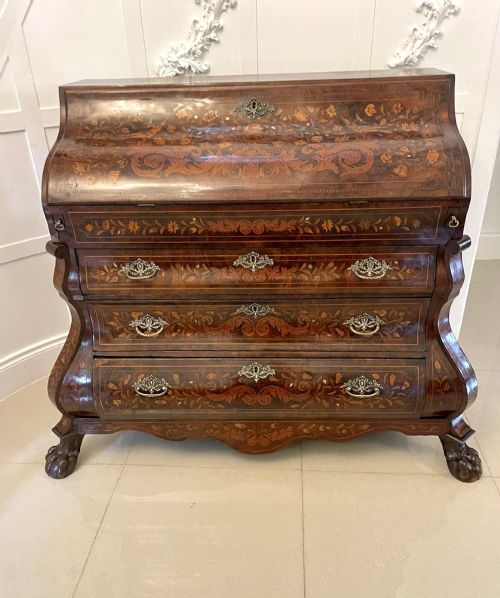
Advanced techniques such as floral marquetry and floral inlay appear on select continental and English pieces, adding intricate floral motifs directly into the burr veneer. Dovetail joints secured the drawer construction, ensuring longevity through centuries of daily use.
Many antique bureaux feature secret sliding compartments hidden behind pigeonholes, designed for stashing love letters and small family heirlooms.
Judging the quality of furniture
The depth and movement of the burr walnut grain dictate much of the visual impact, with tighter, more symmetrical swirls commanding greater admiration than sparse figuring. Originality of the surface finish and the preservation of the timber's natural patina remain critical to an piece's integrity.
Joinery execution separates standard workshop production from finer cabinet work, evident in the tightness of the dovetails and the precise alignment of drawer fronts. The presence of period-appropriate brass hardware and undamaged internal pigeonholes further distinguishes superior examples.
Proportion and stylistic cohesion influence how successfully a piece sits within an interior, particularly when comparing eighteenth-century originals to later revival interpretations. The smoothness of operation in drop-front desks and sliding writing surfaces reflects the underlying skill of the original maker.
The Burr Walnut Bureau Drawers Glossary
- Burr walnut
- A wood harvested from walnut tree growths, producing highly figured, swirling grain patterns that are sliced into decorative veneers. This material is prized for its organic, cloud-like visual texture.
- Bureau
- A writing desk featuring a sloping hinged lid that opens to reveal internal compartments and small drawers. It combines storage with a dedicated writing surface.
- Escritoire
- A tall writing cabinet or writing desk fitted with a fall-front flap and multiple internal drawers. These pieces offer substantial vertical storage alongside a fold-down work area.
- Bombe
- A furniture shape characterised by convex, bulging curves on the front and sides. This opulent profile is frequently seen on Dutch and continental baroque pieces.
- Kneehole desk
- A compact desk featuring a central recessed space for the user's legs, flanked by pedestals of small drawers. They provide organised storage beneath a convenient writing top.
Burr Walnut Bureau Drawers: Frequently Asked Questions
What is a burr walnut bureau?
A burr walnut bureau is a writing desk featuring a sloping front flap that lowers to form a writing surface. Inside, it typically contains small pigeonholes and secret compartments for correspondence.
The exterior showcases decorative burr walnut veneer, harvested from irregular tree growths to create intricate patterns. These pieces function as both practical writing stations and statement storage items.
How do I date a walnut desk?
Dating a walnut desk involves examining construction methods, timber thickness, and hardware styles. Eighteenth-century pieces often feature hand-cut dovetails and solid oak drawer linings.
Stylistic markers like bracket feet, herringbone banding, and brass bat-wing handles point towards the Georgian era. Later Victorian and Edwardian revivals tend to utilise machine-sawn elements and different secondary woods.
Where should I place a bureau?
A bureau suits living rooms, studies, or bedrooms where its fold-down flap can be easily opened without blocking pathways. Because the back is often finished plainly, placing it flat against a wall works best.
Keep the timber away from direct sunlight and heat sources to prevent the burr veneer from drying out or warping over time.