



Vintage Walnut Secretaire
These vintage walnut secretaire pieces combine concealed writing surfaces with fine timber, offering a practical workspace wrapped in cabinetry.
Vintage Walnut Secretaire
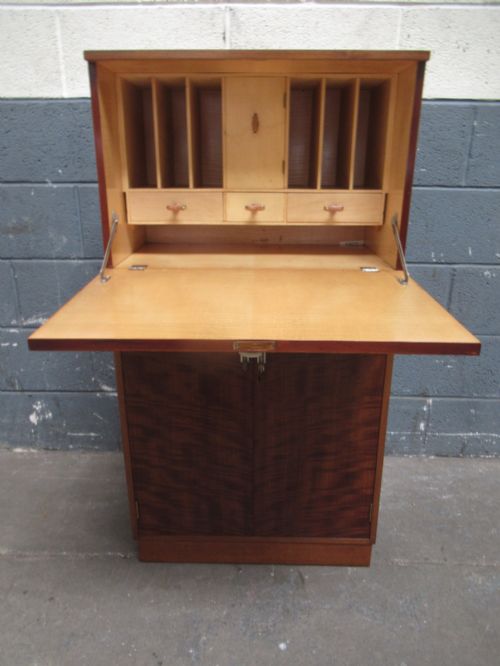
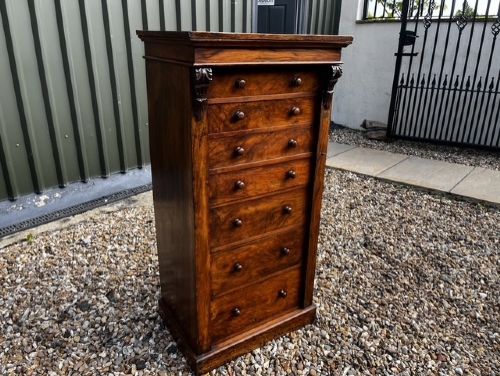
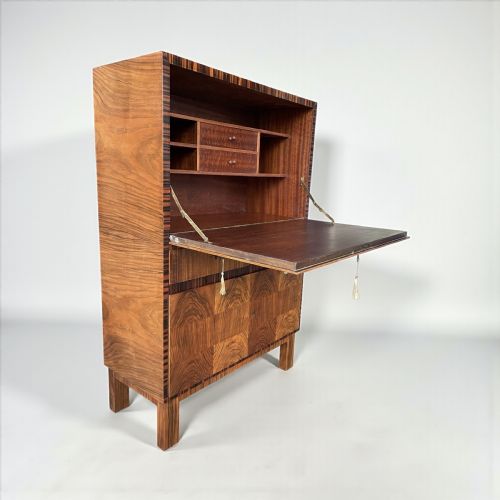
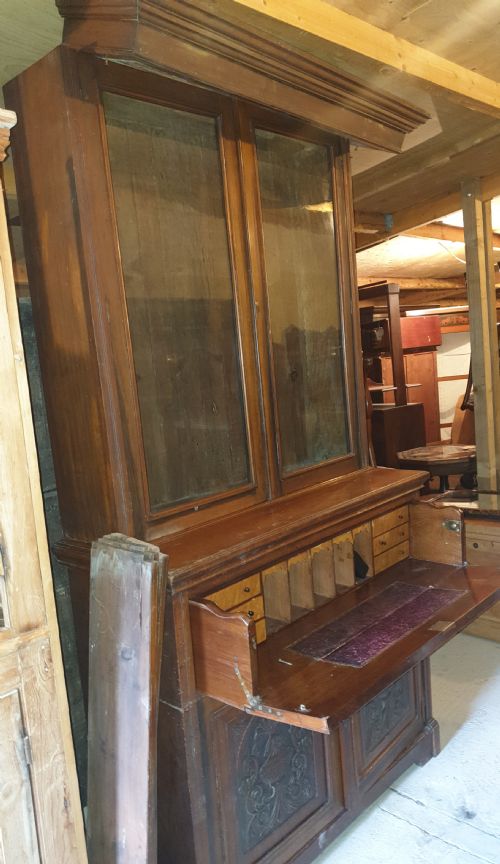
A vintage walnut secretaire is a cabinet or chest containing a drop-down or sliding writing surface that conceals fitted drawers and pigeonholes. Buyers searching for this phrase encounter various forms, including tall Wellington chests, compact Art Deco desks, and substantial Georgian bureau cabinets.
The selection ranges across several periods, stretching from mid-eighteenth century Dutch Baroque examples to early twentieth century Edwardian and Art Deco designs. Pieces appear in distinct regional flavours, encompassing English gentleman's bureaux alongside French secretaire a abattant models.
Smaller formats also emerge within the listings, such as nineteenth century miniature apprentice cabinets. These diverse iterations share the defining characteristic of a primary walnut carcass housing a concealed writing compartment.
How they were made
Cabinet makers utilised walnut timber, often applied as fine veneers over secondary woods to create decorative grain patterns on the exterior surfaces. Inlays of satinwood and floral marquetry frequently decorate the facades, adding contrast and visual depth to the dark timber.
Interior fittings incorporate secondary hardwoods like fruitwood alongside functional hardware such as brass handles and hinges. Writing surfaces often feature lined inserts of baize to provide a smooth plane for correspondence.
Listings span periods from the mid eighteenth century to the mid twentieth century, incorporating walnut, satinwood, fruitwood, and brass.
What varies in quality
The sophistication of the internal stationery compartments and the precision of the exterior veneer matching separate basic utility models from masterworks. Elaborate floral marquetry and well-executed Dutch Baroque or French Rococo revival carving elevate the visual ambition of a piece.
Structural integrity depends on the stability of the walnut timber and the smooth operation of the drop-front mechanism or tambour doors. Superior examples display seamless movement in the internal drawers and careful selection of figured grain across the primary surfaces.
The Vintage Walnut Secretaire Glossary
- Secretaire
- A piece of furniture containing a writing drawer or fold-down writing flap. This mechanism conceals internal compartments for papers and ink.
- Marquetry
- Decorative veneer work arranged in pictorial patterns using various coloured woods. Craftsmen cut thin pieces of timber to form floral or geometric designs.
- Bureaux
- The plural form of bureau, denoting a desk with a sloping lid or a chest of drawers with a writing compartment. These forms appear frequently in Georgian and Art Deco designs.
- Baize
- A coarse woolen material resembling felt, traditionally used to line writing surfaces and desk tops. It provides a soft, durable pad for writing.
- Tambour
- A sliding door constructed from narrow vertical strips of wood glued to a canvas backing. This flexible panel runs in tracks to enclose small compartments.
- Wellington chest
- A tall, narrow chest of drawers secured by a locking side pilaster bar. Victorian makers often adapted this form to incorporate a secretaire drawer.
Vintage Walnut Secretaire: Frequently Asked Questions
What is a secretaire a abattant?
A secretaire a abattant is a tall upright cabinet featuring a vertical drop-front flap that opens to reveal a writing surface and pigeonholes.
This French form keeps correspondence neatly enclosed when not in use, maintaining a formal silhouette in a room.
How do I care for walnut veneer?
Walnut furniture requires stable room humidity and protection from direct sunlight to prevent the veneer from drying or fading.
Regular dusting with a soft cloth and occasional gentle waxing maintain the lustre of the timber without damaging the polish.
Are these desks suitable for daily work?
Many of these pieces offer functional writing heights and internal compartments sized for modern stationery and laptops.
However, users should check the depth and weight capacity of the fold-down flap before committing to heavy daily computer use.
How do I distinguish Georgian from Victorian walnut?
Georgian pieces generally exhibit simpler, robust proportions with understated walnut figuring and traditional bracket feet.
Victorian and revival examples often display heavier ornamentation, darker finishes, and more elaborate marquetry or hardware.