

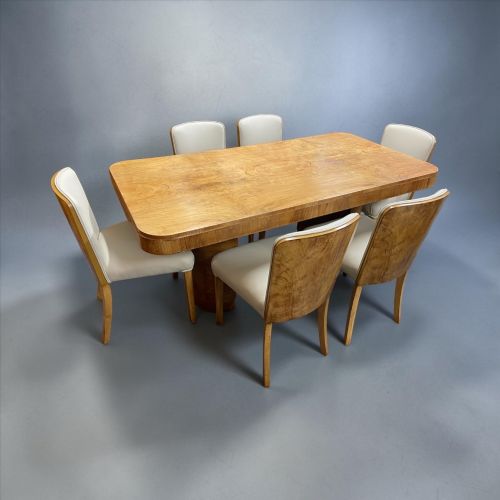


Vintage Walnut Dining Suite
A vintage walnut dining suite brings deep timber grain and striking period forms to the centre of the home.
Vintage Walnut Dining Suite
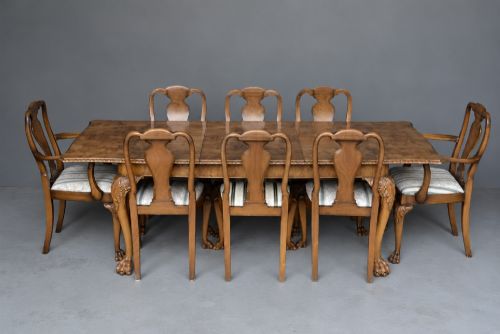
A vintage walnut dining suite consists of a matching dining table and accompanying chairs designed to furnish a complete dining room. When searching for a vintage walnut dining suite, buyers encounter combinations of tables with six or eight chairs, alongside related salon and drawing room seating.
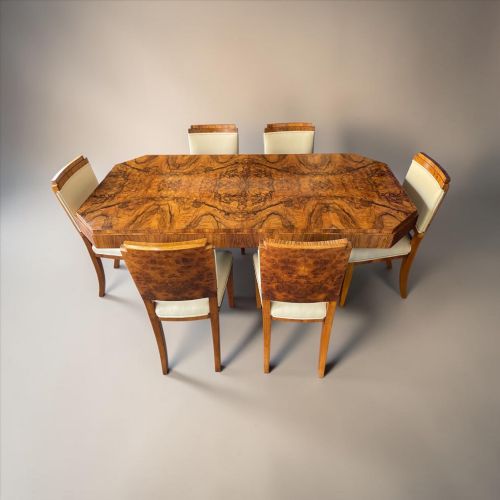
The pieces on offer span the Edwardian period through to the 1920s and 1930s, encompassing distinct stylistic movements. Edwardian iterations sit alongside robust Queen Anne style and Queen Anne revival sets, as well as striking Art Deco designs.
Origins vary across these dining room sets, with English production sitting alongside examples from America and specific metropolitan workshops. The configuration typically centres on a timber dining table accompanied by a set of upholstered or wooden chairs.
Materials and construction
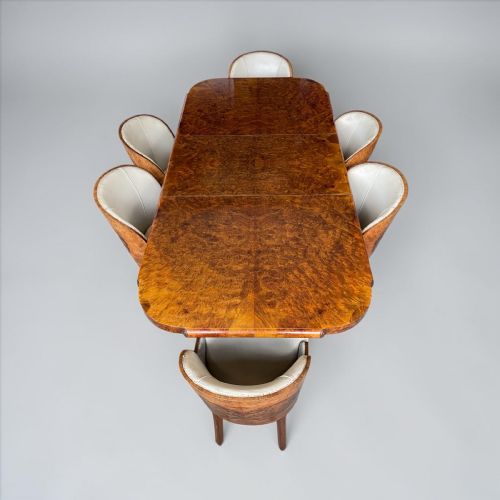
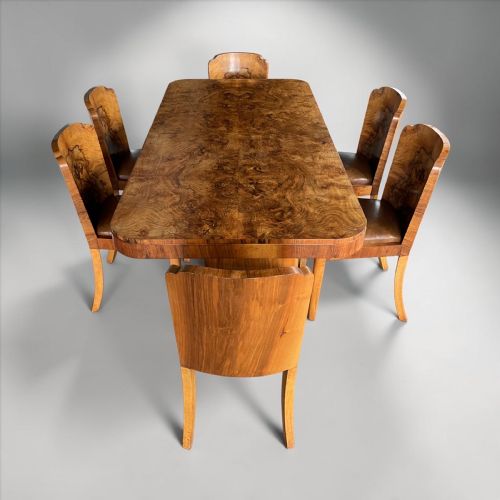
Makers utilised walnut, burr walnut, and black walnut across these dining suites, often selecting burr veneers to create dramatic figuring on table tops and cabinet fronts. Solid timber frames support the core structures of both tables and chairs.
Seating components incorporate various textiles, leather, and traditional upholstery materials to pad the chairs. Wood and timber form the underlying skeletons, while specialist stamping sometimes marks the origin of the workshop.
Vintage Walnut Dining Suite Retail Price Guide 2026
Typical asking prices for vintage walnut dining suite among the pieces listed under this phrase on Sellingantiques today, from the lower quarter to the upper quarter. They describe what is for sale here now, not the wider market.
Listings span three distinct eras: Edwardian, the 1920s, and the 1930s, incorporating Art Deco and Queen Anne styles.
Factors that define quality
The calibre of a vintage walnut dining suite rests upon the selection and matching of burr walnut veneers across the table top and chair backs. Superior examples display continuous grain patterns that flow logically across separate leaves and panels.
Stylistic cohesion and the integrity of the original construction separate standard sets from exceptional ones. Suites bearing maker stamps from notable workshops retain a documented provenance that elevates their standing.
Maurice Adams·Harry and Lou Epstein·Shoolbred·Hille London
The Vintage Walnut Dining Suite Glossary
- Burr walnut
- A prized timber harvested from growth excrescences on walnut trees, yielding highly figured and swirling grain patterns. It is sliced into thin veneers for decorative table tops.
- Art Deco
- A prominent design style from the 1930s characterised by sleek geometric lines, stylised motifs, and modern industrial aesthetics. These suites often feature streamlined silhouettes and contrasting dark woods.
- Queen Anne style
- A traditional design revival featuring cabriole legs, pad feet, and graceful curved lines derived from early eighteenth-century furniture. Sets in this style emulate classic proportions.
- Edwardian
- A period spanning the early twentieth century prior to the First World War, known for lighter and more refined interpretations of earlier historical revivals. Edwardian suites often employ traditional English walnut timber.
- Upholstery
- The padded textile or leather covering applied to chair seats and backs for comfort. Original coverings provide historical context to the piece.
Vintage Walnut Dining Suite: Frequently Asked Questions
How many chairs usually come with a vintage walnut dining suite?
Most suites include a central dining table accompanied by either six or eight matching chairs. Some smaller sets feature five chairs or expand to seat larger gatherings.
Buyers should verify the exact chair count listed with each set to ensure it meets their seating requirements.
What periods do these walnut dining suites date from?
The available suites primarily date from the Edwardian era, the 1920s, and the 1930s. This timeframe covers both traditional revival designs and sleek Art Deco pieces.
Stylistic cues such as cabriole legs or geometric lines help identify the specific era of manufacture.
Are these dining suites made from solid walnut?
Many pieces combine solid wood frames with decorative walnut and burr walnut veneers applied to visible surfaces. This technique allowed craftsmen to display striking grain patterns on large areas like table tops.
Underpinning timber provides structural integrity while the exterior showcases the figured walnut.
How do I care for a vintage walnut dining table?
Protect the walnut surface from excessive moisture and direct sunlight to preserve the timber and veneer. Regular dusting with a soft cloth maintains the finish without harsh chemical polishes.
Using heat-resistant mats during meals prevents accidental damage to the historical polish.