



Carved Walnut Table Chairs
These carved walnut table chairs bring rich timber and centuries of craft to dining rooms and dressing spaces.
Carved Walnut Table Chairs
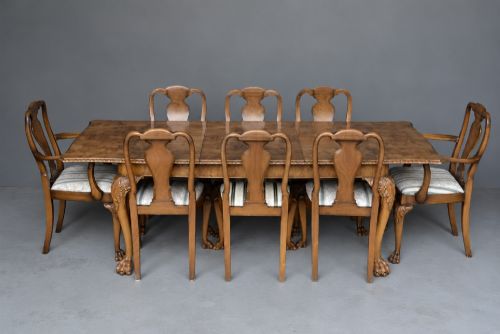
Carved walnut table chairs comprise dining sets, side chairs, and dressing pieces shaped from dark timber across the nineteenth and early twentieth centuries. These seating forms range from substantial Victorian dining chairs to Edwardian suites and intimate dressing table stools.
The most common examples encountered here are Victorian and Edwardian dining chairs alongside smaller nineteenth century stools featuring carved wooden frames. Pieces often arrive grouped as larger dining room sets or paired as side chairs and vanity seats.
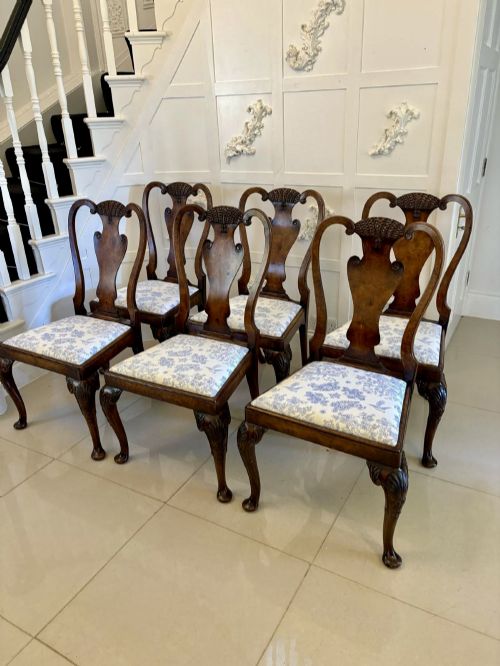
Makers drew upon historical revivals, producing Queen Anne style cabriole legs, French Rococo curves, and later Art Deco geometric lines. Walnut timber dominates the construction, frequently paired with contemporary or period upholstery fabrics.
How they were made
Cabinet makers utilised solid walnut and burr walnut veneers, shaping frames with hand-carved details and decorative flourishes. Turning lathes produced twisted rope legs while joinery techniques secured structural stability across chairs and stools.
Upholstery involved traditional stuffing and springs covered in textiles such as damask, wool, needle point, and modern fabric replacements. Brass fittings and original maker stamps occasionally marked the finished seating.
Carved Walnut Table Chairs Retail Price Guide 2026
Typical asking prices for carved walnut table chairs among the pieces listed under this phrase on Sellingantiques today, from the lower quarter to the upper quarter. They describe what is for sale here now, not the wider market.
Some stools double as music seats, hiding mechanisms beneath needle point tops so pianists could twist up and down.
What varies in quality
Quality rests upon the depth and crispness of the hand carving across the walnut frame, where sharper execution distinguishes superior pieces. The choice between plain walnut and highly figured burr walnut alters the visual presence of the timber.
Structural integrity of the joints and the authenticity of period upholstery materials define the grade of each chair. Retaining original maker stamps or cohesive matching sets elevates the standing of dining suites and individual seats alike.
Hille London
The Carved Walnut Table Chairs Glossary
- Burr walnut
- A prized timber cut from tree growths displaying intricate, swirling grain patterns. It adds rich texture to table tops and chair backs.
- Cabriole leg
- A furniture leg featuring a double curve, typically arching outward and tapering inward to a pad or scroll foot. This form characterises Queen Anne revival pieces.
- Balloon back
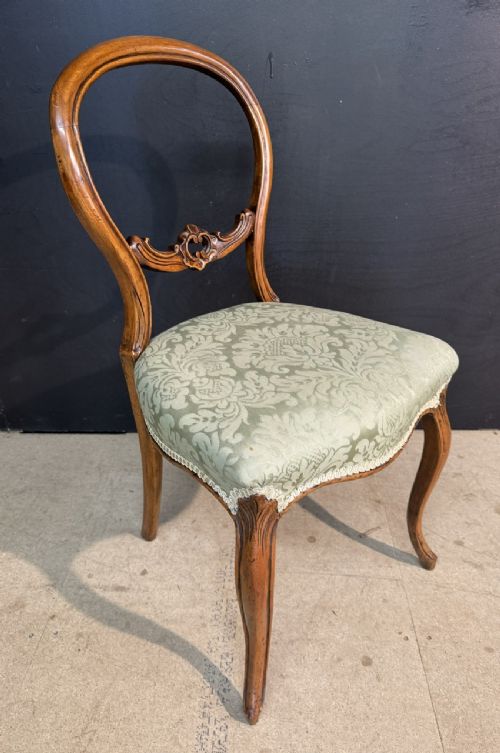
- A rounded chair back resembling the shape of a balloon, popular during the Victorian era for nursing and side chairs. It offers ergonomic support through curved timber.
- Needle point
- A type of counted thread embroidery stitched onto canvas, frequently utilised for historic stool and chair seat covers. It introduces colourful patterns to wooden frames.
- Rise and fall
- A mechanical mechanism allowing piano stools and dressing seats to adjust in height via a revolving screw action. This permits seated users to alter their elevation.
Carved Walnut Table Chairs: Frequently Asked Questions
What periods do these chairs cover?
The listings span from the nineteenth century through the Victorian and Edwardian eras up to nineteen thirty. This encompasses diverse revival styles alongside art deco design.
Buyers encounter pieces from eighteen fifty onward, reflecting shifting aesthetic preferences across British and continental workshops.
How do I distinguish dining chairs from vanity stools?
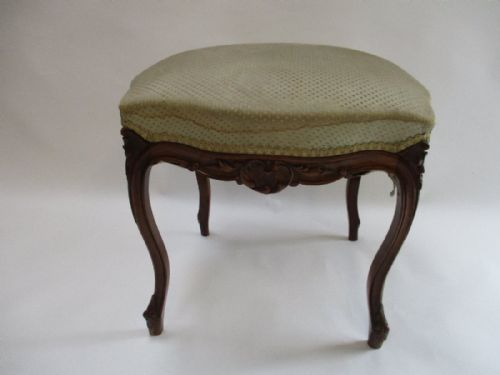
Dining chairs feature tall upright backs designed for seated support around a table. Stools lack backs entirely and are scaled lower for dressing tables or piano use.
Stools often incorporate upholstered tops or needle point covers, whereas dining chairs focus on carved wooden frames and upholstered seats.
How should I care for walnut timber?
Walnut benefits from occasional polishing with suitable wax to nourish the grain and protect the surface. Avoid placing furniture in direct sunlight or near heat sources to prevent timber cracking.
Gentle dusting with a soft cloth preserves the carved details without abrasive wear.
Can these chairs be used daily?
Sturdy nineteenth century construction allows for regular daily use provided joints remain secure. Periodic inspection ensures frames stay stable under weight.
Upholstered components can be renewed with fresh fabric while retaining the antique wooden core.