
Vintage Wall Mounted Hooks
These vintage wall mounted hooks offer practical hanging solutions, spanning Victorian, Edwardian, and Art Deco periods across oak, brass, and wrought iron.
Vintage Wall Mounted Hooks
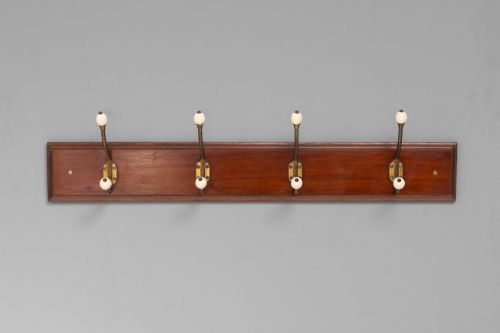
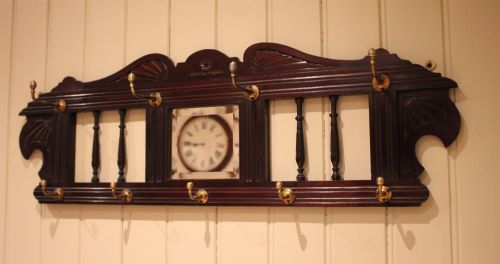
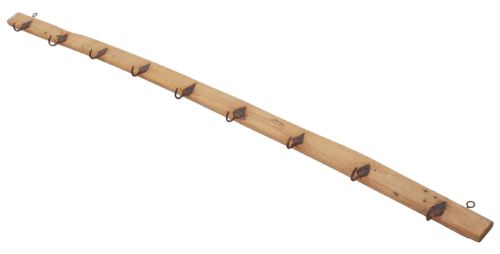
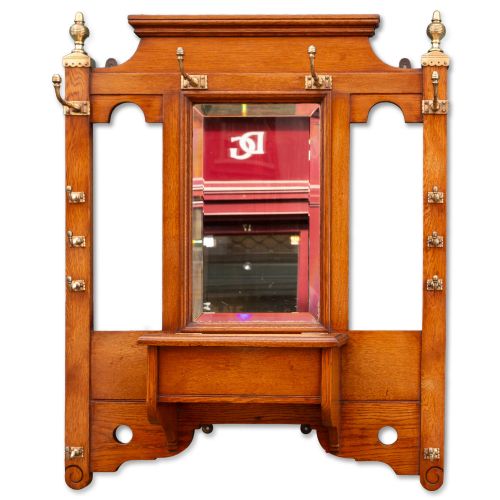
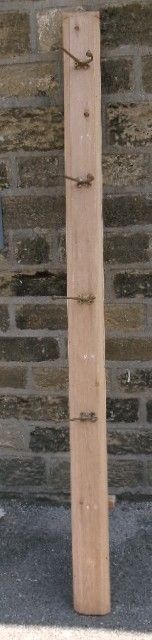
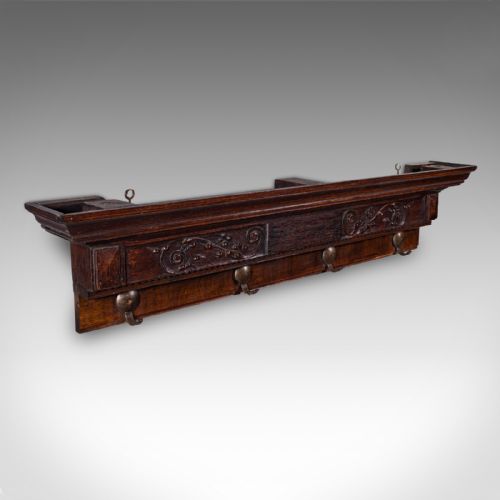
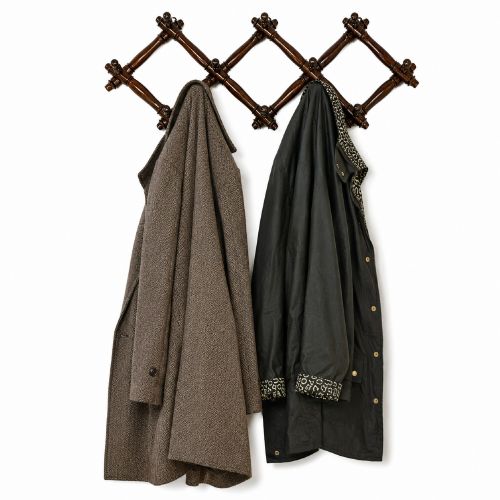
When searching for vintage wall mounted hooks, buyers encounter a range of functional hardware and mounted rails designed for hallways, cloakrooms, and kitchens. The selection on this page centres on coat racks, individual wall hooks, key racks, and combination hat and coat stands.
The material origins trace through Victorian, Edwardian, and Art Deco periods, alongside French country and bistro styles. Backboards appear in oak, mahogany, pine, and ebonised wood, supporting brass, ceramic, iron, or bronze hooks.
How they were made
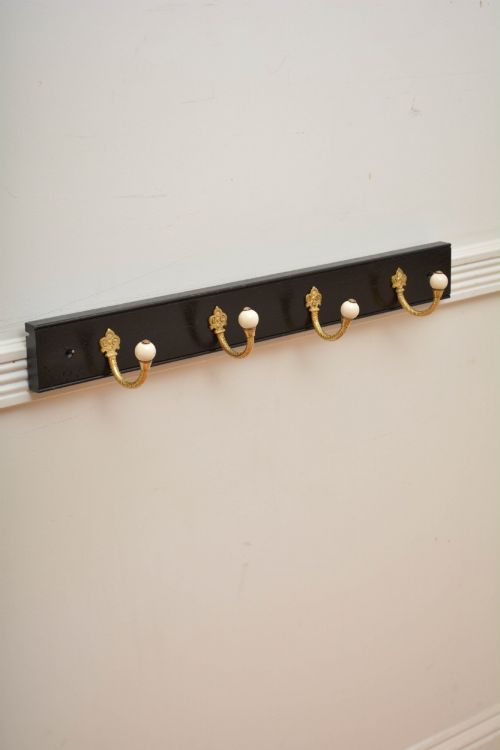
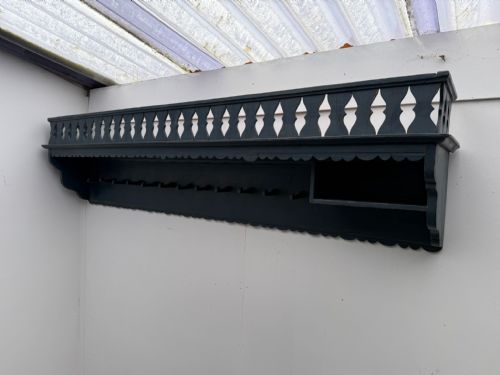
Makers utilised solid timbers such as mahogany, oak, and walnut for backboards and shields, frequently employing ebonising or painting techniques for surface finish. Mounting plates and hooks relied on cast brass, bronze, iron, and nickel plating.
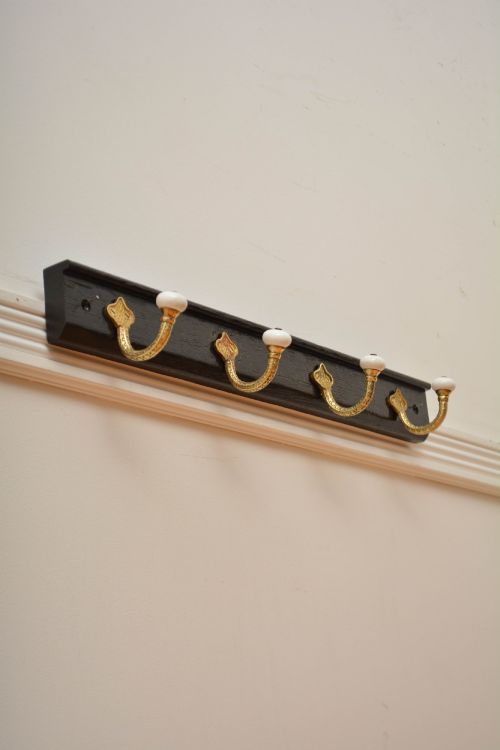
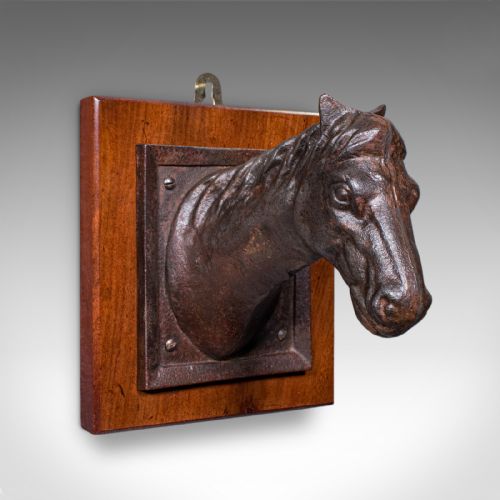
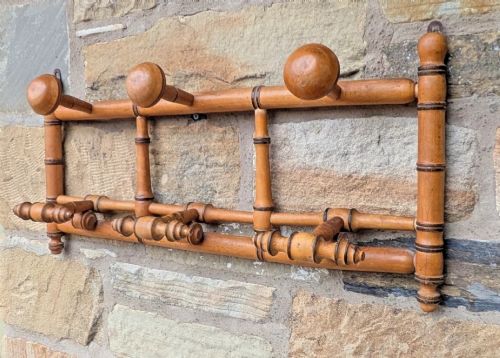
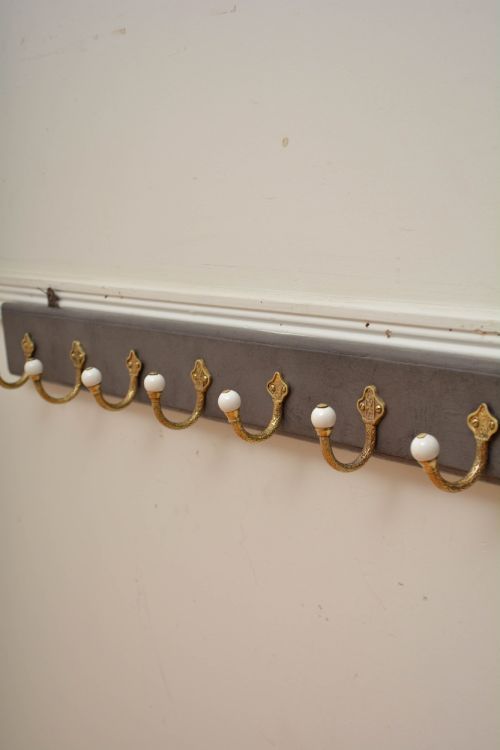
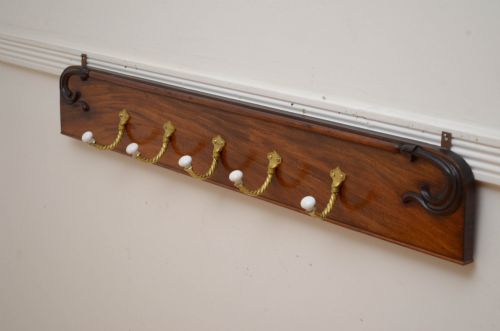
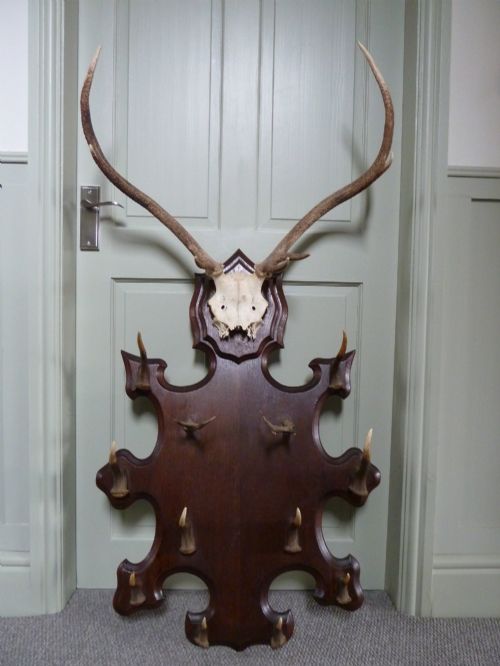
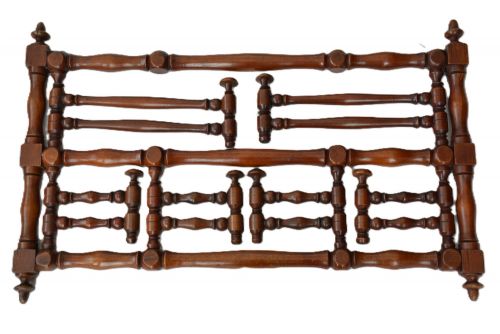
Detailing includes twisted rope carvings, faux bamboo turns, and ceramic inserts set within cast metal hooks. Wrought iron and natural horn also appear among the structural forms.
Listings feature materials spanning brass, glass, oak, mahogany, wood, ceramic, metal, and wrought iron across multiple decades.
What varies in quality
Quality differentiates through the weight and casting depth of the brass or bronze hooks and the selection of timber for the backboard. Solid hardwoods like oak and mahogany with substantial, well-cast mounting plates sit above simpler pine constructions.
The integration of materials, such as fitted ceramic centres within cast brass frames and original mounting hardware, dictates the standard of the piece.
The Vintage Wall Mounted Hooks Glossary
- Backboard
- The wooden rail or panel upon which individual hooks are mounted. It attaches directly to the wall.
- Ebonised
- Wood treated with a dark finish to imitate ebony. This treatment appears frequently on Victorian oak and pine pieces.
- Portmanteau
- A combined hall fixture featuring hooks, a shelf, and often a mirror. These units served reception areas for hats, coats, and accessories.
- Aesthetic Movement
- A late nineteenth-century design style focusing on visual and material quality. Pieces from this movement utilise contrasting brass and dark wood.
Vintage Wall Mounted Hooks: Frequently Asked Questions
How do I mount a wooden coat rack?
Wooden coat racks utilise pre-drilled screw holes or metal mounting plates positioned along the backboard. Fixings must align with wall studs or utilise appropriate wall plugs to support heavy garments.
Distributing weight evenly across multiple hooks prevents strain on the timber and fixings during daily use.
What is the difference between Victorian and Art Deco hooks?
Victorian hooks typically feature ornate cast brass, ceramic centres, and dark hardwoods like mahogany or ebonised oak. They emphasise decorative detail and traditional craft.
Art Deco examples introduce geometric lines, nickel plating, and wrought iron, reflecting early twentieth-century industrial design shifts.
Are these hooks suitable for modern bathrooms?
Many brass, bronze, and chromed metal hooks adapt well to damp environments such as bathrooms. Consideration should be given to the backing timber to ensure moisture resistance.
Unsealed pine or antique woods require careful placement away from direct water contact to preserve the finish.
How do I identify an Edwardian coat rack?
Edwardian pieces often feature lighter golden oak or polished pine backboards paired with simple brass or iron double hooks. The style prioritises domestic utility in reception halls and cloakrooms.
Construction dates around the turn of the twentieth century, bridging Victorian heaviness and later modernist forms.