
Hallway Wall Hook Rack
A hallway wall hook rack organises coats and hats while setting the domestic tone the moment anyone steps inside.
Hallway Wall Hook Rack
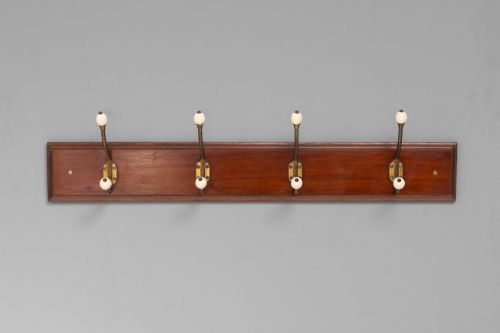
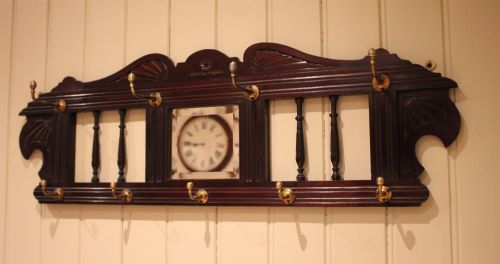
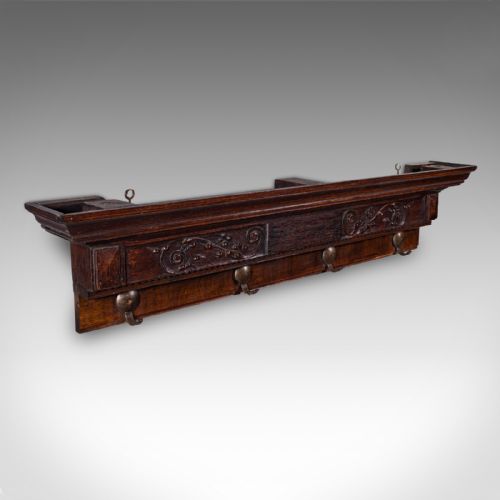
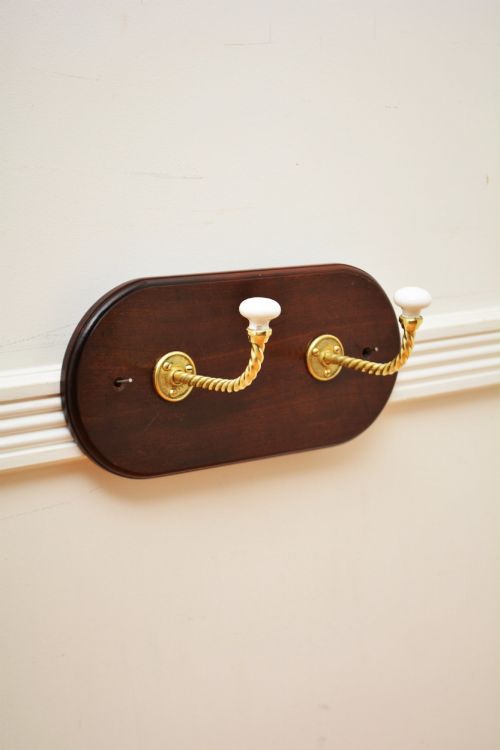
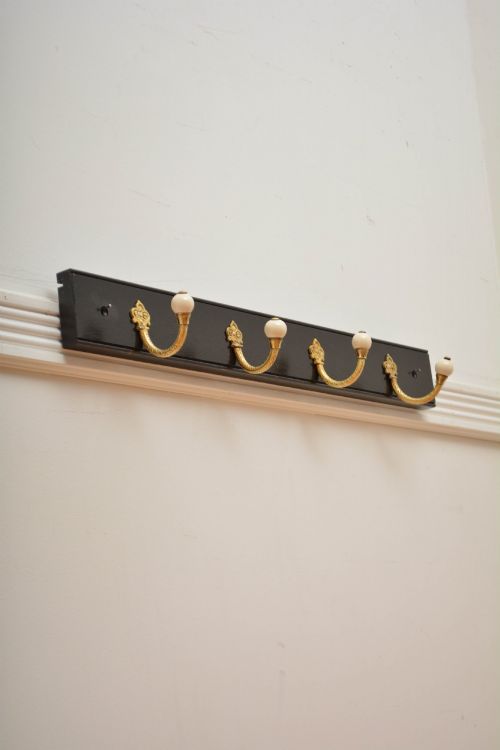
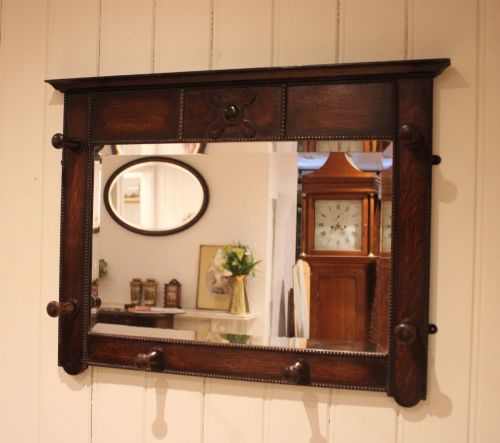
A hallway wall hook rack combines structural timber backboards with metal or ceramic hooks designed for everyday entryways and cloakrooms. These pieces range from simple wooden strips fitted with brass hooks to more complex arrangements incorporating mirrors, key boards, and shelf brackets.
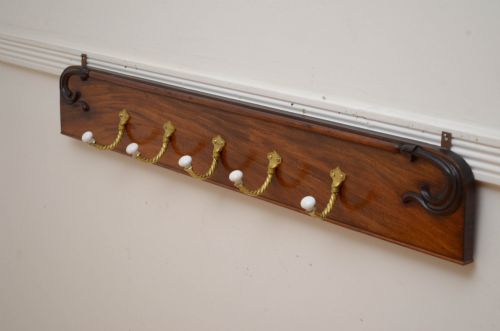
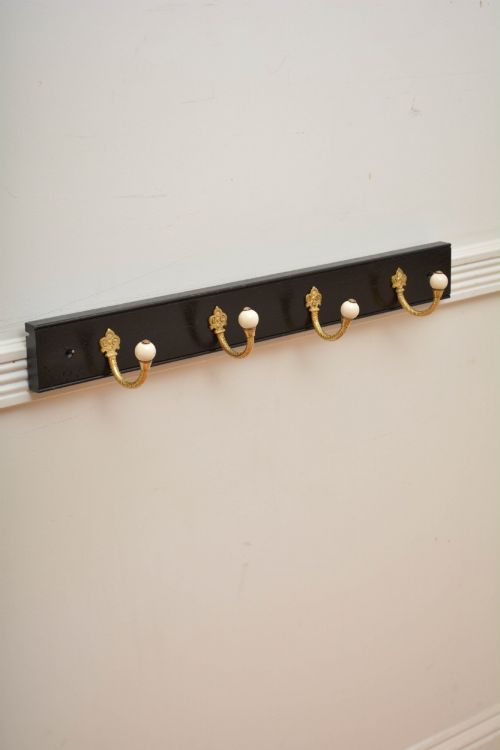
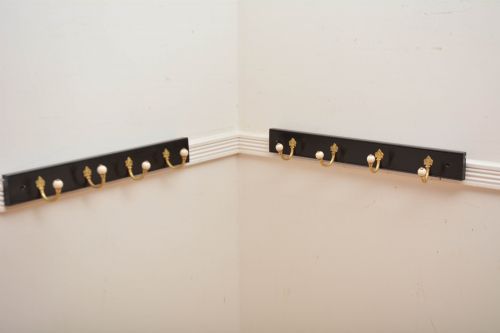
The versions most commonly met on this page belong to the Victorian and Edwardian periods, utilising solid timbers like mahogany, oak, and pine. Many incorporate cast brass, porcelain knobs, and ceramic elements to secure garments safely.
Formations extend from compact pairs of hooks to long cloakroom valets, French provincial brackets, and combined hall mirrors with integrated storage. Each piece reflects the functional requirements of domestic receptions from the nineteenth and early twentieth centuries.
Materials and Construction
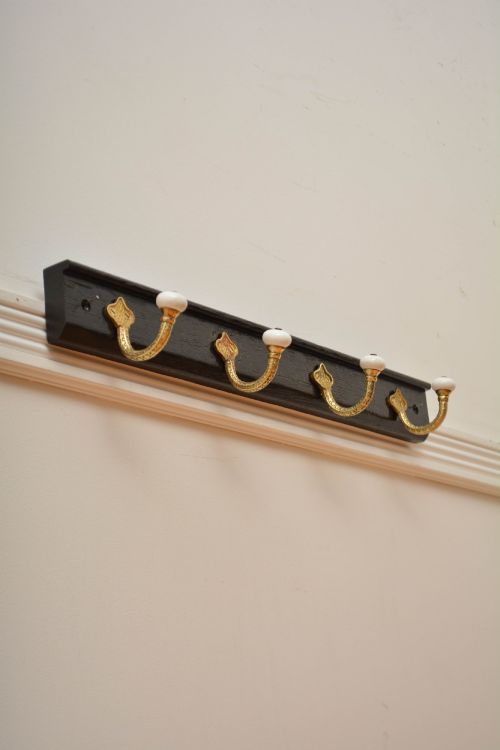
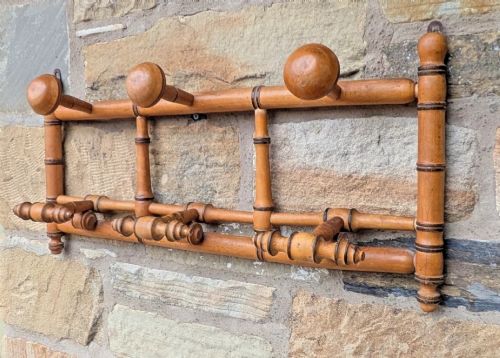
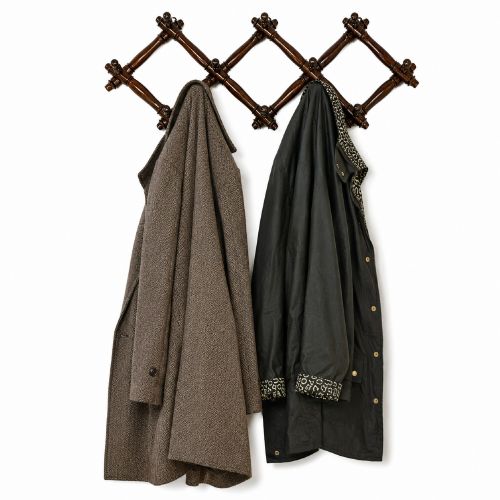
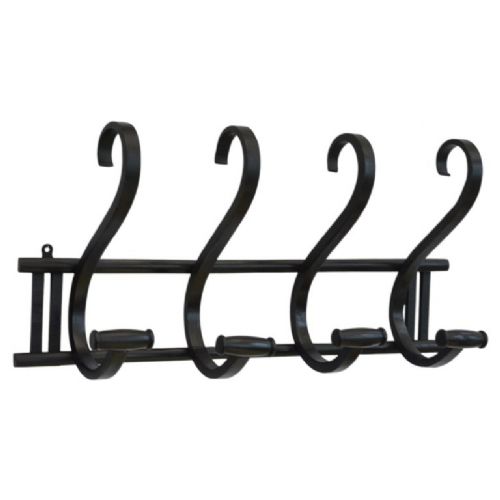
Makers constructed these racks using dense hardwoods like mahogany and oak alongside softer backboards of pine and beech, occasionally employing ebonising or simulated bamboo techniques for decorative effect. Bentwood methods also shaped pliable timber into rounded coat brackets.
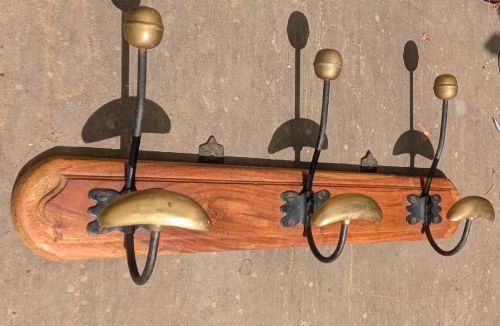
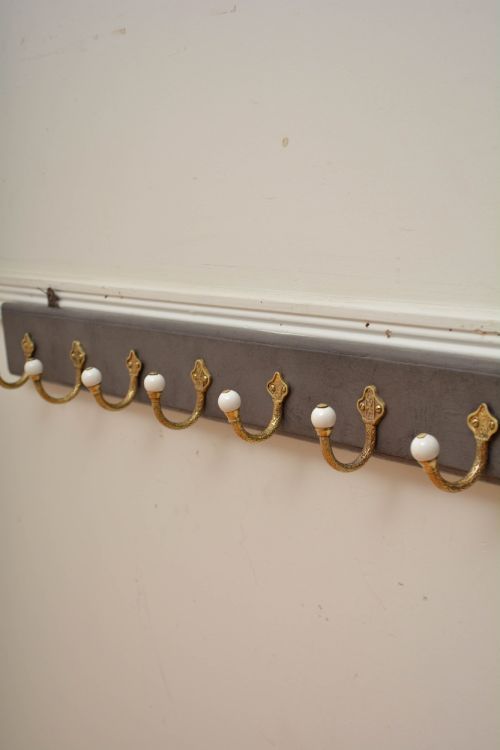
Hardware typically involved cast brass, bronze, and iron fixed directly to the wooden backboards, often paired with ceramic or porcelain hook tips to prevent garment damage. Screwed mounts and shaped mounting plates secured the entire assembly firmly to domestic walls.
Hotel reception key boards offer an unexpected alternative to standard coat hooks for sorting daily mail and keys.
Markers of Quality
Quality rests in the substance of the mounting board and the weight of the metalwork, where solid mahogany or oak backboards and heavily cast brass hooks outlast simpler pine and stamped sheet alternatives. The integration of original ceramic knobs and deep bevelling in companion mirrors further distinguishes superior examples.
The refinement of the joinery and the execution of details such as chased brass surfaces, twisted rope turnings, or hand-finished ebonising separate standard utility pieces from finer reception furnishings.
The Hallway Wall Hook Rack Glossary
- Ebonised
- Timber treated with a dark finish to imitate the appearance of ebony. This dark staining was common on Victorian hardware backboards.
- Bentwood
- Wood heated and bent into curved shapes utilising steam techniques. This method created rounded hooks and frames popular around the turn of the century.
- Portmanteau
- A large wall-mounted bracket or rack designed for holding hats, coats, and accessories. These often feature elaborate cast brass framework.
- Valet
- A piece of furniture or hardware dedicated to organising daily wear garments. In hallway fittings, this refers to equipped coat and hat arrangements.
- Bevelled
- Glass with an edge cut at an angle to create a decorative frame. This treatment appears frequently on the mirror plates attached to hallway racks.
Hallway Wall Hook Rack: Frequently Asked Questions
How do I hang a heavy wooden coat rack?
Heavy wooden racks require secure fixing directly into wall studs or masonry using appropriate screws and wall plugs. Distributing the weight across multiple fixing points ensures the timber board remains stable under heavy winter coats.
Checking that the mounting holes align with solid wall anchors prevents the rack from pulling loose over years of daily use.
Were these racks meant for homes or public buildings?
Many of these pieces served domestic reception hallways, family cloakrooms, and bedroom entrances. Others originated in hotel reception areas, railway waiting rooms, or large country estate boot rooms.
Commercial examples often feature larger capacities or specific boards for hotel keys and guest checkrooms.
How do I date a Victorian or Edwardian hook rack?
Dating relies upon timber choices, screw types, and stylistic indicators such as brass casting quality and edge moulding profiles. Victorian examples frequently utilise heavier mahogany or ebonised oak with hand-cut screws.
Edwardian and later pieces often introduce lighter oak frames, integrated mirrors, or simpler bentwood construction methods.
Can I use an antique hook rack in a modern hallway?
These racks adapt easily to contemporary hallways, providing practical storage for coats, bags, and dog leads while introducing period character. Their compact wall-mounted profiles suit narrow spaces where floor-standing coat stands take up too much room.
Matching the wood tone to existing door frames or furniture helps integrate the piece smoothly into modern interiors.