


Jacobean Carved Oak Rack
These jacobean carved oak rack pieces are sturdy wall shelves, dressers and stands built for daily utility in solid timber.
Jacobean Carved Oak Rack
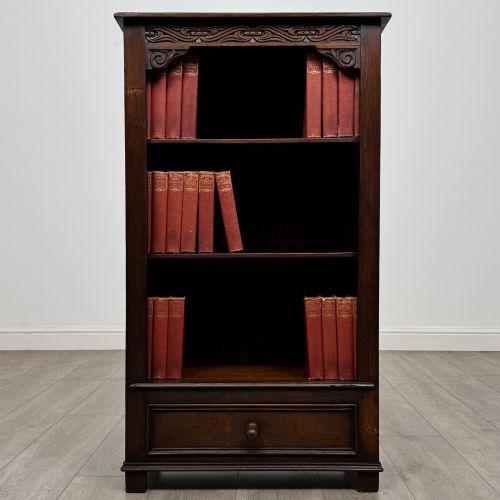
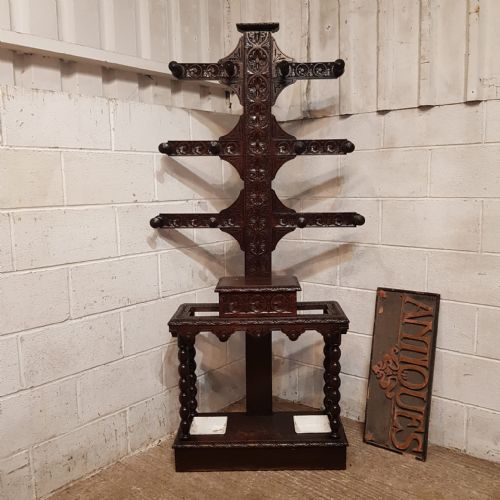
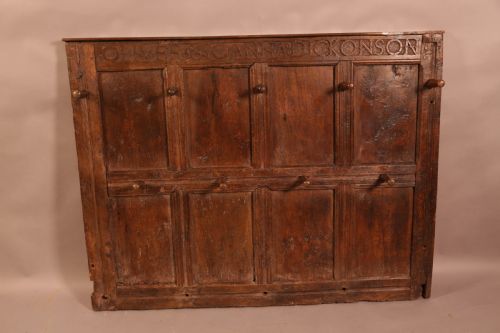
A jacobean carved oak rack brings heavy timber construction and deep relief carving into domestic interiors. The selections on this page span bookcases, hall stands, dressers, and wall-mounted shelves.
Most examples originate from the Victorian and Edwardian revivals of the nineteenth and early twentieth centuries, alongside genuine seventeenth and eighteenth-century survivals. Oak dominates the form, occasionally paired with cane, brass, or iron hooks.
Buyers encounter styles ranging from plain English Country utility to elaborate Jacobean Revival and Renaissance Revival ornamentation. These functional items hold books, coats, umbrellas, and display china.
How they were made
Makers utilised solid oak timbers, joining boards with traditional pegged mortise and tenon joints to bear substantial weight. Surfaces received hand-carved panels, geometric mouldings, and strapwork typical of the Jacobean aesthetic.
Metal components such as brass, iron, and cast metal form the hooks, rails, and umbrella wells attached to the wooden frames. Caning appears in select panels, woven directly into the structural framework to lighten the heavy timber appearance.
Listings span pieces dated from the seventeenth century through the nineteen-thirties, dominated by oak and iron.
What varies in quality
The depth and crispness of the hand carving dictate the aesthetic tier of each piece, distinguishing shallow machine work from sharp chisel execution. Timber selection matters profoundly, with quarter-sawn oak displaying prominent medullary rays that signal superior log conversion.
Structural integrity depends on the original joinery remaining tight without excessive modern intervention or replaced panels. The presence of period brass hardware and intact iron or cast metal fittings preserves the original character.
The Jacobean Carved Oak Rack Glossary
- Jacobean Revival
- A nineteenth-century design movement that emulates the dark timber, geometric paneling, and heavy carving of the early seventeenth century. It frequently appears in domestic furniture built during the Victorian and Edwardian eras.
- Mortise and tenon
- A traditional woodworking joint where a protruding tongue fits tightly into a matching cavity to lock two pieces of timber at a right angle. This method provides the primary structural strength in solid oak furniture.
- Medullary rays
- Natural ribbon-like cellular patterns visible across quarter-sawn oak boards that produce a distinct mottled figure. Craftsmen prize this grain pattern for its decorative appeal and stability.
- Strapwork
- A decorative carving motif resembling interlaced bands of leather or flat straps, common in sixteenth and seventeenth-century English woodwork. It often frames panels on dressers and wall shelves.
Jacobean Carved Oak Rack: Frequently Asked Questions
How do I clean a carved oak rack?
Dust the deep relief carvings regularly with a soft-bristled brush to prevent grit accumulation in the crevices. Apply occasional applications of beeswax to nourish the timber without building up sticky layers.
Avoid liquid polishes containing silicone, which can penetrate porous historic wood and damage the finish over time. Keep the timber away from direct heat sources to prevent the oak from splitting.
Are these racks suitable for heavy coats?
Wall-mounted versions and hall stands generally feature robust iron or brass hooks anchored into solid oak backboards. They support heavy garments securely when fastened properly to wall studs.
Verify that the mounting points or structural legs remain sound before loading the rack with winter coats or umbrellas.
How do I tell an original seventeenth-century piece from a revival piece?
Examine the tool marks, timber shrinkage, and joinery methods visible on the reverse and interior surfaces of the oak. Seventeenth-century work displays hand-riven boards and irregular peg placements.
Revival pieces from the Victorian and Edwardian periods often show mechanical saw marks and standardised dimensions despite their antique styling.