

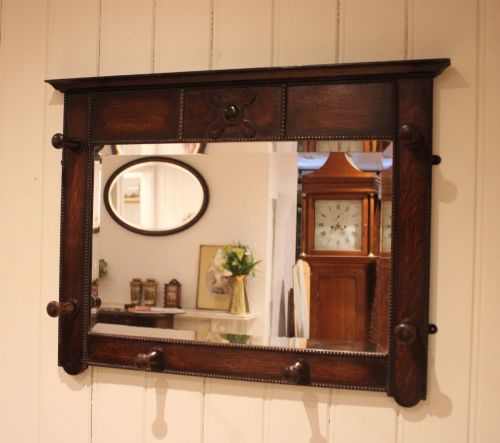
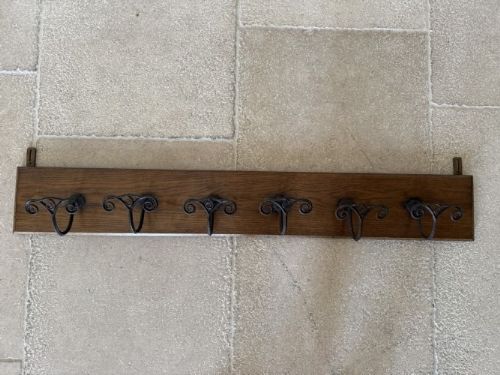


Oak Coat Hooks
Oak coat hooks bring practical timber warmth to an entranceway, offering robust hanging solutions formed in various period styles.
Oak Coat Hooks
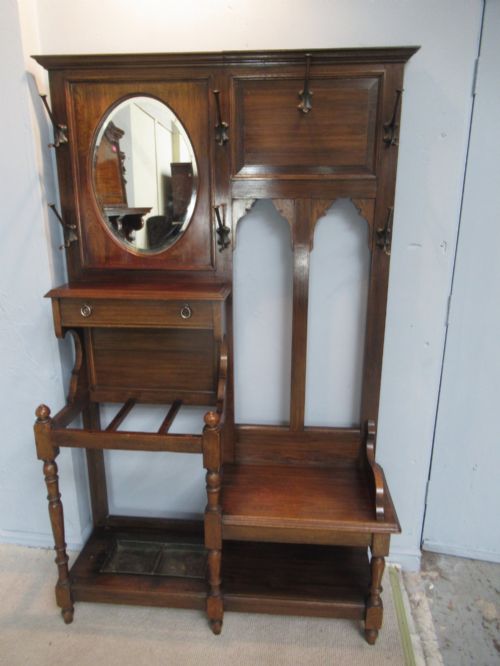
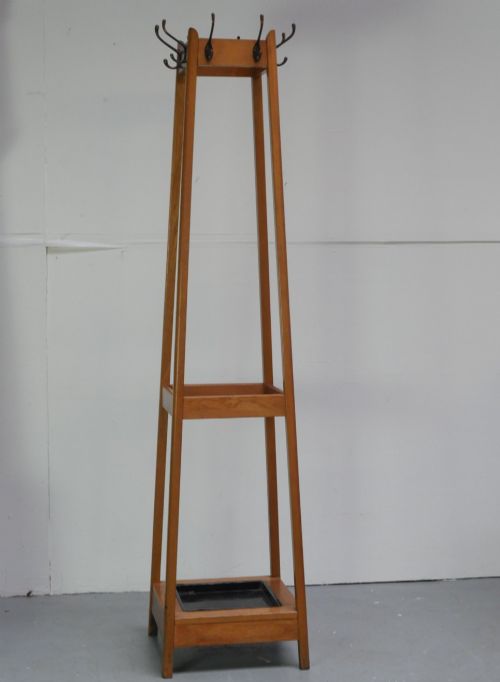
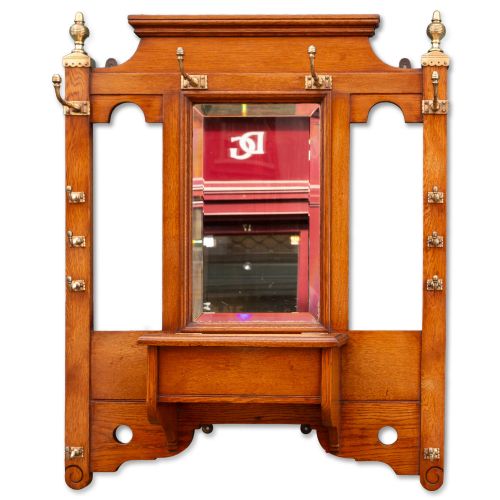
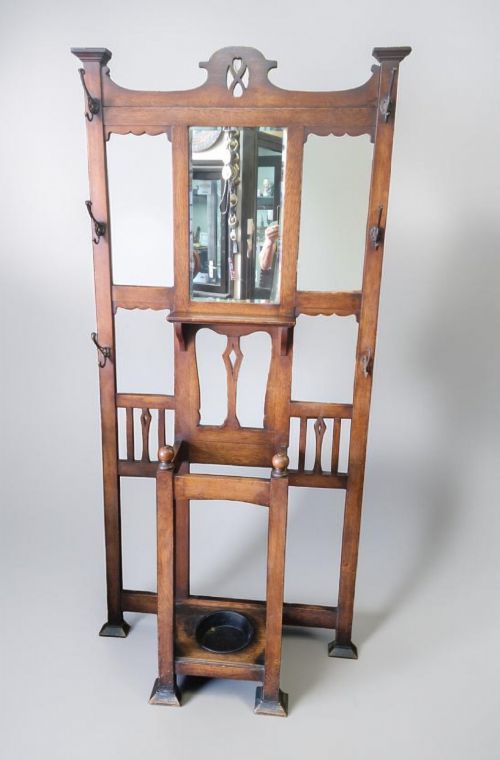
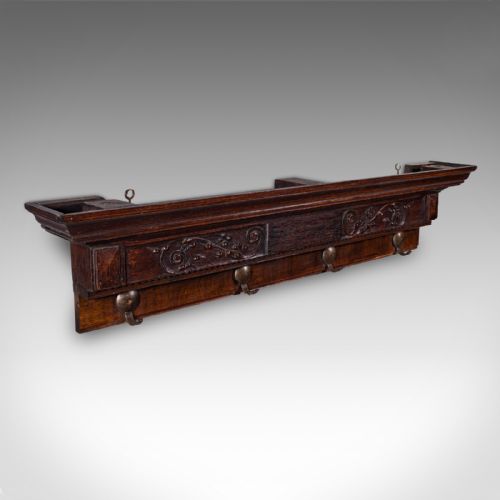
Oak coat hooks encompass wall-mounted racks, hanging strips, and substantial hall stands designed for domestic organisation. These pieces range from simple eighteenth-century timber rails to elaborate Victorian and Edwardian hall stands incorporating mirrors and umbrella compartments.
Wall-mounted variants serve compact hallways, whereas larger architectural hall stands suit spacious vestibules. Many iterations combine practical timber panels with integrated shelving for hats and central looking glasses.
Materials and construction
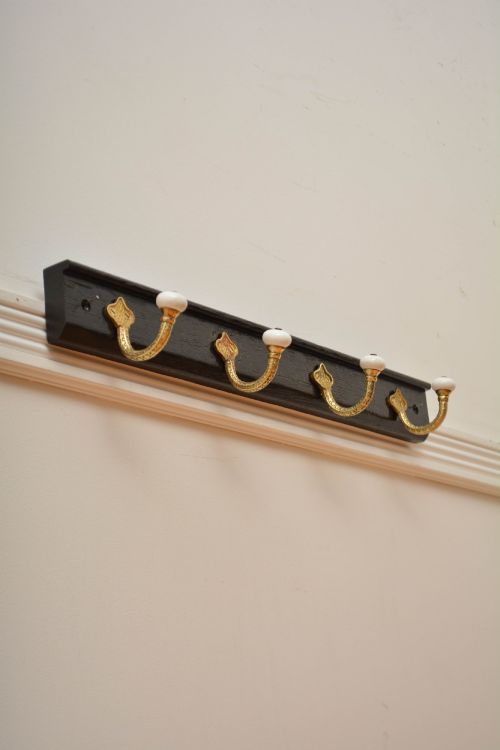
Makers utilised solid oak, often complemented by ebonised finishes or golden tones, providing a durable foundation for daily domestic use. Metal components typically involve cast brass, wrought iron, or steel fixtures screwed securely into the timber backing.
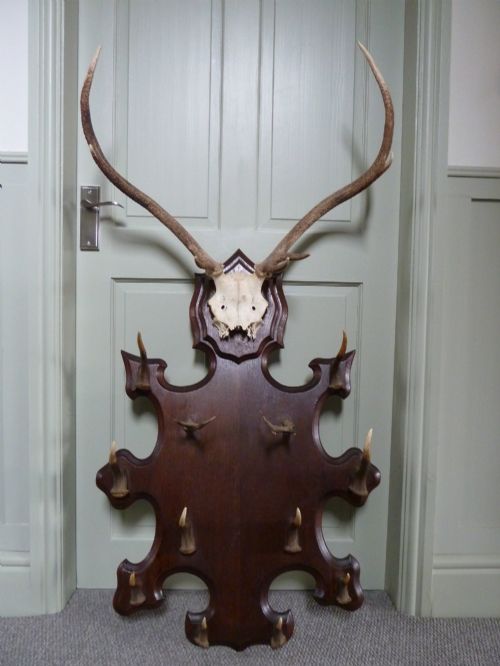
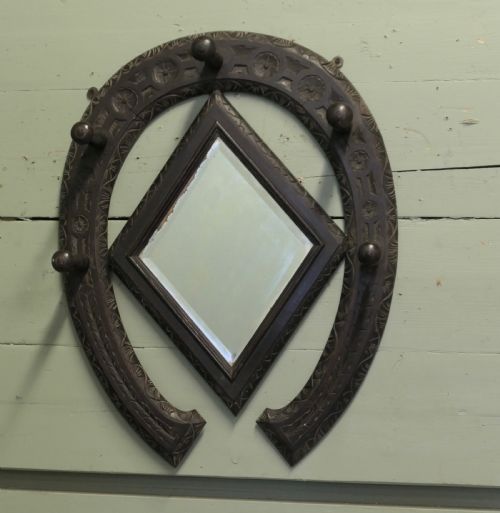
Detailing incorporates carved ornamentation, applied mouldings, and specialist additions such as stags' horns or taxidermy elements. Joinery methods range from pegged joints on earlier eighteenth-century boards to secure bracket mountings on later Victorian and twentieth-century racks.
Some nineteenth-century halls relied on stags' horns and mounted equestrian horse heads to keep coats in check.
Evaluating quality
Quality rests upon the selection of timber, the integrity of the joinery, and the originality of the metal fixtures. Superior examples display dense, well-figured oak boards coupled with substantial, high-grade brass or iron hooks rather than later replacements.
The sophistication of the carving and the integration of functional elements, such as bevelled mirror plates or umbrella trays, separate standard utility pieces from finer decorative works of the Arts and Crafts period.
The Oak Coat Hooks Glossary
- Hall stand
- A large freestanding hall furniture piece combining coat hooks, a mirror, and umbrella stands. These units anchored the entranceways of nineteenth and early twentieth-century homes.
- Ebonised oak
- Timber treated with a dark finish to resemble ebony. This technique gained popularity during the Victorian period for creating high-contrast decorative effects.
- Arts and Crafts
- A design movement prioritising traditional craftsmanship and visible construction methods. Pieces from this style often feature honest timber work and hand-hammered metal fittings.
- Taxidermy mount
- Animal horns or heads integrated into a wooden backplate to function as coat or hat hooks. These items frequently appear in nineteenth-century country house contexts.
- Gothic Revival
- An architectural and decorative style inspired by medieval forms. Such pieces often display pointed arches, tracery, and robust ironwork.
Oak Coat Hooks: Frequently Asked Questions
How do I mount an old oak coat rack safely?
Heavy timber racks require secure fixings into wall studs or solid masonry using appropriate screws and rawlplugs. Given the substantial weight of old oak and metal hardware, proper load distribution prevents wall damage.
Ensuring the mounting points align with internal structural supports maintains stability when hanging heavy winter garments.
Are these coat hooks suitable for modern hallways?
Period oak hooks adapt readily to contemporary interiors, adding textural contrast and practical storage to modern entranceways. Their robust construction handles daily use effectively.
Different formats accommodate various spatial layouts, from narrow wall-mounted strips to freestanding hall stands with integrated mirrors.
What is the difference between a hall stand and a coat rack?
A coat rack is typically a wall-mounted board fitted with hooks, designed primarily for hanging garments and hats in limited spaces.
In contrast, a hall stand is a larger freestanding item that frequently incorporates umbrella wells, walking stick racks, and central looking glasses.
How do I care for antique oak and brass?
Regular dusting with a soft, dry cloth preserves the natural finish of the oak without stripping its historic patina. Avoid liquid polishes that can build up within carved recesses.
Brass hooks benefit from gentle cleaning if desired, though many collectors prefer to leave the aged metallic surface undisturbed.