



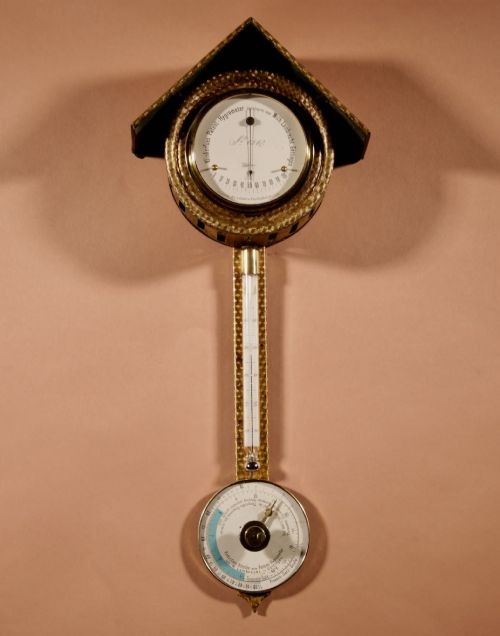

Vintage Wall Instrument
These vintage wall instrument examples range from Georgian stick barometers to Edwardian weather stations, offering functional science housed in period timber.
Vintage Wall Instrument
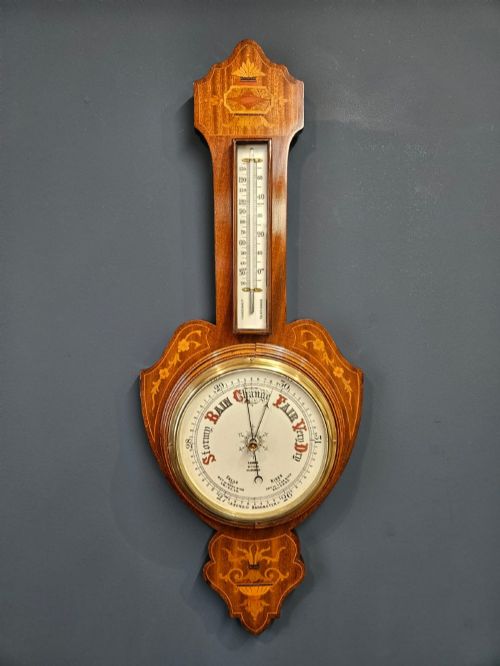
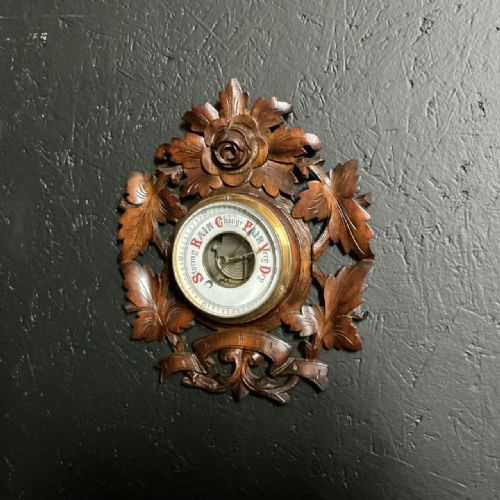
When you search for a vintage wall instrument, you encounter scientific and meteorological devices designed to hang in domestic interiors. The selections span Georgian, Victorian, and Edwardian periods, alongside Art Deco and Arts and Crafts examples.
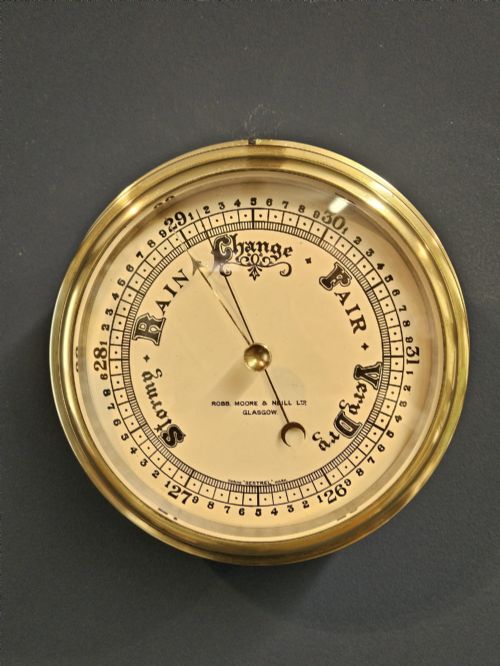
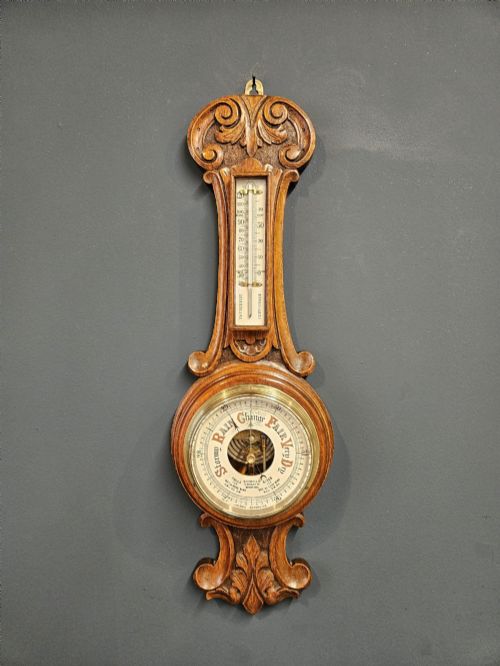
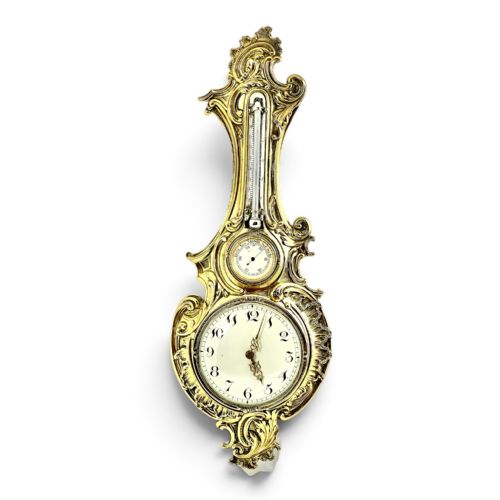
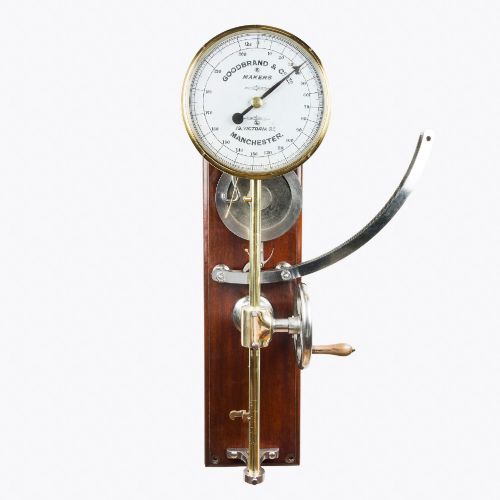
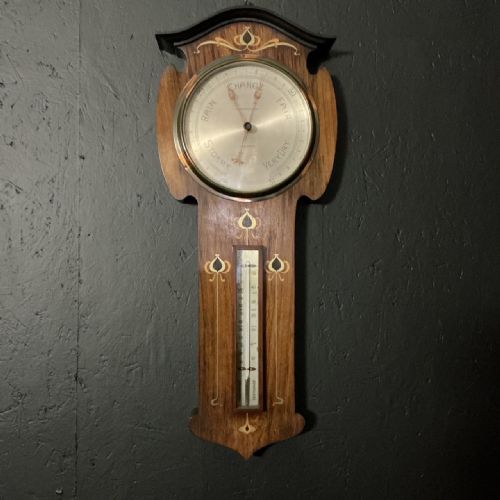
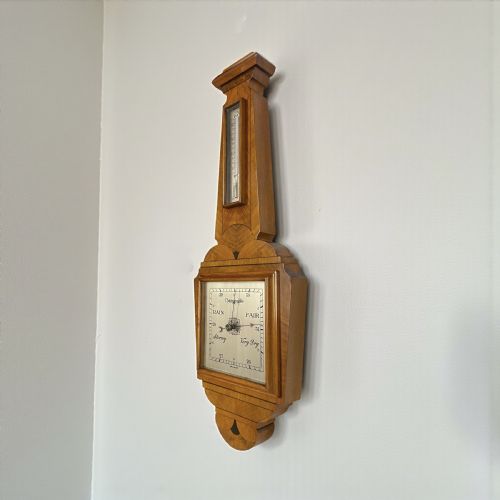
The objects take several forms, most notably aneroid and stick barometers, weather stations combining barometers with thermometers and clocks, wall thermometers, hair hygrometers, and specialist testing apparatus.
Oak, mahogany, and walnut dominate the timber casings, often paired with brass dials, mercury columns, and silvered scales. These pieces originate from British, German, and French makers and workshops.
How they were made
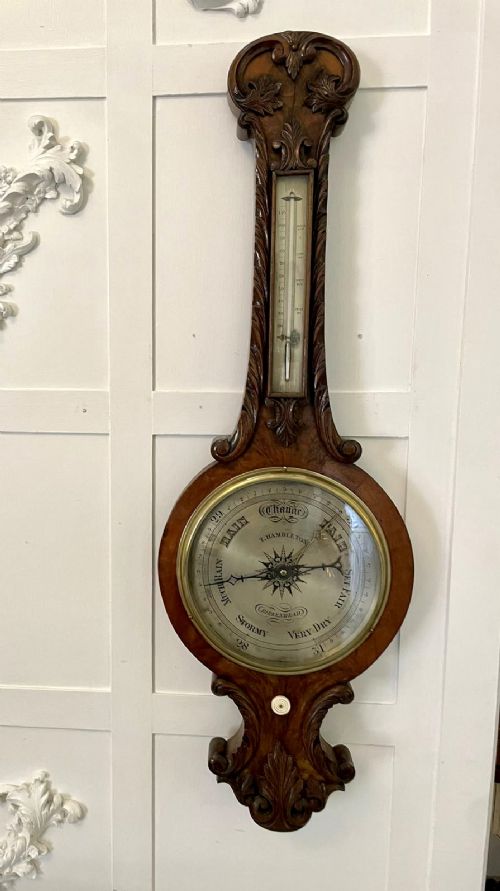
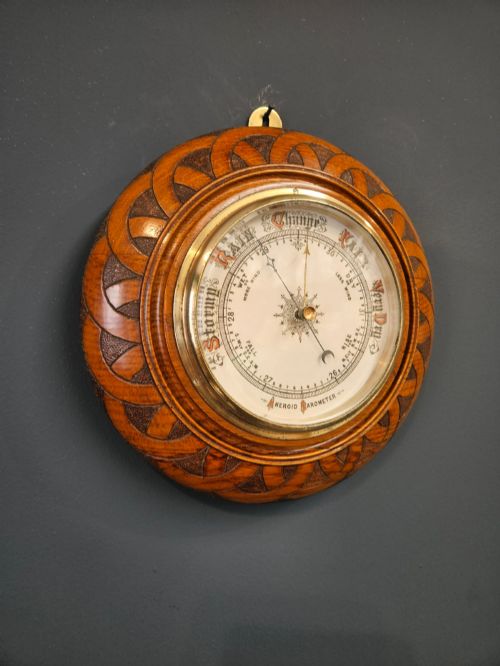
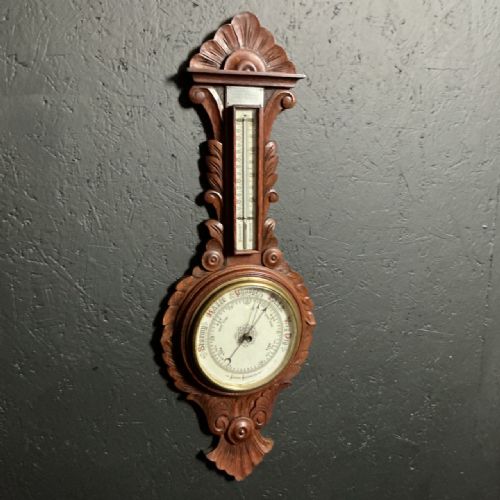
Cabinetmakers constructed the wall cases from dense hardwoods like mahogany, oak, rosewood, and walnut, frequently employing carving, geometric turning, inlay, and Black Forest styling.
Precision instrument makers integrated brass bezels, silvered dials, glass viewing covers, and delicate steel pointers with mercury tubes or aneroid mechanisms to record atmospheric pressure and temperature.
Vintage Wall Instrument Retail Price Guide 2026
Typical asking prices for vintage wall instrument among the pieces listed under this phrase on Sellingantiques today, from the lower quarter to the upper quarter. They describe what is for sale here now, not the wider market.
Listings feature brass, glass, oak, mahogany, walnut, metal, rosewood, and steel across Victorian, Edwardian, Georgian, Regency, and Art Deco styles.
What varies in quality
Quality rests upon the clarity of the silvered or engraved dial, the precision of the maker's signature, and the execution of the timber case carving or inlay. Signed dials by noted scientific makers elevate a piece above standard domestic models.
The sophistication of the mechanism also distinguishes the range, from simple wheel barometers to complex weather stations featuring hygrometers, thermometers, and clock movements mounted within heavy carved walnut or oak.
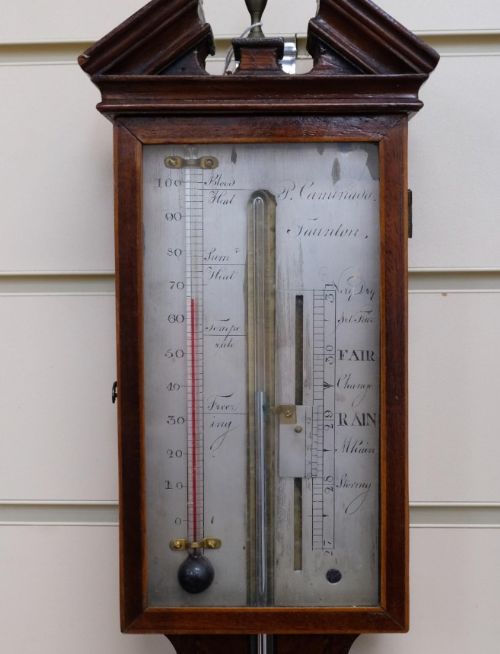
Hyde & Sons Sleaford·Wilh. Lambrecht, Göttingen Germany·P. Caminada, Taunton·Poulenc Freres of Paris·Short & Mason, London·George Adams of Fleet Street·Negretti & Zambra·Bramwell & Harbron of Darlington
The Vintage Wall Instrument Glossary
- Aneroid barometer
- A barometer that measures atmospheric pressure by the expansion and contraction of a flexible metal box, eliminating the need for liquid mercury. This mechanism allows for compact banjo or wall-hanging designs.
- Stick barometer
- A tall, narrow instrument containing an open column of mercury that rises and falls with atmospheric pressure. These typically date from the Georgian and Regency periods.
- Weather station
- A combined instrument housing multiple meteorological indicators such as a barometer, thermometer, and hygrometer within a single wall-mounted case. They frequently include clock faces.
- Hygrometer
- A scientific instrument used to measure the humidity or moisture content of the air. Hair hygrometers utilise organic fibres like human or animal hair to detect these changes.
- Silvered dial
- A brass dial treated with silver powder to create a matte white metallic finish that receives engraved numerals and inscriptions clearly. These dials form the visual centrepiece of quality barometers.
Vintage Wall Instrument: Frequently Asked Questions
What is the difference between aneroid and mercury barometers?
Aneroid barometers use a sealed vacuum capsule that flexes with air pressure changes to move a dial pointer. They offer robust construction and convenient wall hanging.
Mercury barometers rely on an open column of liquid metal responding directly to atmospheric weight. These traditional instruments require careful handling due to the enclosed mercury.
Where should I hang a wall barometer?
Mount the instrument on an interior wall away from direct sunlight, central heating radiators, and draughty doors. Stable room temperatures ensure the internal mechanism responds accurately to barometric pressure rather than local heat sources.
Secure the case firmly to a wall plug or timber stud, particularly with heavier carved oak and walnut models.
How do I date an antique barometer?
Examine the timber housing, dial style, and fixing screws for period characteristics. Georgian instruments typically feature slender mahogany stick cases, while Victorian and Edwardian examples favour carved oak, walnut, or aneroid banjo formats.
Look for an engraved maker signature on the dial or paper trade labels pasted inside the case, which often provide a specific workshop or retailer.