



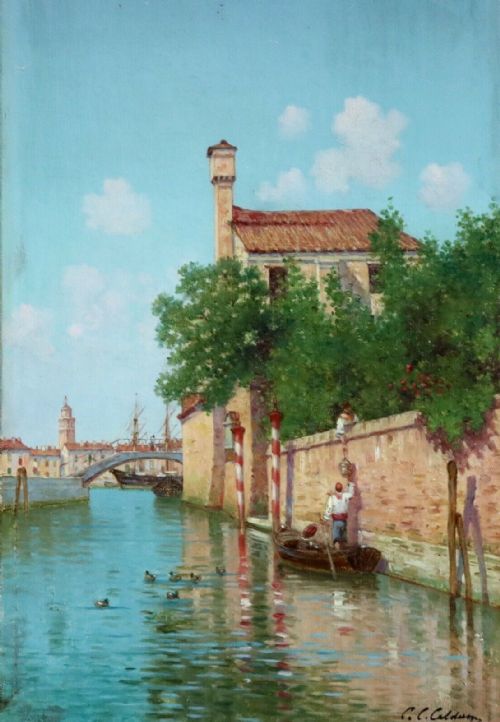


Vintage Venice Canvas Painting
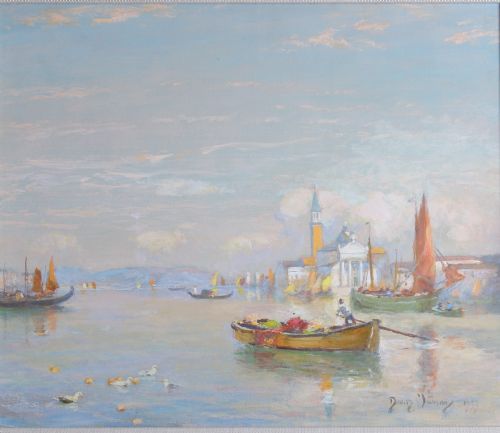
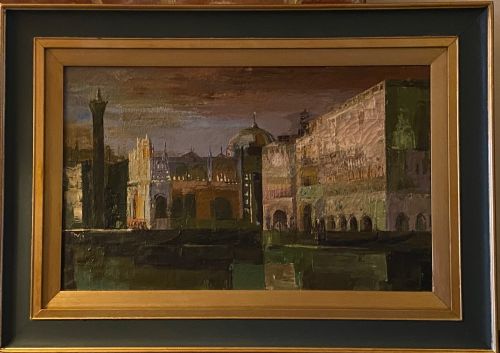
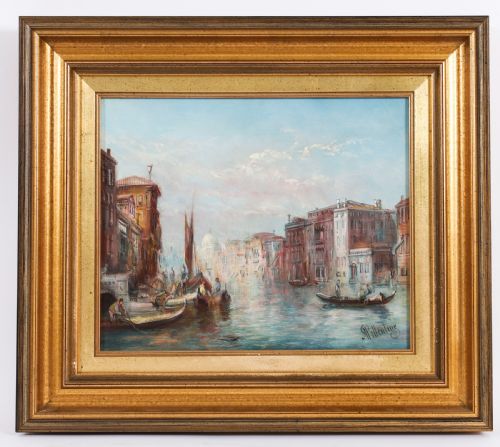
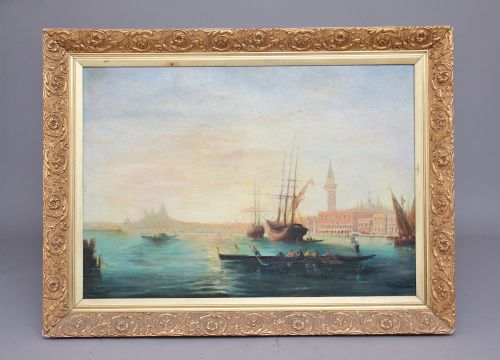
These vintage venice canvas painting works capture the light and architecture of the lagoon using oils on canvas.
Vintage Venice Canvas Painting
A vintage venice canvas painting depicts the canals, lagoons, and historic architecture of the Italian city through oil paint applied to woven textile supports. These works range from nineteenth-century veduta views and Victorian compositions to twentieth-century impressionist interpretations.
Buyers frequently encounter nineteenth-century depictions of the Grand Canal alongside mid-century impressionist cityscapes. The selection spans works dated across the nineteenth and twentieth centuries, including pieces from the decades of the 1910s, 1920s, 1930s, 1950s, and 1960s.
The subjects focus on recognizable Venetian landmarks such as the Dogana, the Bridge of Sighs, and palazzos lining the waterways. Canvases vary in scale, presenting either intimate lagoon vistas or broader architectural perspectives.
How They Were Made
Artists built these images using oil paint applied to primed canvas stretched over wooden frames. The medium allowed painters to layer rich pigments and capture the shifting reflections of light on water.
Many works retain their original frames constructed from wood, embellished with gesso, and finished with gilt, giltwood, or gilded wood surfaces. These frames provide structural support while framing the painted canvas.
Vintage Venice Canvas Painting Retail Price Guide 2026
Typical asking prices for vintage venice canvas painting among the pieces listed under this phrase on Sellingantiques today, from the lower quarter to the upper quarter. They describe what is for sale here now, not the wider market.
Listed works span the nineteenth century through the 1960s, utilising oil paint on canvas housed in wood and gilt frames.
What Varies in Quality
Quality rests in the handling of light and perspective, distinguishing adept impressionist brushwork from rigid topographical recording. The depth achieved in rendering water and architectural stone separates accomplished compositions from simpler depictions.
The preservation of both the oil paint and the canvas support dictates the integrity of the piece. Additionally, the craftsmanship of the associated giltwood or gesso frame contributes to the overall character of the work.
Sushila Singh·Alfred Pollentine·Antonio DeVity·Claude Jousset·Marc Aldine·E. Perez Senet·Emanuele Cappello·Charles Clement Calderon
The Vintage Venice Canvas Painting Glossary
- Veduta
- A detailed, realistic painting of a cityscape, particularly associated with eighteenth and nineteenth-century views of Venice. These works prioritize topographical accuracy and architectural precision.
- Giltwood
- Wood that has been coated with a thin layer of gold leaf or gold paint. This finish frequently adorns the frames housing nineteenth and twentieth-century oil paintings.
- Gesso
- A paint mixture consisting of a binder mixed with chalk, gypsum, or pigment. It is applied to wooden frames as a smooth base before gilding.
- Impressionism
- An art style characterised by relatively small, thin, yet visible brush strokes and an emphasis on accurate depiction of light. This approach appears across several mid-century Venetian scenes.
Vintage Venice Canvas Painting: Frequently Asked Questions
How do I clean a canvas painting?
Surface dust is gently removed using a soft, dry brush without applying pressure to the pigment.
Water and liquid cleaners damage oil paint and must be avoided.
Where should I hang my painting?
Select a wall away from direct sunlight and sudden temperature shifts to protect the canvas and oil medium.
Stable indoor conditions prevent the wood stretcher and canvas from warping over time.
How can I tell the period?
Dating relies on the style of the brushwork, the canvas preparation, and framing techniques characteristic of specific decades.
Signatures, artist dates, and historical motifs also provide a chronological anchor.
Are these paintings original works?
The pieces listed are original oil paintings created by hand on canvas supports rather than mechanical reproductions.
Each work reflects the individual technique of the painter who executed the Venetian scene.