


Framed Venetian Canal Scene
A framed venetian canal scene brings the luminous waterways and historic palazzos of Italy directly into your room.
Framed Venetian Canal Scene
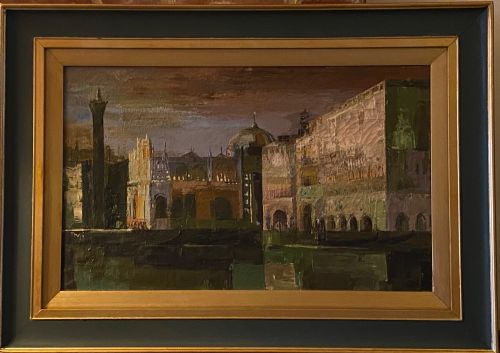
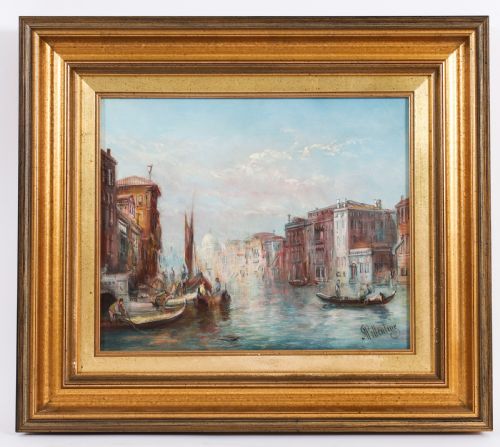
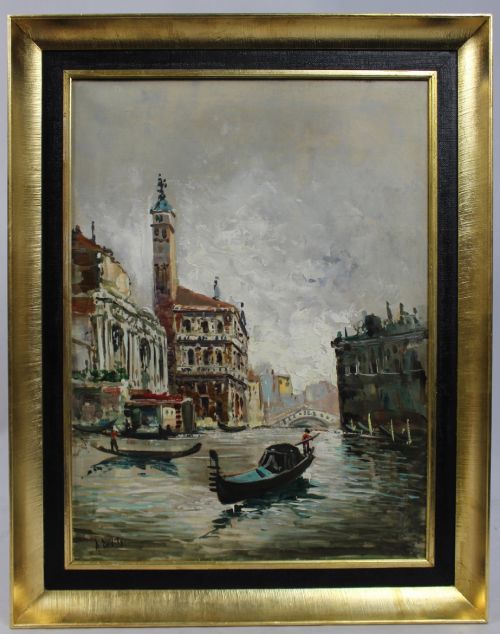
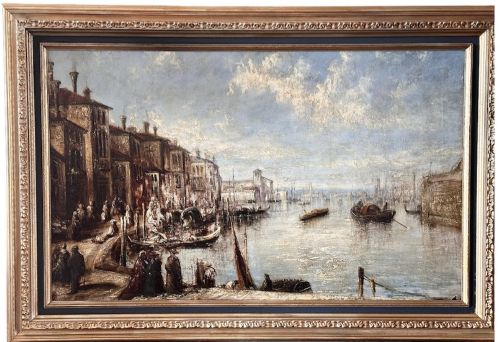
A framed venetian canal scene depicts the historic waterways, gondolas, and architecture of Venice, ranging from nineteenth-century views to mid-century impressions. These works capture specific locations such as the Grand Canal, the Doge's Palace, and Santa Maria della Salute.
The pieces appearing on this page span the Victorian era, the early twentieth century, and the nineteen-fifties and sixties. They include detailed nineteenth-century fine art alongside mid-century impressionist interpretations.
Buyers will encounter both oil paintings and watercolours housed within traditional frames, typically executed in wood or gilded wood.
Materials and Technique
Artists painted these scenes primarily using oil on canvas or watercolour on paper, capturing the distinct light and atmosphere of the Venetian lagoon. Some works also incorporate pastel, gouache, and ink pen drawings.
The finished artworks are secured in wooden frames, frequently featuring giltwood or gilded wood finishes that complement the traditional subjects.
Listings feature works from the nineteenth century, the Victorian period, and the nineteen-twenties, thirties, fifties, and sixties.
Evaluating Quality
Quality in these works rests upon the artist's ability to handle light and perspective on the water, distinguishing skilled nineteenth-century topographical painters from later decorative interpretations.
The treatment of the original frame also influences the overall merit, particularly where period gilded wood enhances the presence of the canvas or watercolour.
Alfred Pollentine·Antonio DeVity·Francis Moltino·Claude Jousset·Marc Aldine·Jane Vivian·William Raymond Dommersen·Vittore Zanetti Zilla·Frank Wasley·William Knox·Helen Donald-Smith
The Framed Venetian Canal Scene Glossary
- Grand Canal
- The main arterial waterway of Venice, lined with historic palazzos, which frequently serves as the central subject for these paintings. It remains the most recognizable view in Venetian topography.
- Gilding
- A decorative technique applied to wooden frames using a thin layer of gold leaf or metallic powder. This finish adds a reflective border that heightens the luminosity of the artwork within.
- Watercolour
- A painting method where fine pigments are suspended in a water-based solution on paper. It allows for translucent washes that suit the atmospheric effects of the Venetian lagoon.
- Impressionism
- An artistic style characterised by relatively small, thin yet visible brush strokes and an emphasis on accurate depiction of light. Mid-century examples of this style appear frequently among these scenes.
Framed Venetian Canal Scene: Frequently Asked Questions
What periods do these paintings come from?
The works span from the Victorian nineteenth century through the early twentieth century up to the nineteen-sixties.
This range encompasses traditional nineteenth-century fine art alongside mid-century impressionist interpretations.
Are these works painted in oil or watercolour?
Both mediums appear across the selection, with artists utilising oil on canvas or watercolour on paper.
Some pieces also employ pastel, gouache, and ink pen drawings to capture the Venetian atmosphere.
Which specific locations in Venice are depicted?
Common subjects include the Grand Canal, the Bridge of Sighs, Santa Maria della Salute, and the Guidecca Canal.
Views frequently look toward St Mark's Square and the Doge's Palace.
What kind of framing do the pieces have?
The artworks are housed in wooden frames, often featuring gilded wood or giltwood finishes.
These traditional surrounds complement the classical style of the paintings.