



Gold Framed Venetian Art
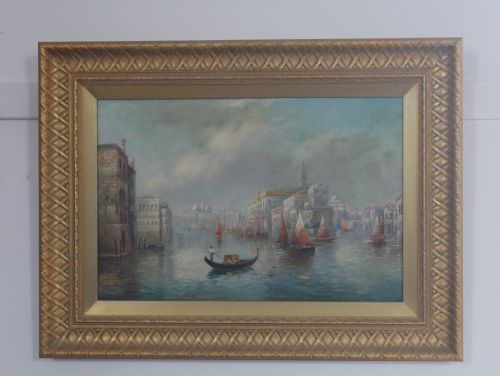
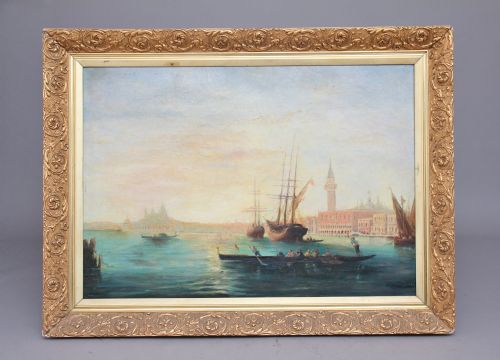
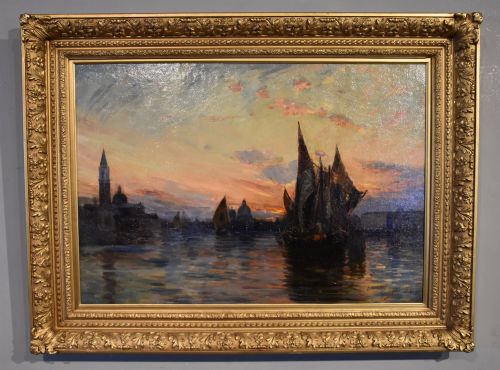
Gold framed venetian art captures the timeless architecture and water-filled vistas of Italy through historic oil and watercolour paintings.
Gold Framed Venetian Art
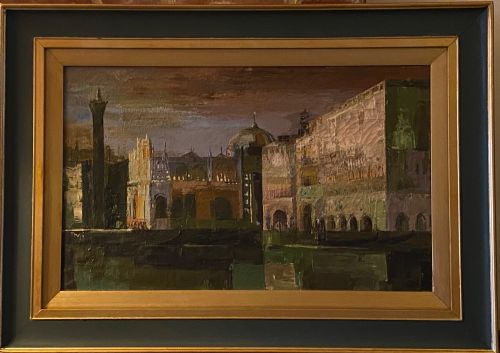
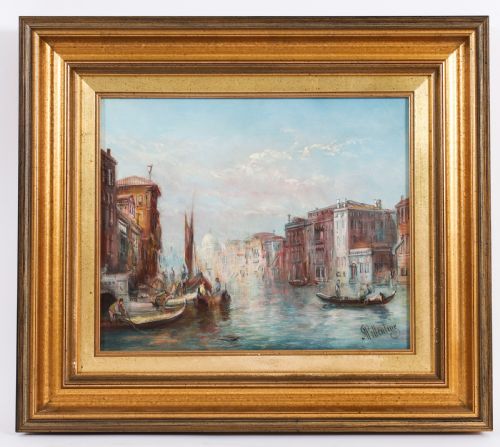
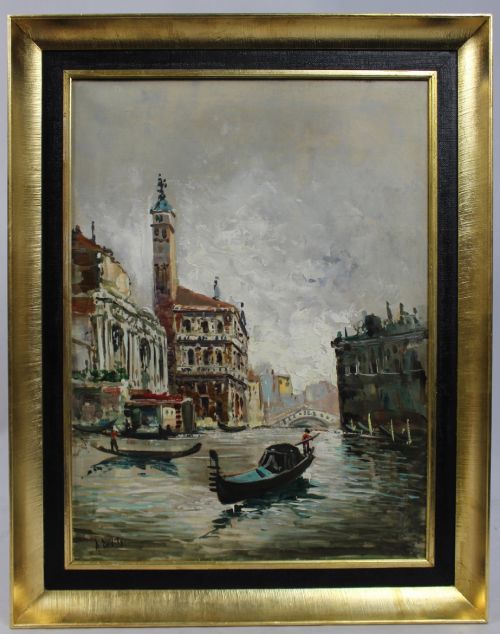
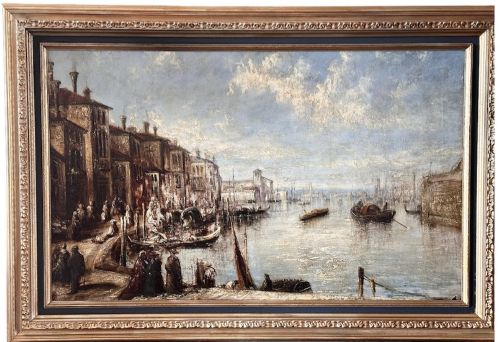
Gold framed venetian art comprises historical paintings focusing primarily on the canals, lagoons, and historic palazzos of Venice. These works frequently depict famous landmarks such as the Grand Canal, the Doge's Palace, and Santa Maria della Salute.
The selections span from eighteenth-century religious and school compositions to nineteenth-century romantic townscapes and twentieth-century impressions. Canvases and watercolours dominate the offerings, usually housed within ornate timber surrounds.
Buyers encounter both signed nineteenth-century canvases by named British and European painters and anonymous works from various historic periods. The imagery transports viewers directly to the Venetian lagoon through atmospheric lighting and detailed architectural studies.
Materials and Construction
Artists relied primarily on oil paint applied to canvas or wood boards, alongside watercolour and gouache on paper supports. These traditional media allowed creators to build luminous effects of light reflecting off the Venetian water.
The frames are constructed from wood, specifically finished with giltwood, gilded wood, or plain gilt surfaces. This metallic leaf application complements the warm tones prevalent in the painted lagoon scenes.
Several canvases capture gondoliers navigating the Grand Canal while wearing the classic eighteenth-century masks of a Venetian masquerade.
Distinctions in Quality
Quality rests heavily on the handling of light and perspective within the painted townscape, separating competent topographical records from masterly atmospheric interpretations. The precision of architectural rendering alongside fluid water movement dictates the visual impact of the piece.
The craftsmanship of the surrounding wooden frame also plays a role, with intricately carved and heavily gilded mouldings elevating the presentation of the artwork contained within.
Alfred Pollentine·Antonio DeVity·Francis Moltino·Antonietta Brandeis·Jane Vivian·William Raymond Dommersen
The Gold Framed Venetian Art Glossary
- Giltwood
- Wood that has been treated with a thin layer of gold leaf. This material forms the characteristic shiny borders surrounding historic canvases.
- Lagoon
- A stretch of salt water separated from the sea by a low sandbank. This geographical feature defines the characteristic watery setting of Venice.
- Townscape
- A painting or drawing that depicts a urban landscape or city view. These works focus heavily on architectural elements like palaces and canals.
- Watercolour
- A paint consisting of pigment suspended in a water-based solution. Artists use this medium on paper to achieve translucent, delicate colour washes.
Gold Framed Venetian Art: Frequently Asked Questions
What periods do these paintings date from?
The listed items span multiple centuries, starting from eighteenth-century academic and religious compositions through to nineteenth-century Victorian romanticism. Twentieth-century impressions and mid-century interpretations also appear frequently across the selection.
Most pieces cluster heavily in the nineteenth century, reflecting the high volume of British and European artists travelling to Italy during that era.
How should I hang a gilt framed painting?
Ensure your wall fixings can securely support the combined weight of the heavy wooden stretcher and the dense gilt frame. Position the artwork away from direct sunlight and excessive moisture to protect the oil paint and gold leaf.
Consider eye-level placement in rooms with stable ambient temperatures to prevent warping of the timber support over time.
Are these works signed by the artists?
Many of the pieces bear visible signatures or attribution to known nineteenth- and twentieth-century painters such as Alfred Pollentine or Jane Vivian. Others remain anonymous examples produced by regional schools or unidentified travelling artists.
Signatures often appear in the lower corners of the canvas or watercolour paper, sometimes accompanied by historic exhibition labels on the reverse.
What subjects besides canals are common?
Artists frequently rendered major architectural landmarks including the Doge's Palace, the Campanile, and the church of Santa Maria della Salute. Occasionally, figurative scenes such as Venetian masquerades or theatrical commedia dell'arte moments supplement the standard architectural views.
Waterborne processions and funeral scenes along the Grand Canal also feature among the narrative townscapes.