




Vintage Valley Painting Canvas
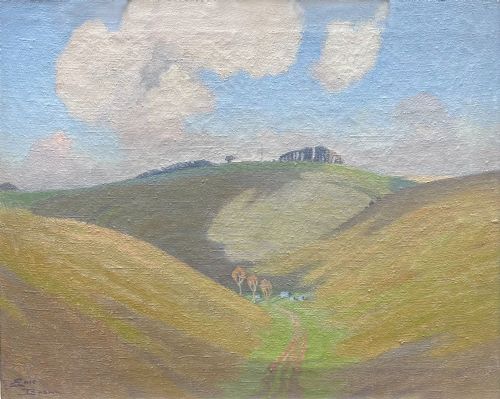
These vintage valley painting canvas works capture rural hollows and river bends in oil, offering buyers a genuine window into British and European pastoral scenery.
Vintage Valley Painting Canvas
When you search for vintage valley painting canvas, you are looking at oil paintings depicting rural landscapes, river scenes, and wooded glens from periods ranging from the nineteenth century through to the mid-twentieth century. The pieces recorded here lean heavily into British landscape traditions, including regional depictions of Yorkshire valleys, Welsh hills, and Scottish scenes executed in oil on canvas.
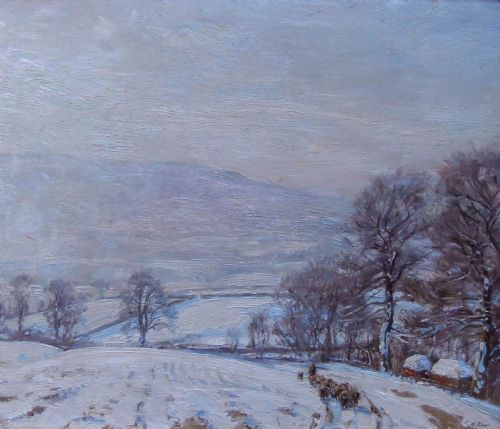
You are most likely to meet works produced across the early decades of the twentieth century, particularly around the nineteen-twenties and nineteen-thirties, alongside nineteenth-century examples and Edwardian pieces. These range from impressionistic depictions of winter snow in northern dales to fauve-inspired Mediterranean landscapes and floral still life subjects.
Materials and construction
The primary vehicle for these works is oil paint applied directly to woven canvas supports, utilising the rich pigment load and slow drying time of oil to build texture and depth. Artists handled the medium with varying brushwork, from the smooth application seen in Edwardian river scenes to the heavier impasto characteristic of northern winter landscapes.
Supporting these canvases are wooden stretcher frames, frequently housed within period gilt or gesso frames that provide both structural integrity and decorative finish. The combination of traditional oil paint on canvas stretched over wood underpins the physical survival of these works across the decades.
Materials documented across the artworks include canvas, oil paint, wood, gilt, gesso, and oil on canvas within various wooden frames.
Judgments of quality
Quality in these landscape canvases rests primarily on the handling of light, atmospheric depth, and the assurance of the artist's brushwork across the canvas surface. Works by established named painters working within recognised regional schools demonstrate superior compositional balance compared to anonymous or more derivative topographical efforts.
The preservation of the original oil paint layer and the integrity of the canvas support dictate the longevity and visual impact of the piece. Furthermore, the presence of a period giltwood or gesso frame that complements the canvas enhances the overall coherence and historical value of the artwork.
Eric Brown·Reginald Grange Brundrit·Clarence Henry Roe·Fred Stead·Herbert Royle·George Melvin Rennie·Ernest Higgins Rigg·Owen Bowen
The Vintage Valley Painting Canvas Glossary
- Canvas
- A heavy woven fabric, typically of linen or cotton, stretched tightly over a wooden frame to serve as a surface for oil painting. It provides a resilient and textured ground for pigment.
- Oil paint
- A slow-drying paint made by mixing pigments with a drying oil, commonly linseed oil. This medium allows for rich colour blending and thick impasto applications.
- Giltwood
- Wood that has been treated with a thin layer of gold leaf or gilt paint, commonly used for traditional picture framing. It adds a warm metallic border to the artwork.
- Gesso
- A paint mixture consisting of a neutral binder mixed with chalk, gypsum, or pigment, used to prepare wood or canvas surfaces before painting. It creates a smooth and stable ground.
- Impasto
- A technique where paint is laid onto a canvas in very thick areas, usually thick enough that the brush or palette-knife strokes are visible. This adds physical texture to the valley painting canvas.
Vintage Valley Painting Canvas: Frequently Asked Questions
What periods do these landscape paintings cover?
The available selection spans from the nineteenth century and the Edwardian era through to the nineteen-twenties, thirties, and nineteen-sixties.
This chronological spread includes Victorian topographical works, early twentieth-century regional British art, and mid-century modernist interpretations.
Are these paintings executed on panel or canvas?
The works recorded on this page utilise canvas as the primary support medium for the oil paint.
Artists stretched these woven fabrics over wooden frames, occasionally housing them within giltwood or gesso surrounds.
Which regional landscapes feature in these artworks?
Northern English valleys such as Wharfedale and Swaledale appear frequently, alongside Welsh river scenes and Scottish views.
These regional subjects reflect the strong output of British landscape painters working during the early twentieth century.
How should I care for an oil painting on canvas?
Keep the canvas away from direct sunlight, damp environments, and rapid temperature fluctuations to protect the oil paint and wood stretcher.
Dust the surface gently with a soft, dry brush and avoid using liquid cleaners on the paint or the gilt frame.