




Vintage Cliff Landscape Art
These vintage cliff landscape art pieces capture dramatic shores and coastal heights across a broad sweep of periods.
Vintage Cliff Landscape Art
Vintage cliff landscape art encompasses oil paintings, watercolours, and glazed ceramic plates depicting dramatic coastal topography and towering shores. Collectors seeking vintage cliff landscape art encounter works spanning the Victorian era through the mid-twentieth century.
Oil on canvas and board predominate among the available formats, alongside delicate watercolours and marked porcelain wares. This variety offers both sweeping topographical views and intimate modernist interpretations of rugged coastlines.
Materials and Techniques
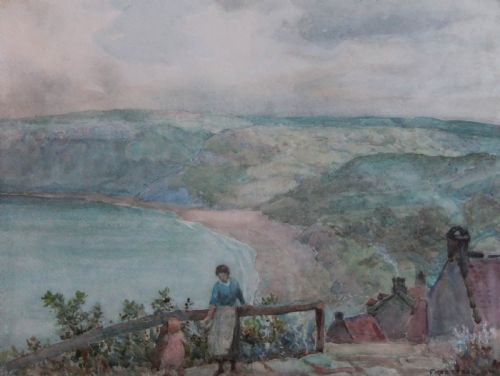
Artists deployed oil paint upon canvas and board to build textured surfaces representing churning seas and weathered rock faces. Watercolour works on paper utilise fluid washes to capture the translucent light of coastal atmospheres.
Ceramic pieces employ specialised glaze techniques upon porcelain bodies to render geometric patterns and figurative motifs. These varied applications demonstrate the physical methods used to record shorelines across different decades.
Listings incorporate works from British Impressionism, Art Deco, and 19th Century Realism, rendered in oil, watercolour, and porcelain glaze.
Judging Quality
Quality rests in the precision of brushwork and the artist's command of atmospheric light upon rock and water. Masterful handling of paint creates genuine depth within the expanse of sea and sky.
The fidelity of topographical detail and the strength of compositional balance separate accomplished works from routine topographical records. In ceramic examples, clarity of glaze and crispness of transfer printing determine the distinction.
Raymond Moritz·Norman Lloyd·Clarice Cliff·Joseph Newington Carter·Herbert James·James Watson·Rowland Henry Hill·Edward T Jones·Fred Stead·Francis Wall·George Marks·Alfred Egerton Cooper
The Vintage Cliff Landscape Art Glossary
- Sea stack
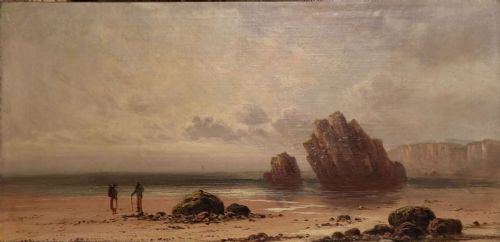
- An isolated column of rock standing in the sea, left behind after coastal erosion. These geological formations frequently anchor the composition of 19th-century marine art.
- Topographical
- Representing a particular place with descriptive accuracy. Topographical paintings record identifiable coastal landmarks such as piers, bays, and specific cliffs.
- Impressionism
- A style of painting that focuses on the visual impression of a moment, especially regarding shifting light. British and French impressionist works utilise rapid brushstrokes to capture fleeting coastal effects.
- Glaze
- A vitreous substance fused to a ceramic body through firing. Glazes provide colour, decoration, and a protective coating on decorative plates.
- Watercolour
- A paint consisting of pigment suspended in a water-based solution. Watercolours are typically applied to paper to produce translucent washes of colour.
Vintage Cliff Landscape Art: Frequently Asked Questions
What periods do these pieces cover?
The selection spans from the Victorian period through the early decades of the twentieth century, including pieces dated around 1900, 1910, 1920, 1930, and 1950.
This broad chronological range allows collectors to trace the evolution of coastal painting alongside concurrent shifts in ceramic design.
How were these coastal scenes displayed?
Paintings on canvas and board were traditionally framed for domestic display in parlours and drawing rooms. Watercolours on paper received protective glass framing to preserve their delicate pigments.
Ceramic plates served both decorative and functional roles within domestic interiors.
How do I identify a Victorian coastal painting?
Victorian works often display meticulous attention to maritime detail, frequently featuring shipping vessels, figures on pebble beaches, and dramatic sea stacks under expansive skies.
Signatures, framing styles, and the specific preparatory canvas or board further help establish this period.
What is the difference between oil and watercolour cliff art?
Oil paintings utilise heavy pigment layers on canvas or board to achieve rich textures and deep tones suitable for stormy seas and rugged cliffs. Watercolours apply fluid washes on paper to emphasise light and air.
Each medium offers a distinct visual interpretation of coastal topography.