
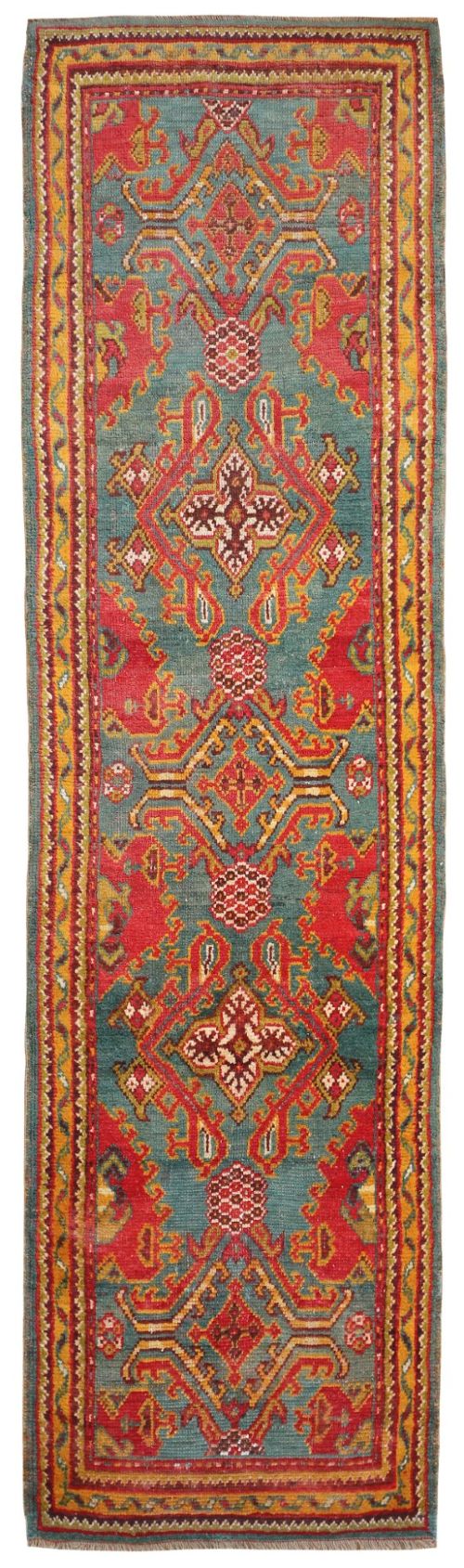



Vintage Ushak Runner
A vintage ushak runner brings distinct Anatolian character and soft wool pile to a hallway, offering a tangible link to traditional Ottoman weaving.
Vintage Ushak Runner
A vintage ushak runner represents traditional Anatolian weaving, specifically originating from the historic town of Ushak in Turkey. Buyers searching for a vintage ushak runner will encounter long, narrow carpets designed originally for corridors and passageways.
The pieces listed here span several decades from the late Victorian era up to the 1920s, showcasing classic Ottoman designs. These textiles combine geometric patterns with softer floral motifs, executed in muted palettes characteristic of the region.
Most examples appear as runner rugs, though related formats like kilims and carpets also populate the selection. Their elongated dimensions make them practical for modern interiors seeking historical warmth underfoot.
How they were made
Weavers constructed these runners using natural wool and cotton foundations, occasionally incorporating angora wool for a softer pile. Hand-knotting techniques predominated, securing the wool yarn to a sturdy cotton warp and weft.
Dyes derived from natural sources yielded the characteristic subdued tones seen across the period. Artisans applied traditional Anatolian and Ottoman design motifs by hand, resulting in slight variations across each individual carpet.
Pair formats occasionally appear, offering identical twin runners for grand double hallways.
What varies in quality
Knot density and precision of the underlying wool structure dictate the durability and refinement of a runner. Finer examples display greater clarity in the Ottoman or Anatolian design motifs.
The condition of the wool pile and the integrity of the cotton foundations determine the structural merit of each piece. Angora wool additions often signal a softer texture that influences the overall feel of the textile.
The Vintage Ushak Runner Glossary
- Ushak
- A traditional style of carpet originating from the town of Ushak in western Turkey. These pieces are known for soft wools and distinctive medallion designs.
- Kilim
- A flat-woven carpet or rug produced without a pile. They differ from knotted rugs through their tapestry-weave construction.
- Angora wool
- A soft fibre derived from angora goats or rabbits. It provides an exceptionally soft pile in select antique carpets.
- Anatolian
- Pertaining to the historical region of Anatolia in modern-day Turkey. This term describes the geographical origin of these traditional textiles.
- Warp
- The vertical threads stretched on a loom before weaving begins. The cotton warp provides the primary structural foundation for the knotted pile.
Vintage Ushak Runner: Frequently Asked Questions
What is a vintage ushak runner?
A vintage ushak runner is a hand-knotted carpet from the Anatolian region of Turkey, made in elongated dimensions suitable for hallways.
These textiles date from the late nineteenth and early twentieth centuries, featuring traditional Ottoman and Anatolian designs.
How do I style a runner rug?
Runner rugs work best in corridors, entryways, and narrow gallery spaces where their length can guide movement.
Their muted tones and soft wool piles complement both traditional and contemporary interior settings.
What materials were used?
Weavers utilised natural wool and cotton for the pile and foundation of these carpets.
Some examples also incorporate angora wool to achieve a softer texture and distinct handle.
How are periods identified?
Periods are determined through stylistic analysis of the Ottoman and Anatolian motifs, alongside material examination.
Listings place these pieces across the Victorian era through to the 1920s based on their manufacturing characteristics.