

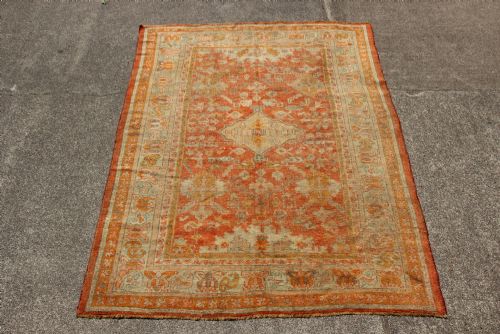


Antique Turkish Floor Carpet
An antique turkish floor carpet brings warmth and history to a room through dense wool pile and centuries-old Anatolian weaving traditions.
Antique Turkish Floor Carpet
An antique turkish floor carpet encompasses large carpets, long runners, and smaller rugs woven across Anatolia during the nineteenth and early twentieth centuries. These floor coverings bridge nomadic tribal patterns and grand workshop designs, often grouped under regional descriptors such as Oushak, Ghiordes, Kula, Melas, Bergama, Konya Karapinar, and Yuruk.
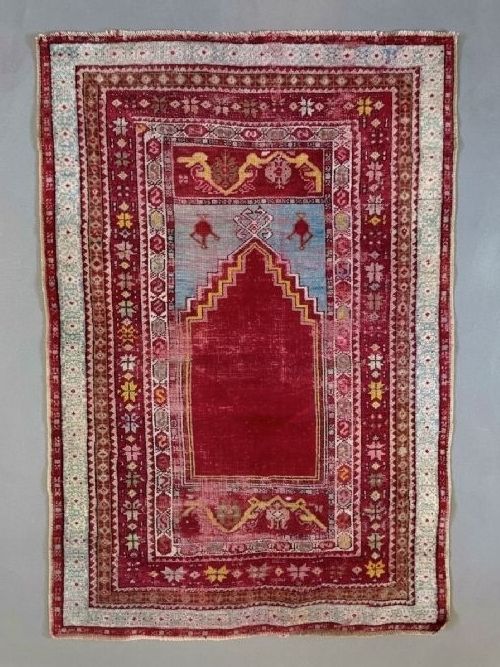
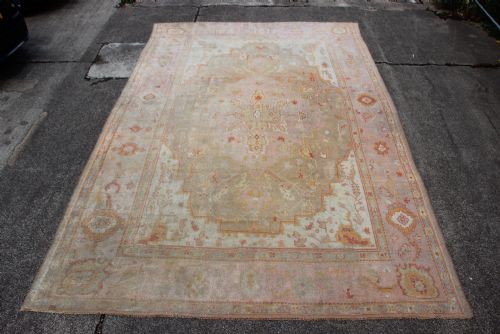
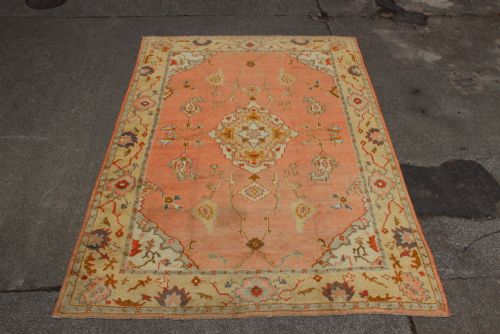
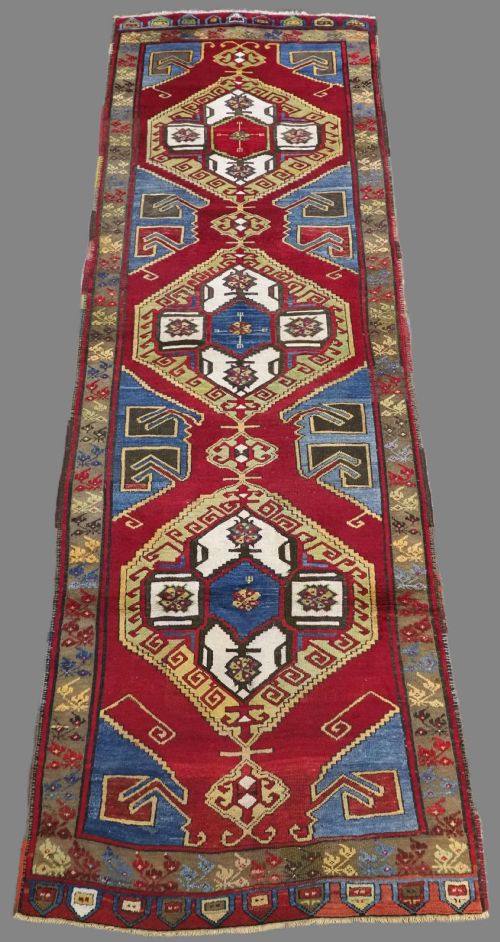
The pieces appearing on this page skew heavily toward large-scale Oushak carpets and village room-size formats from the Victorian era up to the nineteen-thirties. Buyers encounter everything from oversize chamber carpets with pale or pink grounds to narrow hallway runners and flat-weave kilims carrying traditional Ottoman motifs.
How they were made
Weavers constructed these floor coverings primarily using hand-spun wool and standard cotton foundations, occasionally incorporating angora wool or silk for specific visual effects and pile softness. Natural dyes yielded the characteristic faded palettes, soft pinks, and deep blues seen across the inventory.
The production blends knotting techniques with flat-weaving methods, yielding either thick, plush piles designed for heavy foot traffic or lightweight kilim structures. Workshops and village households alike relied on upright looms, working from generational pattern books or memory.
Antique Turkish Floor Carpet Retail Price Guide 2026
Typical asking prices for turkish floor carpet among the pieces listed under this phrase on Sellingantiques today, from the lower quarter to the upper quarter. They describe what is for sale here now, not the wider market.
Listings span the nineteenth and twentieth centuries, featuring Victorian-era production alongside pieces dated specifically to the eighteen-eighties and nineteen-twenties.
What varies in quality
Quality in these floor coverings rests on the integrity of the wool, the depth and nuance of the dye work, and the precision of the tribal or Ottoman design execution. Finer examples display harmonious colour transitions as natural dyes age, whereas lesser pieces may exhibit flat or heavy-handed re-weaving.
Structural stability also dictates worth, separating intact room-sized carpets with full pile from heavily worn or distressed village rugs. The complexity of the drawing in the central medallions and borders marks the distinction between standard commercial output and exceptional workshop weaving.
The Antique Turkish Floor Carpet Glossary
- Oushak
- A major weaving centre in western Turkey known for large-scale carpets featuring soft palettes and oversized floral motifs. These pieces often display open fields with subtle medallion arrangements.
- Kilim
- A flat-woven carpet produced without a pile by tightly interweaving warp and weft threads. This technique creates geometric patterns visible on both sides of the textile.
- Ghiordes
- A historic weaving town in western Anatolia famous for prayer designs and fine knotting. Carpets from this origin typically feature architectural mihrab niches.
- Prayer Rug
- A smaller format rug featuring a central arch or mihrab design indicating the direction of prayer. These pieces were traditionally utilised for personal devotion.
- Angora Wool
- A fine, lustrous fibre gathered from Anatolian goats, utilised in select nineteenth-century weavings to add sheen and softness to the pile.
Antique Turkish Floor Carpet: Frequently Asked Questions
How do I clean an antique carpet?
Professional specialist cleaning is essential for antique textiles to protect delicate hand-spun wool and natural dyes from chemical damage.
Regular gentle vacuuming without a beater bar prevents dust accumulation in the pile between specialist washes.
Are these rugs suitable for hallways?
Long runners and narrow formats specifically suit hallways and high-traffic corridors, provided a quality underlay is used to prevent slipping.
Wool naturally resists dirt and compression, making durable village weavings practical for daily domestic use.
How do I identify an Oushak carpet?
Oushak carpets typically feature large-scale geometric or floral motifs rendered in muted, faded colourways rather than rigid, intricate borders.
The use of silky wool on a cotton foundation is a common characteristic of these western Turkish workshop pieces.
What is the difference between a rug and a carpet?
In historical terms, carpets refer to larger floor coverings designed to anchor an entire room, while rugs denote smaller portable formats.
Both terms often overlap in modern listings depending on the specific dimensions and room placement of the textile.