


Beige Turkish Carpet
A beige turkish carpet brings muted warmth to a floor, offering traditional Anatolian or Ottoman artistry in soft, neutral tones.
Beige Turkish Carpet
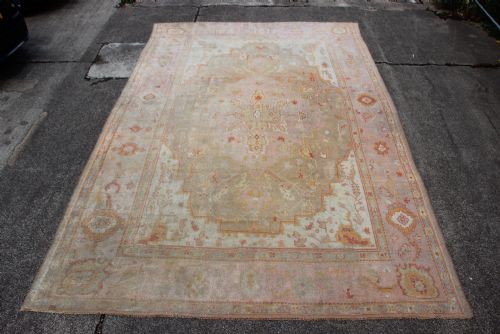
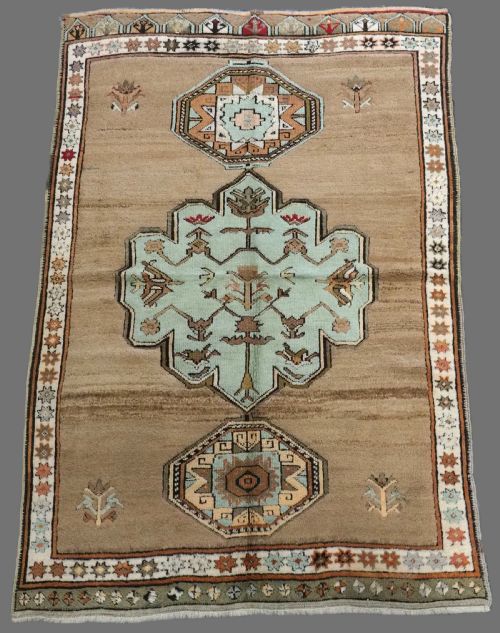
When you search for a beige turkish carpet, you encounter hand-knotted floor coverings originating from Anatolia across several decades. The selection spans distinct regional types such as Oushak, Konya Karapinar, Kayseri, Panderma, Ghiordes, and Sivas. These pieces range from large carpets measuring over four metres in length down to smaller village and prayer rugs.
You are most likely to meet antique Oushak carpets alongside village rugs dating from the late nineteenth century to the early twentieth century. The formats include substantial area rugs and grand carpets designed for formal spaces as well as smaller devotional formats. Each piece reflects specific weaving traditions anchored in West Anatolia and other historic Turkish centres.
How they were made
The makers relied on traditional hand-knotting techniques using natural fibres gathered across the region. Materials recorded in the inventory include standard wool, hand-spun wool, camel wool, cotton foundations, silk, and floss silk. These natural components provide both the resilient pile and the structural foundation of each rug.
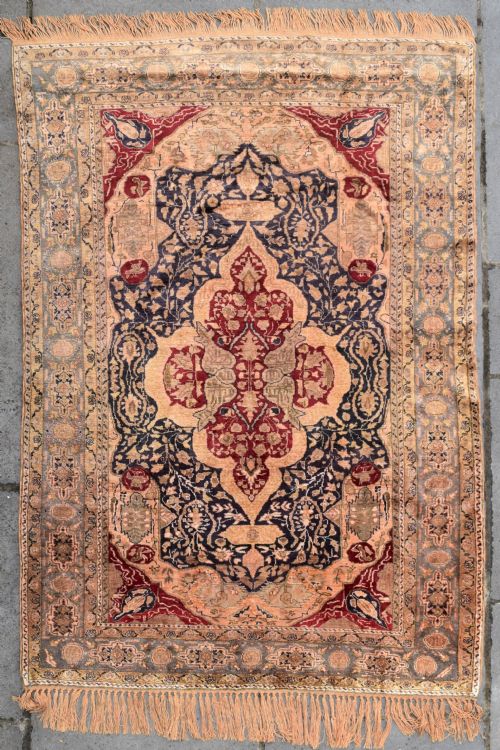
Weavers utilised local animal fibres and botanical dyes to achieve the muted palettes characteristic of these carpets. The integration of camel wool and hand-spun wool adds distinct texture and varied pile density across individual examples. Silk and floss silk appear in specific regional prayer rugs, yielding a finer sheen and lighter structure.
Listings span several decades from the late nineteenth century to the early twentieth century, featuring wool, cotton, silk, and camel wool.
What varies in quality
Quality separates examples primarily through the fineness of the knotting and the refinement of the material preparation. Hand-spun wool and genuine silk display greater tactile depth and durability compared to standard commercial grades. The choice between standard wool pile and floss silk alters the overall handle and visual weight of the textile.
Artistic execution and regional fidelity further distinguish the pieces. Master weavers achieved superior balance in proportion, dye saturation, and design symmetry within traditional Ottoman and Anatolian frameworks. The integrity of the original foundation and the preservation of the pile condition dictate the standing of each carpet.
The Beige Turkish Carpet Glossary
- Oushak carpet
- A large-format woven floor covering originating from the historic town of Ushak in western Anatolia. These pieces are celebrated for their relaxed floral motifs and soft, harmonious palettes.
- Prayer rug
- A small devotional rug featuring a distinctive mihrab or arch design indicating the direction of prayer. Weavers in centres like Kayseri and Panderma produced these portable carpets for personal worship.
- Hand-knotted
- A construction method where individual strands of wool, cotton, or silk are tied by hand to warp and weft threads. This traditional technique creates a durable pile that withstands centuries of use.
- Floss silk
- A lustrous, unspun or lightly twisted silk fibre used to create a shimmering pile. Sivas rugs frequently incorporate this material to catch the light.
- Camel wool
- Unbleached wool taken from camels, valued for its natural fawn or beige hue and exceptional warmth. It provides a soft, organic ground colour in regional Anatolian pieces.
Beige Turkish Carpet: Frequently Asked Questions
How do I clean a beige turkish carpet?
Professional dusting and specialist textile washing preserve the natural wool and silk fibres without damaging the structural dyes. Avoid harsh chemical treatments and excessive water immersion.
Regular gentle vacuuming without a rotating brush prevents dirt accumulation in the pile. Rotating the rug periodically ensures even wear across high-traffic areas.
Are these carpets suitable for heavy traffic?
Wool and camel wool pieces possess inherent durability that handles moderate walking when placed over a quality underlay. Thicker room-sized carpets distribute foot pressure effectively.
Silk and floss silk examples require more delicate placement, such as low-traffic bedrooms or sitting rooms. Protecting them from direct sunlight prevents fading in the natural dyes.
What is the difference between an Oushak and a village rug?
Oushak carpets typically feature expansive, grand scale floral designs intended for large reception rooms. They display refined compositions developed in established weaving workshops.
Village rugs like those from Ghiordes or Konya exhibit more geometric, tribal motifs reflecting local domestic traditions. Their smaller dimensions suit intimate spaces and varied interior layouts.
How can I tell the age of these rugs?
Age is determined by evaluating the spinning of the wool, the chemical composition of the natural dyes, and structural wear patterns. Late nineteenth-century pieces often display softer colour transitions caused by natural ageing.
Comparative analysis of regional motifs and foundational materials confirms the historical period. Documentation from traditional Anatolian weaving centres aids in classification.