
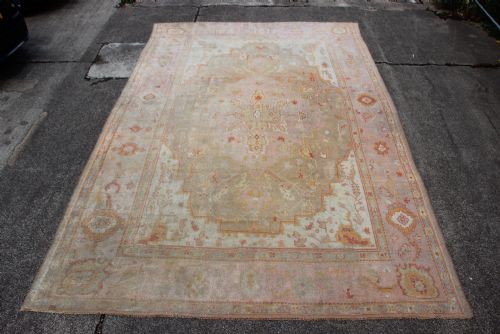



Oversized Oushak Carpet
An oversized oushak carpet brings grand scale and muted colour to a large room, offering the unmistakable warmth of traditional Turkish weaving.
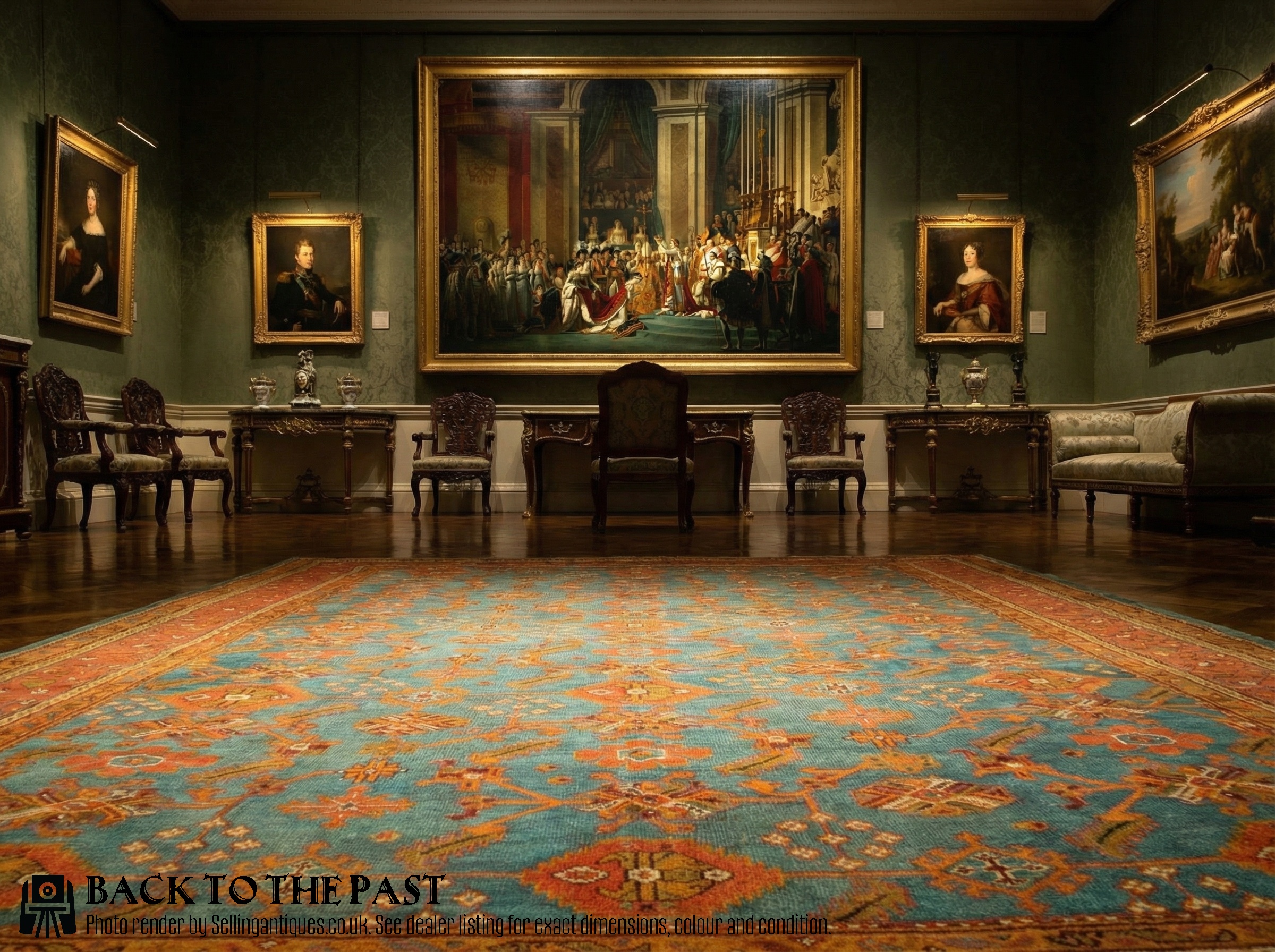
Oversized Oushak Carpet
An oversized oushak carpet is a large floor covering originating from the Turkish tradition, designed to anchor expansive rooms with substantial proportions. These pieces span production dates from the late nineteenth century through to the early decades of the twentieth century. They appear in room-size formats and runner lengths, often displaying a pale or faded palette rather than bright, saturated tones.
The styles recorded across these listings range from traditional Turkish and Ottoman designs to specific Oushak classifications. Buyers will encounter both square and rectangular formats that measure well beyond standard domestic dimensions, making them suitable for major halls and drawing rooms. The surfaces often show the natural softening of age, aligning with traditional aesthetics valued by collectors of antique carpets.
How they were made
These carpets are constructed using wool for the pile, providing a dense and durable surface suited to heavy use. The foundation and structural elements rely on cotton, giving the large textiles stability across their broad spans. This combination of materials allows heavy rugs to maintain their drape and form over decades of floor placement.
Weaving techniques follow traditional Turkish methods associated with Oushak workshops, producing characteristic pile densities and knot structures. The dyes used on the wool interact with the natural fibres to create the subdued, pale tones seen in older examples. Hand-knotting ensures that even with generous dimensions, the textile retains flexibility and structural integrity.
Listings feature pieces dated from 1880 through to 1920, constructed entirely from wool and cotton.
What varies in quality
The visual strength of an oversized oushak carpet depends on the balance of its pale palette and the preservation of its traditional Ottoman design motifs. Finer examples maintain crispness in their large-scale patterns even as the colours soften with age. The overall harmony of the faded dyes distinguishes a thoughtfully proportioned piece from one with a less balanced appearance.
Proportion and scale dictate the success of these large formats, where the interaction between the vast field and the border design must hold the eye. Even wear across the wool pile contributes to a sophisticated surface texture rather than a patchy appearance. The distinction between a standard floor covering and a finer antique rests on the coherence of the original Ottoman or Turkish design scheme.
Maples
The Oversized Oushak Carpet Glossary
- Oushak
- A traditional style of Turkish carpet originating from the town of Usak, known for larger-scale floral designs and a muted colour palette. These pieces often feature soft wool and expansive fields.
- Pile
- The upright yarn loops or cut ends that form the soft upper surface of the carpet. In these antique pieces, the pile consists of wool.
- Runner
- A long, narrow carpet format designed for corridors, hallways or large staircases. These pieces provide floor coverage in linear spaces.
- Foundation
- The underlying grid of warp and weft threads that supports the knotted wool pile. In these rugs, the foundation is made of cotton.
Oversized Oushak Carpet: Frequently Asked Questions
What is an oversized oushak carpet?
An oversized oushak carpet is a large antique floor covering from Turkey, typically measuring well beyond standard room dimensions and featuring muted tones.
These pieces use wool pile on a cotton foundation, reflecting traditional Ottoman and Turkish weaving styles from the late nineteenth and early twentieth centuries.
How do I place a large rug?
These expansive carpets are designed to anchor major living spaces, halls, or drawing rooms with generous floor areas. Their large scale works best when central furniture sits comfortably within the borders of the textile.
Pale colours and traditional patterns allow the rugs to complement existing interior schemes without overwhelming the room.
How do I care for antique wool?
Antique wool carpets require gentle maintenance, avoiding aggressive cleaning methods that might disturb the historical pile and natural dyes. Regular light vacuuming without a rotating brush helps protect the fibres.
Professional cleaning suited to antique textiles ensures the cotton foundation and wool pile remain stable over time.
How can I tell the age?
Dating these carpets involves examining the natural wear of the wool pile and the specific characteristics of the Ottoman or Turkish design motifs. The presence of pale, faded dye work often points towards production periods spanning the late nineteenth and early twentieth centuries.
Structural details, such as the cotton foundation and knotting density, provide further clues to the era of manufacture.