


Large Turkish Carpet
When buying a large turkish carpet, collectors seek room-sized floor coverings originating from Anatolia and woven across the late nineteenth and early twentieth centuries.
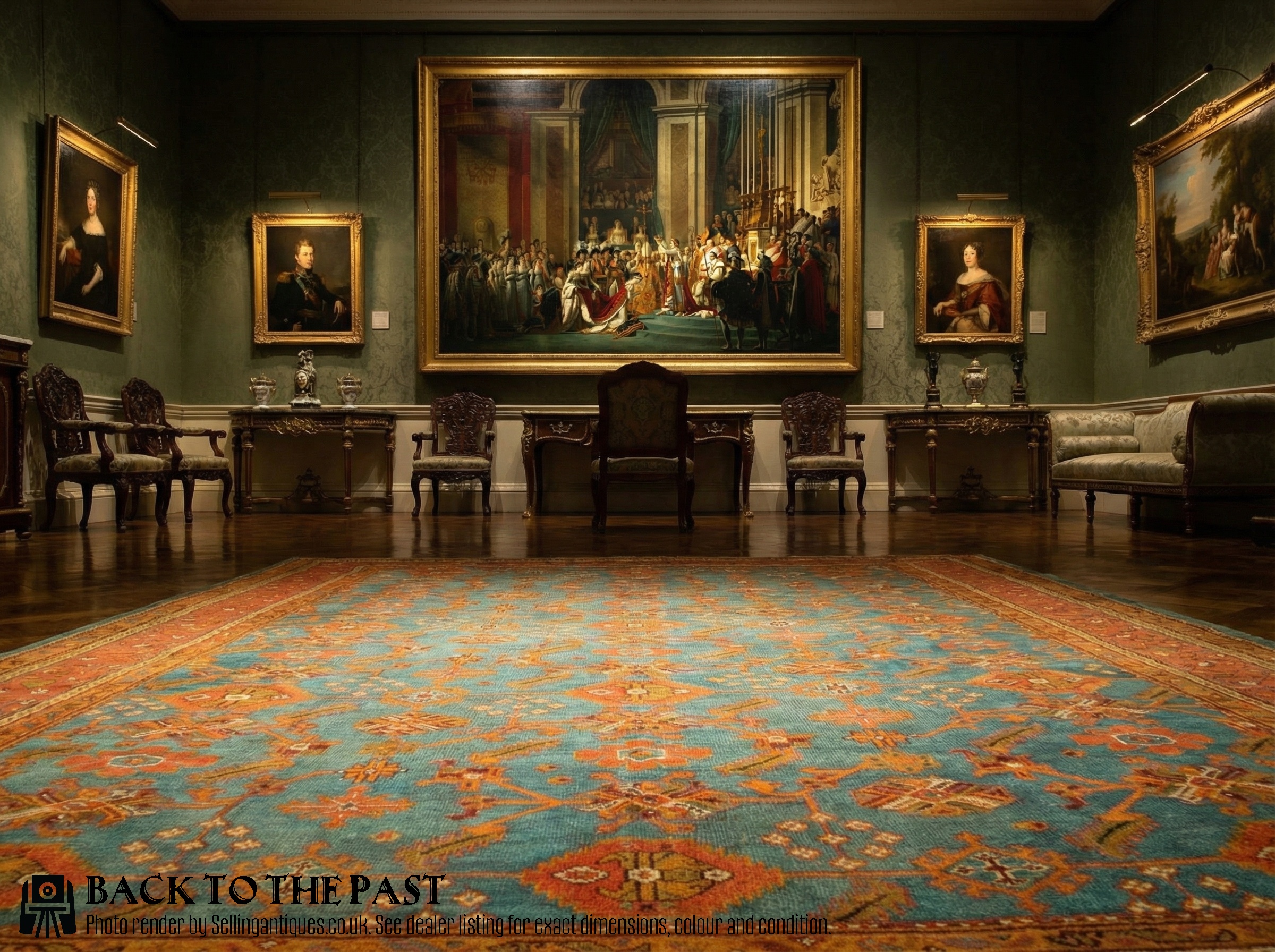
Large Turkish Carpet
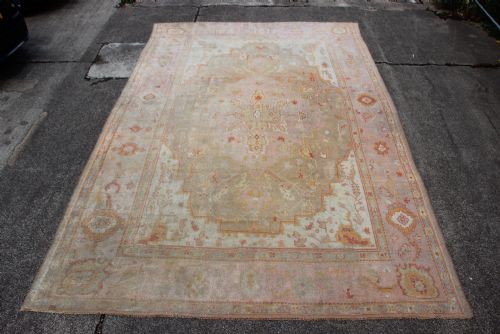
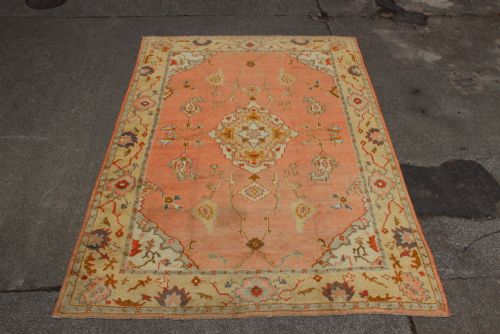
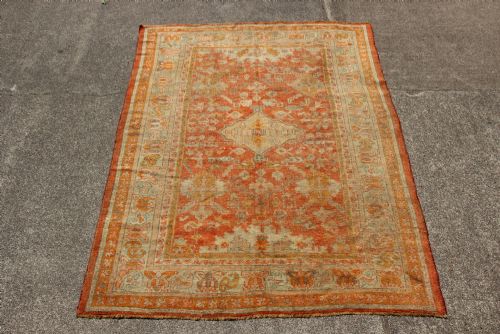
A large turkish carpet provides substantial room coverage with generous dimensions that suit principal reception spaces and historic interiors. These floor coverings emerge frequently as Oushak or Ushak productions, alongside specific regional weaving traditions from centres such as Ghiordes, Bergama, Melas, Konya and Kula.
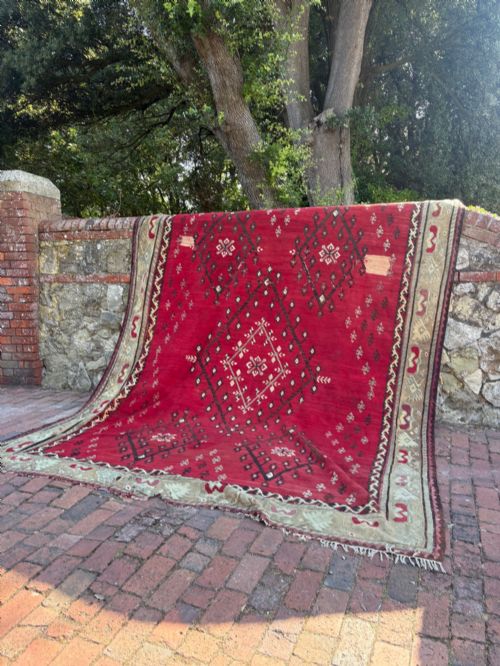
The aesthetic embraces traditional Anatolian and Ottoman design vocabularies, featuring large central medallions, botanical motifs, and repeat patterns rendered in soft, faded palettes or unusual ground colours like pink and green. Many examples reflect the weaving styles of Western Turkey, while flatwoven kilim variations offer alternative textural qualities.
Dating primarily from the decades between eighteen-seventy and nineteen-thirty, these woven artefacts display the aesthetic shifts from bold nineteenth-century room-size formats to early twentieth-century decorative requirements.
How they were made
The structural foundation relies on cotton warp and weft threads, providing stability for the dense pile woven above. Certain pieces incorporate specialised materials such as angora wool alongside standard wool fibres, yielding varied tactile surfaces and subtle lustre.
Weavers knotted the pile by hand onto the vertical looms, using traditional techniques passed down through generations in Anatolian workshops and villages. Natural dye sources produced the enduring muted tones that mellow gradually across decades of light exposure and domestic use.
Production dates span from eighteen-seventy through to nineteen-thirty, encompassing room-size carpets and flatwoven kilims.
What varies in quality
Quality rests upon the harmony of the palette and the intentionality of the design execution, where balanced proportions within large medallions distinguish finer artistic achievements. The handling of secondary motifs and border configurations reveals the individual competence of the workshop or village weaver.
Material selection and knot density dictate the longevity of the fabric, while the preservation of original selvedges and end finishes maintains the integrity of the piece. The depth and clarity of the dye work separate standard commercial output from exceptional decorative specimens.
Maple and Co
The Large Turkish Carpet Glossary
- Oushak
- A significant weaving centre in Western Turkey known for large-scale decorative carpets with expansive fields and soft colour palettes. These pieces frequently feature muted reds, blues, and pale ivories.
- Kilim
- A flatwoven textile produced without a pile, resulting in a lighter, tapestry-like fabric. These rugs often display geometric patterns and sharp colour transitions.
- Warp
- The vertical foundation threads stretched tightly on the loom before weaving begins. The weft threads are passed across these structural elements to secure the knots.
- Ghiordes
- A historic Turkish town associated with distinctive antique carpet production and knotting techniques. Pieces from this region often incorporate traditional prayer designs or medallion formats.
- Medallion
- A large central ornamental motif placed in the middle of the carpet field. This design element serves as the primary focal point for many Anatolian and Ottoman compositions.
Large Turkish Carpet: Frequently Asked Questions
How do I care for an old carpet?
Protect the fabric from direct, prolonged sunlight to prevent dye fading across wool and cotton surfaces. Vacuum gently using suction attachments without rotating brushes.
Rotate the textile periodically to ensure even wear across high-traffic areas in the room. Professional cleaning tailored to antique pile rugs maintains the condition of natural fibres.
What periods do these carpets span?
The available pieces predominantly date from the late nineteenth century through to the early decades of the twentieth century. Production years recorded in the archive range from eighteen-seventy up to nineteen-thirty.
Earlier examples from the eighteen-eighties often exhibit deep saturated tones, whereas pieces from the nineteen-twenties frequently display softer, faded decorative qualities suited for interior styling.
Where were these textiles woven?
Originating primarily in Anatolia, these floor coverings stem from specific towns and village weaving traditions across Turkey. Prominent production areas include Ushak, Bergama, Kula, Melas, and Konya.
Each region developed distinct geometric or floral design vocabularies influenced by local Ottoman aesthetics and nomadic heritage.
What materials make up the pile?
Wool serves as the primary material for the visible pile surface, providing warmth, resilience, and rich texture. Selected pieces incorporate softer angora wool to enhance the tactile quality of the weave.
Cotton provides the foundational structure through warp and weft threads, ensuring stability and flat alignment across large floor spaces.