
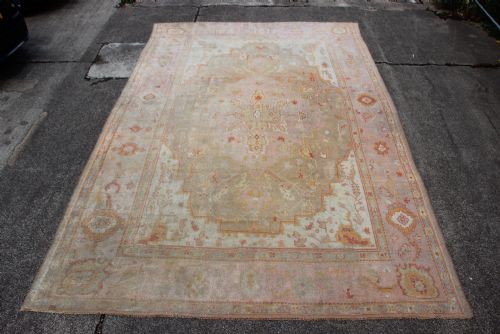


Muted Floral Area Rug
These antique rugs and carpets are chosen for a muted floral area rug collection to bring historic warmth and pattern into a room.
Muted Floral Area Rug
When searching for a muted floral area rug, a buyer looks at large carpets and rugs originating from late nineteenth-century workshops. The pieces available span periods from 1880 to 1900, capturing the classic output of Persian and Ottoman weaving centres.
The most common versions met on this page are Ushak, Ziegler, Mahal, and Hamadan carpets. These large formats display floral motifs rendered in softer, faded palettes rather than bright primary colours.
Originating from regions such as Anatolia and Persia, these floor coverings carry traditional designs adapted for European and Western interiors. Each piece offers room-anchoring scale combined with subdued botanical patterns.
How they were made
The materials recorded in these carpets are wool and cotton, utilised to build durable pile and sturdy structural foundations. Weavers knotted soft wool yarn onto cotton warps and wefts to create flexible yet resilient floor coverings.
Traditional looms and hand-knotting techniques governed the construction of these nineteenth-century floor coverings. Natural dyes mellowed over decades to produce the characteristic faded tones seen across the styles.
Every listed carpet here dates between 1880 and 1900, constructed entirely from wool and cotton materials.
What varies in quality
The standard of a carpet depends upon the fineness of the knotting and the precision of the botanical drawing. Denser foundations allow intricate floral details to remain clear even as the pile softens with age.
Design balance and the harmony of the muted palette distinguish superior examples from ordinary production. The most successful pieces maintain structural integrity while displaying an even, graceful fading of their vegetable dyes.
The Muted Floral Area Rug Glossary
- Ushak
- A town in western Anatolia known for large-scale carpets featuring understated floral designs. These pieces typically utilise relaxed geometric and botanical layouts.
- Ziegler
- A nineteenth-century design style created for Western tastes, featuring subdued colour palettes and large floral motifs. These carpets suit contemporary and traditional interiors alike.
- Mahal
- A style originating from the Mahal region of Persia, producing room-size carpets with all-over floral patterns. The drawing is often more spaced out and relaxed than city carpets.
- Hamadan
- A major trading and weaving centre in western Persia known for durable village rugs. These pieces often employ sturdy cotton foundations and geometric floral sprays.
- Pile
- The vertical or knotted surface of a carpet that forms the soft upper layer. In antique pieces, the wear of this wool surface reveals the age and history of the weaving.
Muted Floral Area Rug: Frequently Asked Questions
How do I clean an antique rug?
Gentle surface vacuuming without a beater bar removes loose dirt from the wool pile safely.
Professional specialist cleaning remains essential for deep washing to protect fragile nineteenth-century foundations.
Where should I place a large carpet?
These room-size formats anchor living spaces, dining rooms, and studies by sitting beneath main furniture groupings.
Placing them away from direct, harsh sunlight preserves the subtle tones of the faded vegetable dyes.
How do I identify an Ushak carpet?
Ushak carpets display characteristically large-scale floral motifs combined with a relaxed, open composition.
Their palette tends toward muted terracotta, soft blues, and warm creams rather than saturated reds and blues.
What is a Ziegler Mahal carpet?
Ziegler Mahal carpets represent nineteenth-century Persian production specifically tailored for Western aesthetic preferences.
They feature subdued field colours and softened floral sprays that blend easily into modern domestic interiors.