
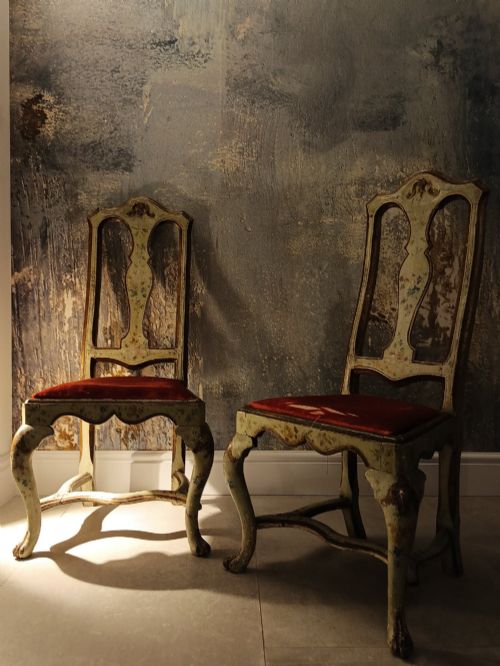
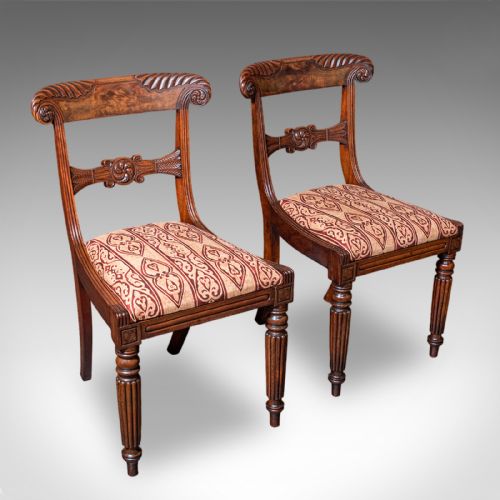
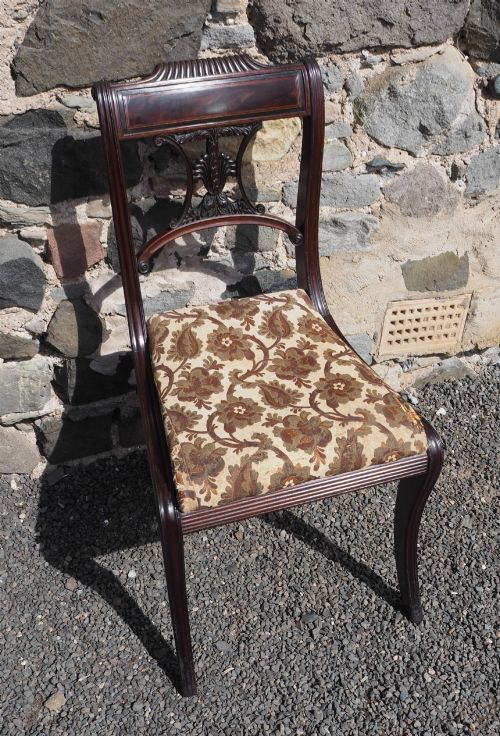
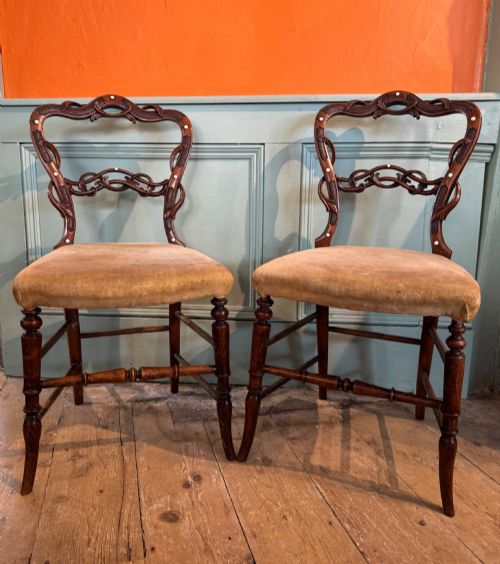


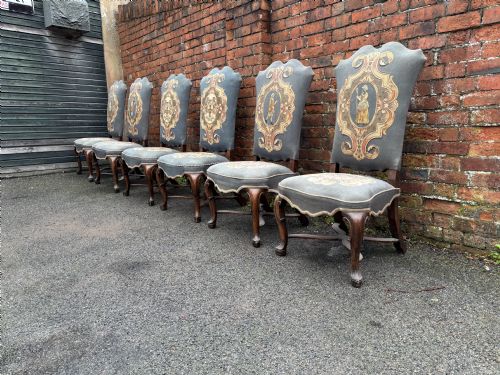


Vintage Upholstered Hall Chairs
These vintage upholstered hall chairs bring timber and textile together in narrow spaces, offering sturdy timber frames and comfortable seats for an entrance.
Vintage Upholstered Hall Chairs
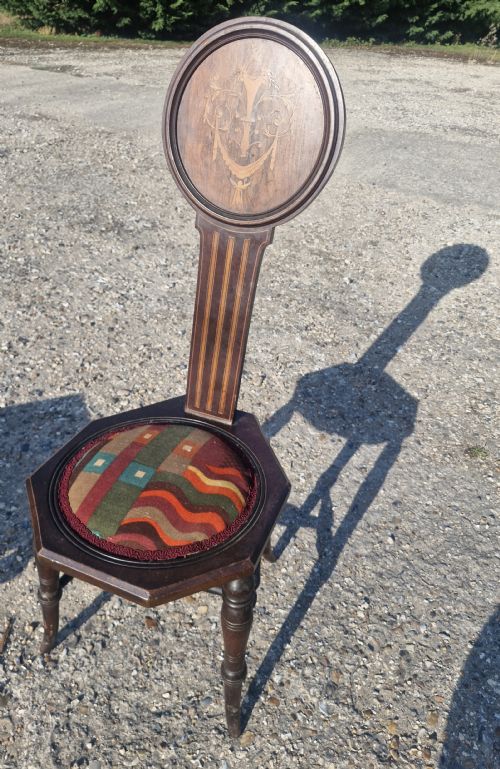
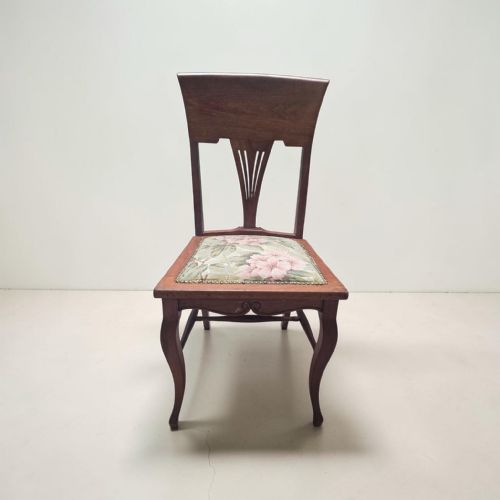
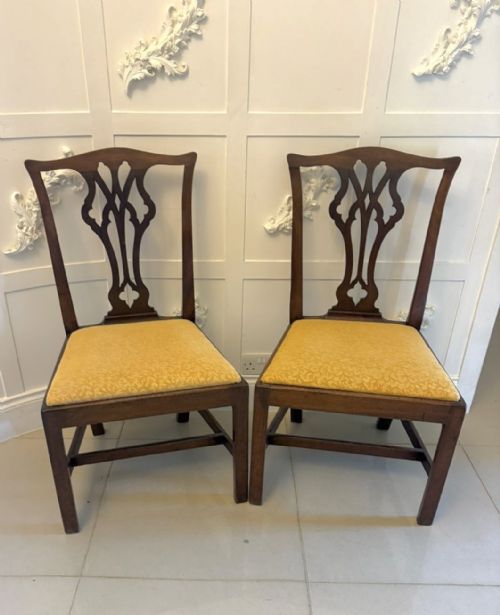
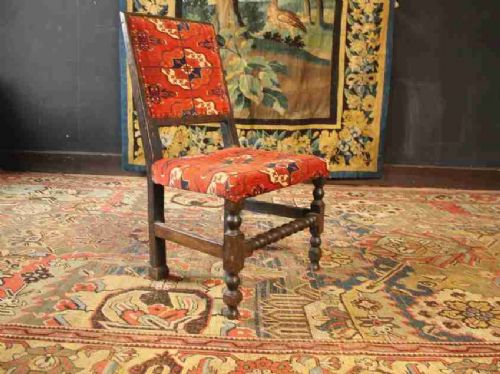
When you search for vintage upholstered hall chairs, you encounter sturdy seating designed primarily for entranceways, corridors, and reception spaces. The pieces listed span periods from the eighteenth century through the Edwardian era, showing how makers adapted domestic seating for transitional spaces.
The most frequent examples on this page combine timber frames in oak, mahogany, or walnut with textile, velvet, or leather upholstery. Side chairs and armchairs dominate the selection, often appearing in pairs rather than single items.
Makers drew on diverse design vocabularies, incorporating styles from Georgian and Regency models to Victorian Gothic and Arts and Crafts interpretations. These varied forms reflect how domestic architecture evolved to treat the hall as a furnished room.
How they were made
Craftsmen built the structural frames using dense hardwoods like oak, mahogany, walnut, and satinwood, frequently employing traditional joinery to ensure stability under daily use. Timber surfaces received carved detailing, scrollwork, or inlay work depending on the prevailing style of the period.
Upholstered elements relied on textiles such as velvet, leather, and patterned fabrics, sometimes secured with brass detailing or needlepoint work. These coverings transformed simple wooden frames into comfortable reception seats suitable for corridors and morning rooms.
Listings feature oak, mahogany, walnut, and satinwood frames paired with velvet, leather, and textile upholstery across the Victorian and Edwardian periods.
What varies in quality
The calibre of timber selection and the precision of the frame construction set pieces apart, distinguishing robust cabinetmaking from standard production. Dense grain in the mahogany or oak and crisp definition in carved scrollwork indicate superior workshop standards.
The integration of the upholstery and textile work relative to the timber frame influences the overall integrity of the piece. Well-executed joinery ensures the chair remains rigid and balanced over centuries of placement in busy halls.
Waring & Gillow·Liberty of London·White, Allom & Co.·Whytock & Reid of Edinburgh
The Vintage Upholstered Hall Chairs Glossary
- Side chair
- A chair without arms designed for general room use or placement against walls. These frequently appear in pairs within entrance spaces.
- Hall chair
- A rigid timber seat intended for an entranceway or corridor. They often incorporate carved backs or minimal upholstery.
- Mahogany
- A durable reddish-brown tropical hardwood favoured for furniture frames. It provides high structural strength and takes fine carving.
- Needlepoint
- A form of canvas work embroidery used for upholstery. This technique introduces patterned textile surfaces to chair seats.
Vintage Upholstered Hall Chairs: Frequently Asked Questions
Where do these chairs sit best?
These chairs suit entrance halls, narrow corridors, and reception spaces where seating is needed without occupying excessive floor area. Their compact side chair forms allow them to stand flat against walls.
Placing them in rooms with similar timber tones helps integrate the darker woods like oak and mahogany into modern interiors.
How are pairs matched?
Makers originally produced many hall chairs in matched sets or pairs for symmetrical placement flanking a doorway or console table. Surviving pairs share identical timber species, carving motifs, and upholstery treatments.
Examining the turning and joinery reveals whether two chairs originated from the same workshop bench.
What woods appear most often?
Oak and mahogany dominate the timber selection across these listings, alongside walnut and satinwood. These dense hardwoods provided the structural durability required for everyday use in high-traffic corridors.
Craftsmen polished or waxed the wood to highlight the natural grain patterns beneath the surface finish.
How do styles differ?
The styles range from the clean classical lines of the Georgian and Regency periods to ornate Victorian Gothic carvings and Arts and Crafts simplicity. Each period applied its characteristic ornament to the chair back and frame.
Recognising these decorative details helps date the construction and understand the workshop traditions behind the piece.