


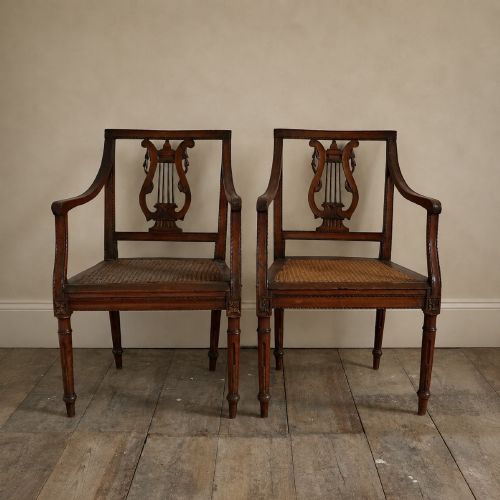
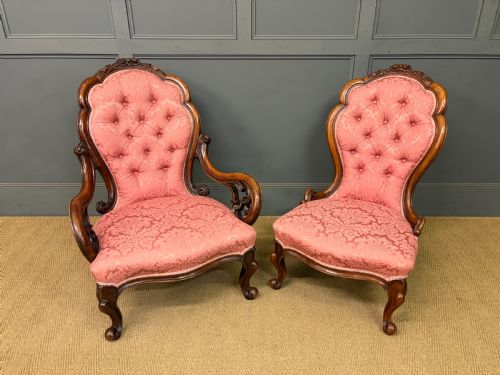
Pair Bedroom Accent Chairs
Pair bedroom accent chairs bring matched seating and period character to a dressing room or guest suite.
Pair Bedroom Accent Chairs
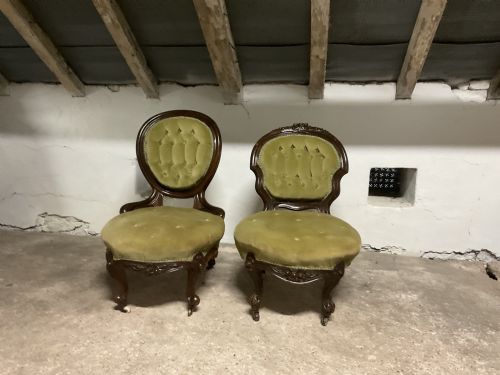
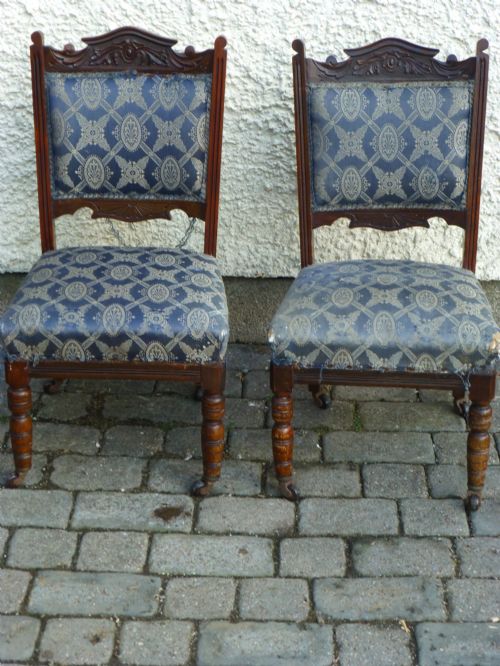
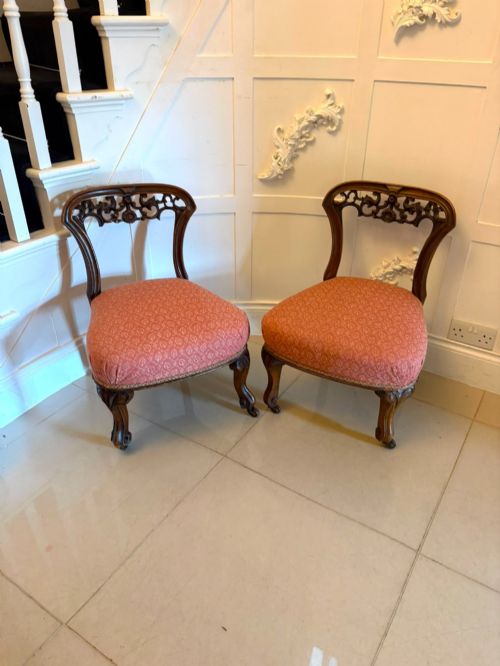
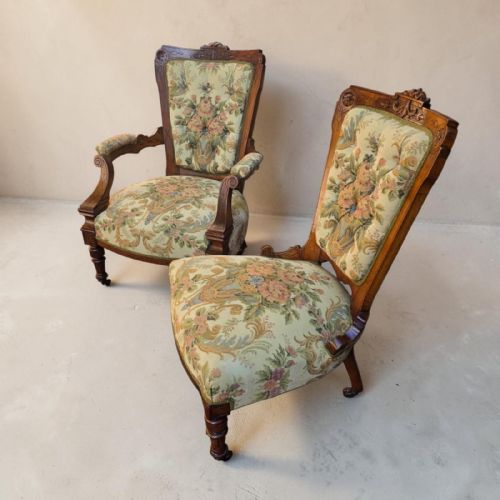
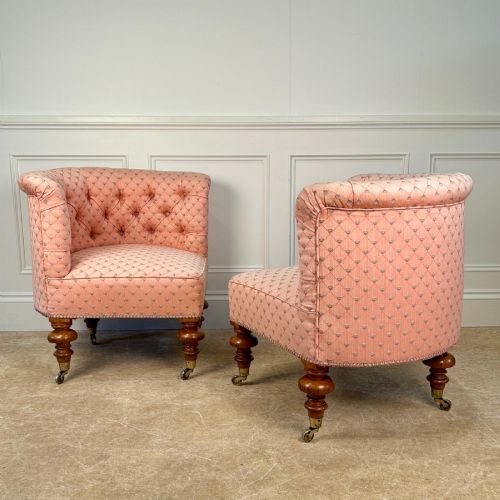
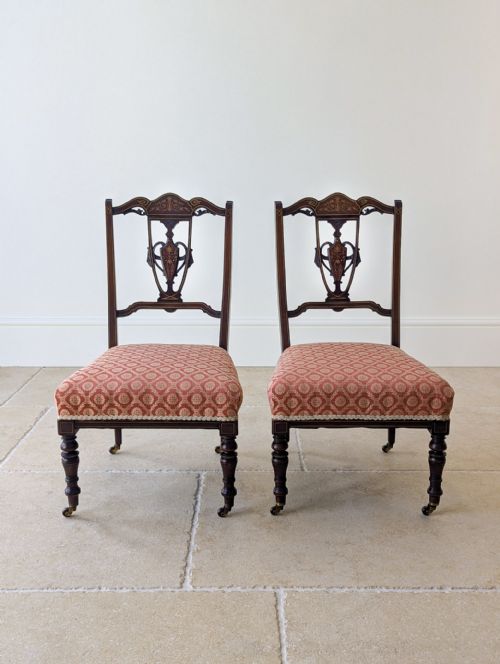
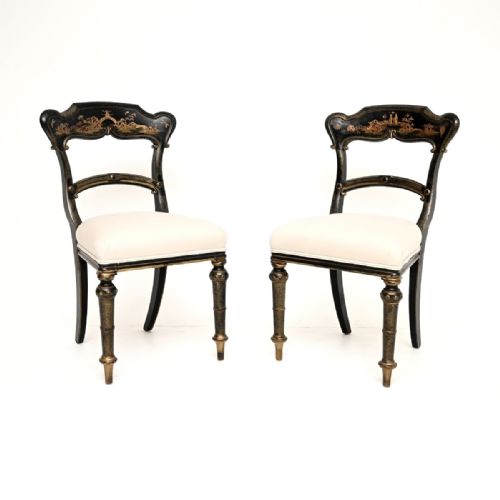
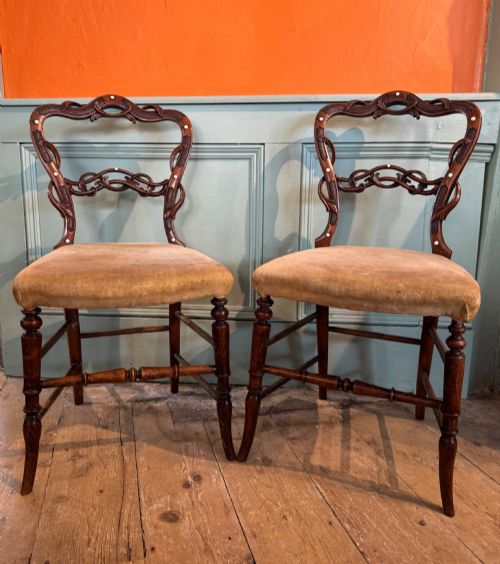
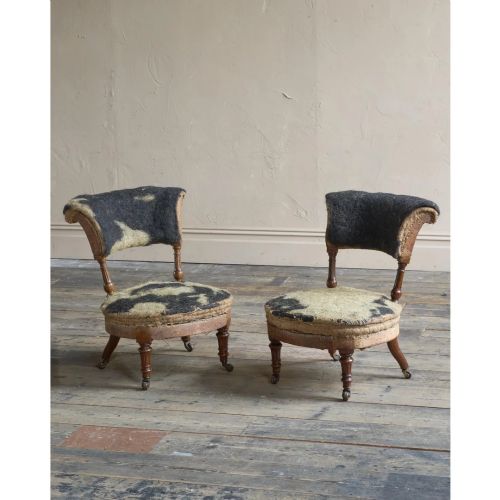
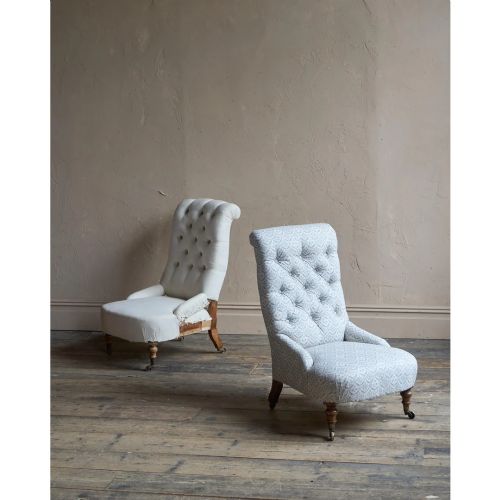
Pair bedroom accent chairs encompass compact seating designed for private chambers, appearing frequently as Victorian walnut side chairs and low nursing chairs. Buyers searching for pair bedroom accent chairs often find nineteenth century and Edwardian forms intended for corners and dressing spaces.
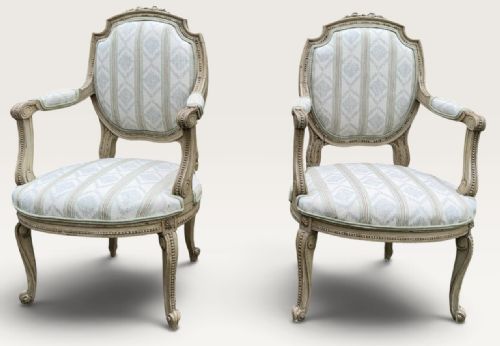
The selection ranges from French giltwood armchairs to mahogany salon chairs and bamboo side chairs. Low profiles and upholstered seats dominate the forms, offering versatile seating that functions well away from the formal drawing room.
Materials and construction
Frames rely principally on timber such as walnut, mahogany, and rosewood, carved with scroll backs, cabriole legs, or inlaid details. Beech and oak appear alongside giltwood and painted finishes, sometimes accented with brass or ormolu mounts.
Upholstery uses traditional stuffing and fabric or velvet coverings, while cane panels serve on seats and backs. Original paint surfaces and lacquered chinoiserie finishes provide decorative detail on specific French and Victorian examples.
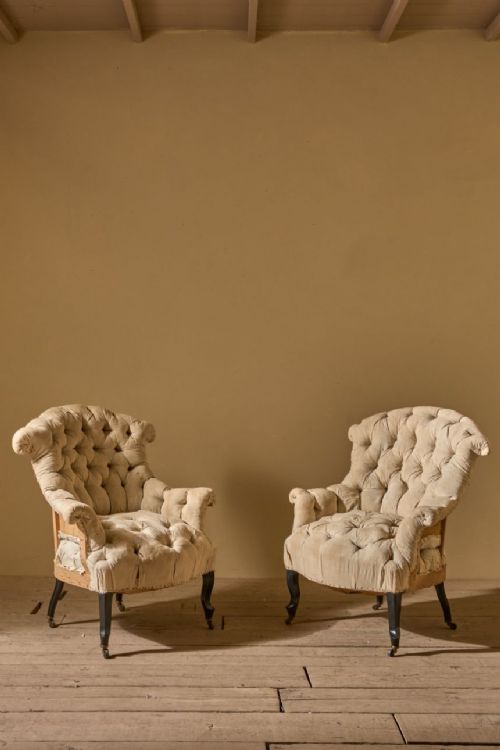
Some chairs require complete re-upholstery, offering a blank canvas for bold modern fabrics.
The markers of quality
Quality rests in the crispness of carved woodwork and the integrity of joint construction across both chairs in the pair. Rich timber grain and well-defined floral or scroll motifs distinguish superior examples from plain utility seating.
The preservation of original finishes, whether giltwood, lacquer, or polished mahogany, elevates a matched pair. Balanced proportions and sturdy frames ensure that the seating maintains both visual harmony and structural stability.
Howard and Sons
The Pair Bedroom Accent Chairs Glossary
- Nursing chair
- A low-seated armchair designed in the Victorian era for comfort while nursing infants. These pieces often feature low legs and supportive upholstered backs.
- Bergere
- An enclosed upholstered armchair with wooden framing exposed around the sides and back. This French style frequently incorporates cane panels or padded armrests.
- Chinoiserie
- European decorative style imitating East Asian artistic traditions. Pieces often feature lacquered surfaces and painted motifs of figures or landscapes.
- Cabriole leg
- A furniture leg that curves out and then in, resembling an animal's front leg. This form appears frequently on mid-nineteenth century chairs.
- Ormolu
- Gilded bronze mounts applied as decorative ornaments to furniture frames. These details are typical on nineteenth century French revival pieces.
Pair Bedroom Accent Chairs: Frequently Asked Questions
Where should I place a pair of bedroom chairs?
These chairs fit well in corners, beside a dressing table, or flanking a fireplace in a master bedroom. Their compact scale allows them to sit comfortably without dominating the room.
Matching pairs create a sense of symmetry and balance at the foot of a bed or near a window. They provide functional seating while adding decorative period character to private spaces.
How do I distinguish Victorian from Edwardian chairs?
Victorian chairs tend to feature heavier timbers like walnut and rosewood, deep carving, and darker, richer finishes. Styles from this era often emphasise ornate scrollwork and button-tufted upholstery.
Edwardian pieces generally present lighter woods such as satinwood and mahogany with inlaid details and Sheraton revival influences. The overall aesthetic feels airier and less massive than mid-nineteenth century furniture.
What is a nursing chair used for today?
Originally built low to the ground for infant care, modern interiors use these chairs as comfortable reading seats or bedroom accents. Their low seat height makes them ideal for relaxing in smaller spaces.
They also serve effectively as vanity chairs or occasional seating in dressing rooms. The compact proportions fit easily into alcoves where standard armchairs prove too large.
Are these chairs suitable for daily use?
Most antique bedroom chairs handle normal daily sitting well, provided the underlying frame remains sturdy and well-joined. Walnut and mahogany constructions offer enduring structural strength.
Upholstered components may require updating depending on their condition and the desired interior scheme. Checking the stability of the joints ensures the chairs remain practical for regular use.