

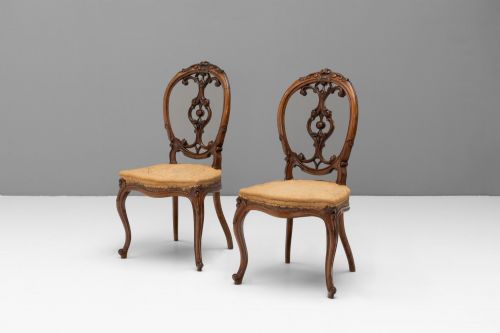


Victorian Rococo Side Chairs
Victorian rococo side chairs are ornate nineteenth-century seating pieces defined by exuberant carved frames and scrollwork, offering a dramatic focal point for period interiors.
Victorian Rococo Side Chairs
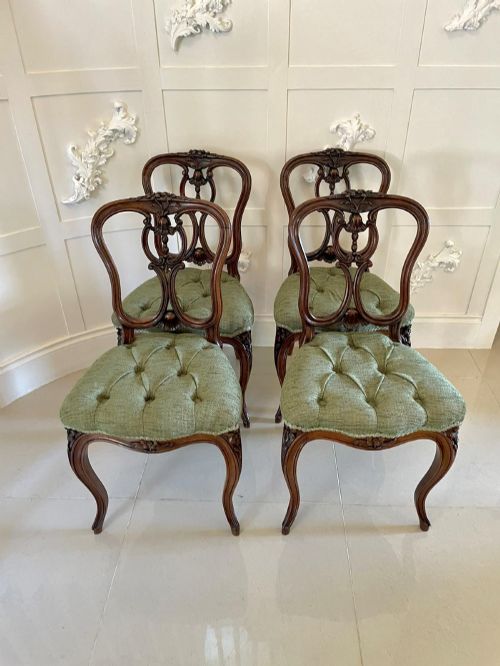
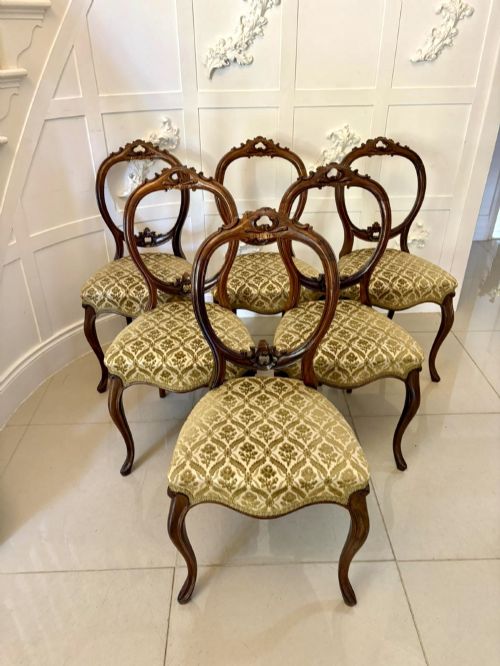
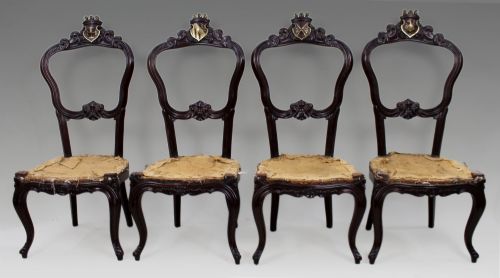
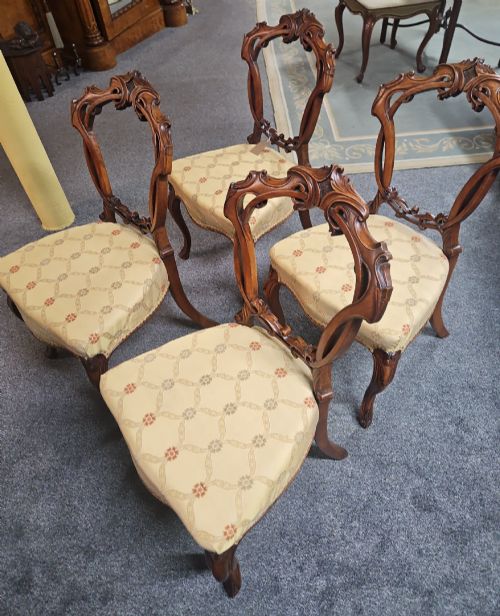
Victorian rococo side chairs combine mid-nineteenth-century British cabinet-making with exuberant continental influences drawn from French revival styles. Buyers searching this phrase typically encounter walnut or rosewood examples featuring carved frames, pierced splat backs, and serpentine rails.
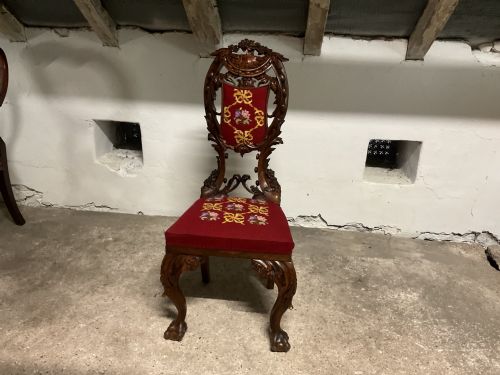
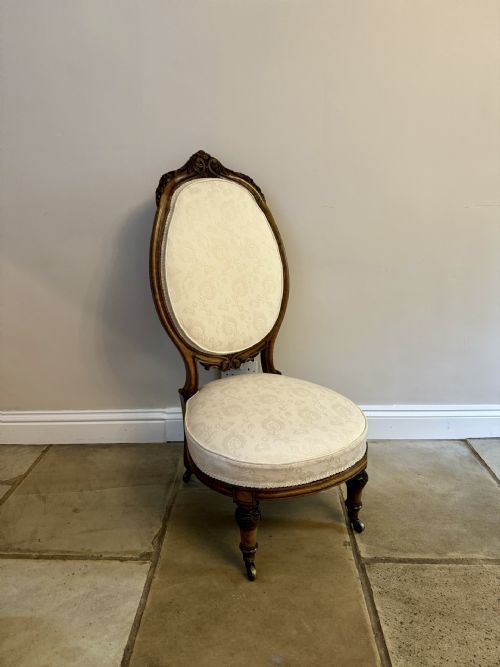
The selection ranges from individual hall chairs to substantial sets of dining chairs spanning the mid to late nineteenth century. Single salon chairs and bedroom seating also appear frequently alongside traditional dining forms.
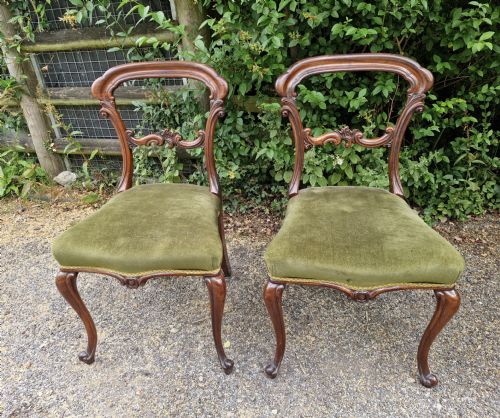
Makers of this period adapted earlier Louis XV motifs to suit Victorian drawing rooms, incorporating cabriole legs and floral carving into standard domestic seating. The resulting pieces balance decorative flourish with practical nineteenth-century construction.
Materials and construction
Cabinet-makers relied primarily on dense timbers such as walnut, rosewood, and mahogany, which supported deep relief carving without splitting along the grain. Selected pieces utilise Cuban mahogany or oak alongside primary structural woods.
Upholstery materials included contemporary fabric, velvet, and various traditional textiles applied over buttoned backs or sprung seats. Brass fittings occasionally appear on castors or associated hardware.
Frames were joined using traditional tenon and mortise techniques before carvers applied intricate scrolling foliage and heraldic motifs directly to the timber surface.
Certain dining chairs arrive with heraldic crested details, as if every dinner guest belonged to an ancient peerage.
Distinctions in quality
The distinction between standard commercial seating and exceptional cabinet-work lies in the crispness and depth of the timber carving. Superior examples display meticulously undercut foliage and hand-shaped cabriole legs rather than shallow, machine-routed patterns.
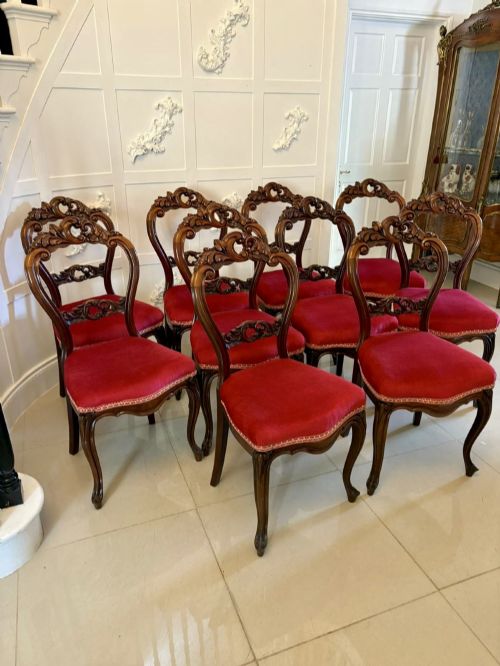
Cohesion within larger sets significantly affects standing, as matched sets of six or ten dining chairs demand rigorous consistency in timber grain and carved detail across every frame. Single salon and ladies chairs achieve distinction through harmonious proportions and sophisticated wood selection.
The Victorian Rococo Side Chairs Glossary
- Cabriole leg
- A furniture leg that bends outward in a convex curve and tapers inward to a scroll or pad foot, mimicking animal limbs. This form typifies mid-nineteenth-century revival seating.
- Balloon back
- An oval or loop-shaped chair back resembling a balloon silhouette, popular during the Victorian era. The curved timber frame often encloses a pierced centre splat.
- Pierced splat
- The central vertical slat within a chair back that has been pierced or cut through to form a decorative openwork pattern. Cabinet-makers used this technique to lighten the visual weight of heavy timbers.
- Serpentine rail
- A horizontal framing member curved in a wavy line with a convex centre flanked by concave bends. This shaping frequently occurs on the front seat rails of rococo revival chairs.
Victorian Rococo Side Chairs: Frequently Asked Questions
Where were Victorian rococo side chairs used?
These chairs served primarily in formal drawing rooms, parlours, and dining spaces where homeowners entertained guests. Smaller side and occasional chairs were easily moved around the room to accommodate visitors.
In larger houses, similar carved walnut or mahogany pieces also functioned as hall chairs or bedroom seating. Their decorative profiles ensured they remained visible against room walls when not occupied.
How do I identify a rococo revival chair?
Rococo revival seating is characterised by asymmetrical scrollwork, naturalistic floral carvings, and flowing serpentine lines. These elements distinguish them from the stricter geometric forms of earlier neoclassical furniture.
Look for cabriole legs, carved cartouche motifs on the top rail, and dark timbers such as walnut and rosewood. The overall silhouette emphasises curves over straight edges.
Can I use antique side chairs for daily dining?
Many nineteenth-century dining chairs remain sturdy enough for regular use provided the frame joints are secure. Solid timber construction and sound joinery allow them to withstand daily seating.
Buyers planning regular use should examine the structural rigidity of the leg joints and seat rails. Professional reupholstery may be necessary if original padding has deteriorated over time.
How do I distinguish 1850s chairs from later copies?
Mid-nineteenth-century examples typically feature hand-cut joinery marks, dense native or imported hardwoods, and period-appropriate upholstery foundations. Examining the underside reveals hand-shaped components rather than uniform modern machine production.
Timber patination and wear patterns around the handholds and feet also indicate age. Later Edwardian or twentieth-century revivals often display different secondary woods and modern hardware fixings.