
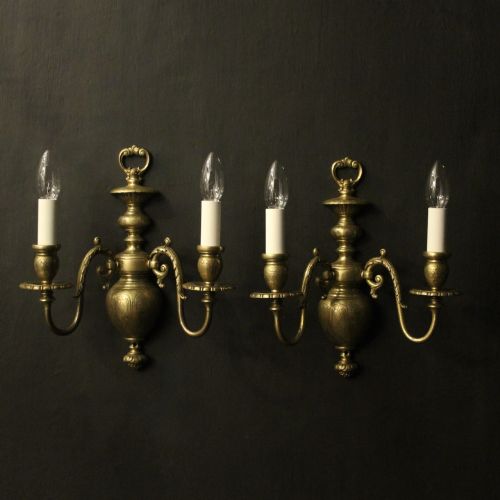
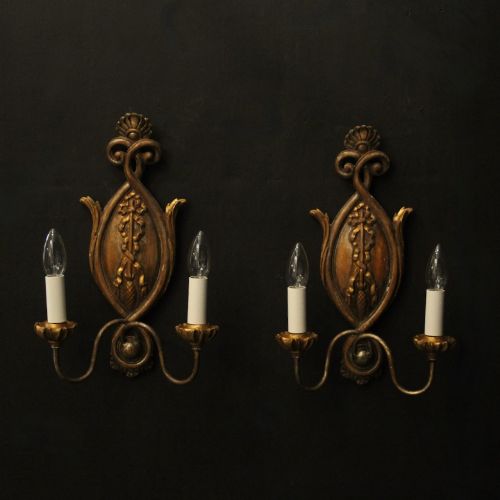
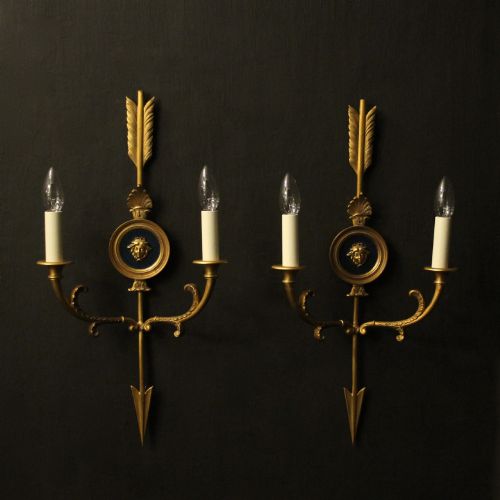
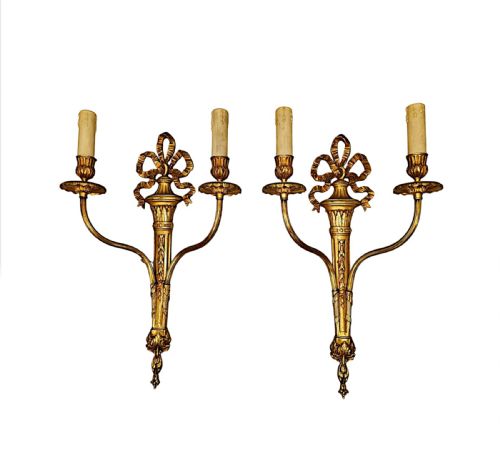
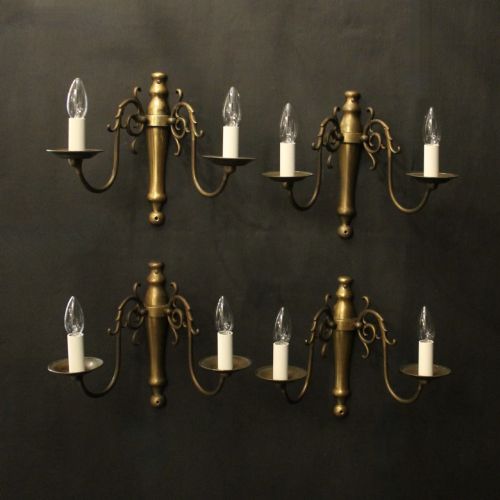
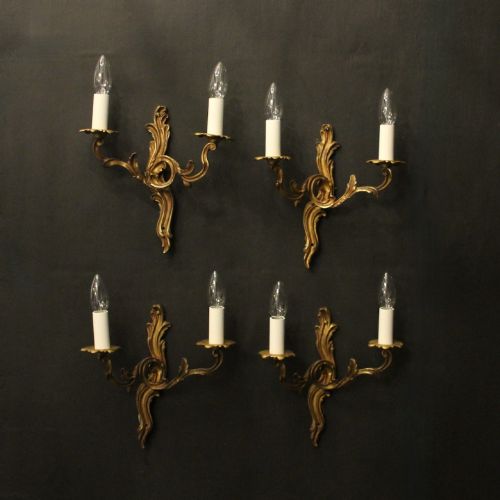

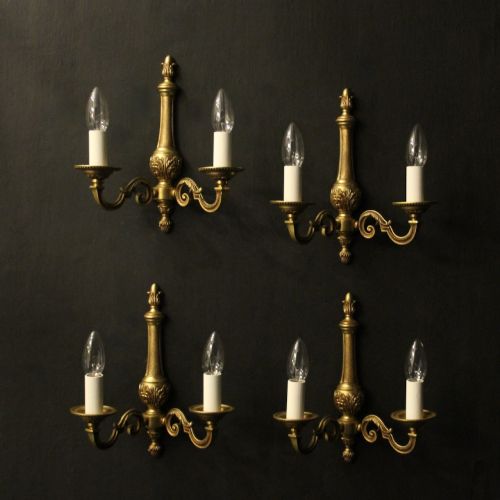
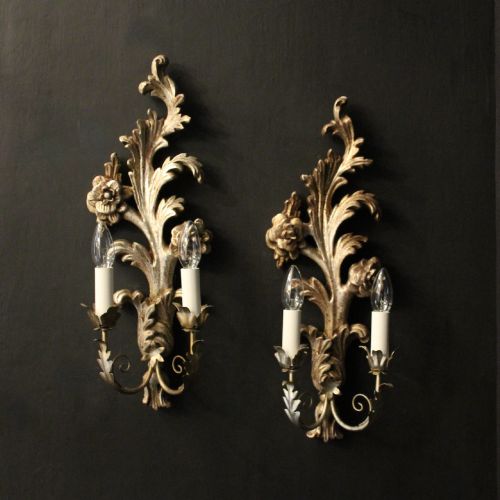
Vintage Twin Wall Sconce
A vintage twin wall sconce brings paired candle or bulb branches to a vertical surface, offering balanced illumination in a period interior.
Vintage Twin Wall Sconce
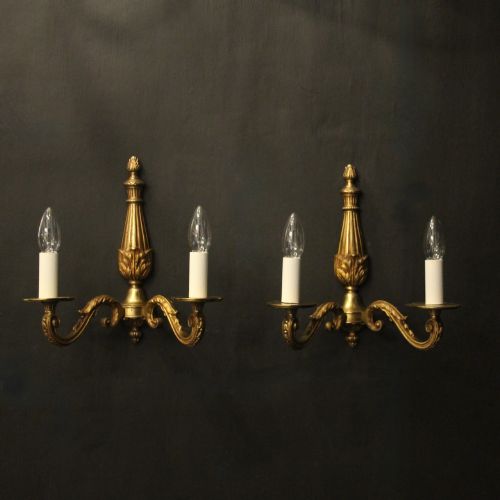
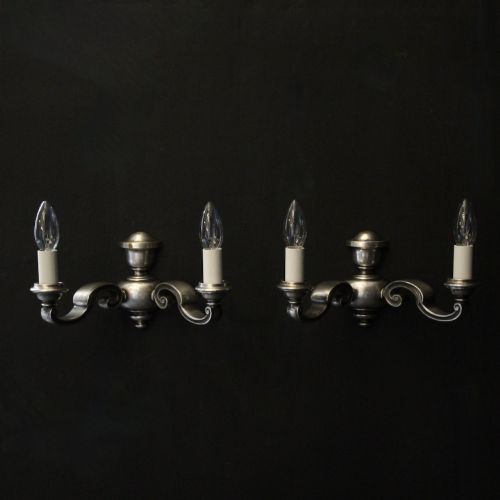
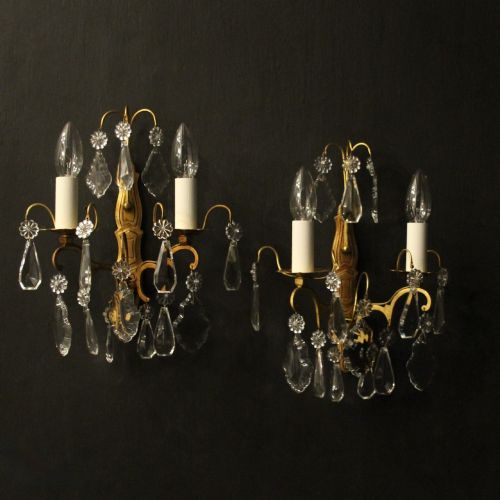
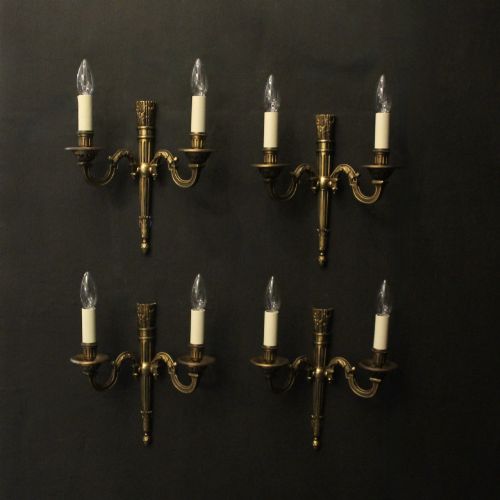
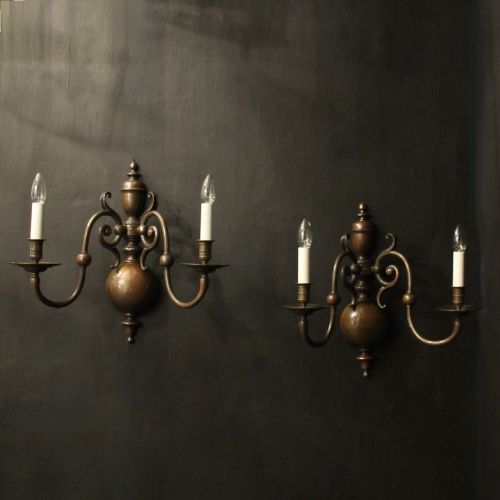
A vintage twin wall sconce primarily takes the form of wall lights, girandoles, or half lanterns designed with two distinct branches for lighting. These fixtures appear frequently in French and English designs spanning from the Victorian era through the mid twentieth century.
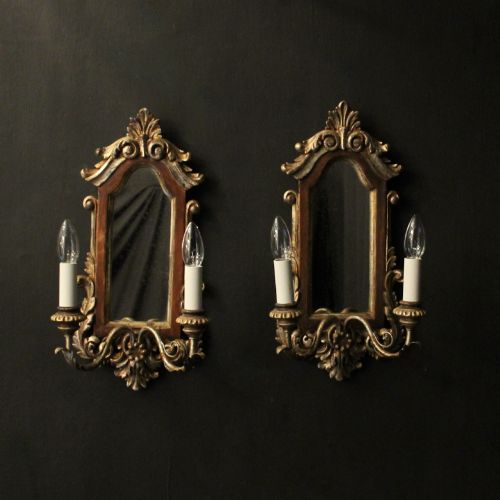
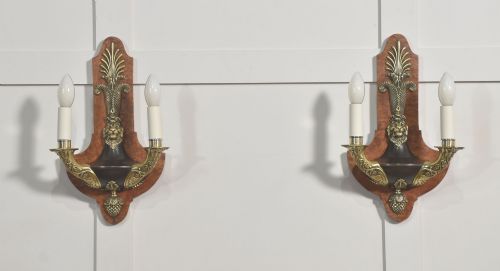
Buyers encounter examples shaped by specific regional aesthetics, notably French Rococo, Empire, and Florentine styles. Many of these pieces integrate twin arms into symmetrical arrangements involving ribbons, scrolls, or architectural motifs.
The selection ranges from compact pairs to extensive sets intended for larger reception rooms. Materials such as brass, giltwood, and bronze define the physical presence of these wall-mounted objects across the inventory.
Materials and construction methods
Foundries and workshops shaped these fixtures using cast brass, bronze, and gilt bronze, often applying surface gilding to enhance the metalwork. Giltwood alternatives emerge through carved timber frames finished with gold leaf.
Makers assembled multiple components through mechanical joints, pins, and screws, integrating backplates designed to mount flush against plaster or wood-panelled walls.
Several French sconces feature carved ribbon motifs tied in permanent bows above the candle arms.
Distinctions in craftsmanship and material grade
The depth and clarity of the metal casting or wood carving establish the baseline quality of each sconce. Finer examples display crisp relief work along scrollwork, ribbons, and acanthus motifs without the softening typical of secondary casts.
Surface treatments further differentiate the tier of manufacture, distinguishing heavy fire-gilded or ormolu finishes from simpler painted or plated surfaces that wear differently over time.
Casier
The Vintage Twin Wall Sconce Glossary
- Girandole
- A branched wall light or sconce, frequently paired with a reflective backplate or mirror to augment the candle light. These decorative fixtures gained popularity in formal European interiors.
- Ormolu
- Gilded bronze produced by applying a mercury and gold amalgam to a bronze base, then heating the piece to drive off the mercury. This technique creates a durable, luminous surface found on finer period mountings.
- Giltwood
- Timber, typically carved gesso-coated wood, treated with gold leaf or metallic powder to simulate solid gold. It appears frequently in Florentine and decorative wall frames.
- Rococo
- An ornate design style characterised by asymmetrical curves, C-scrolls, shell motifs, and naturalistic plant forms. The style dominates many French wall lights from the nineteenth and early twentieth centuries.
Vintage Twin Wall Sconce: Frequently Asked Questions
How were these wall sconces originally lit?
These fixtures were designed to hold tallow candles or wax tapers mounted securely within small drip pans or nozzles.
Many surviving examples have subsequently been converted to electricity for modern interior use.
Where should a twin wall sconce be positioned?
They suit flanking positions on either side of a fireplace, mirror, or doorway to provide balanced lateral illumination.
Placement height depends on ceiling proportions, typically sitting at eye level to direct light effectively across the room.
How do I distinguish French styles from English ones?
French pieces often incorporate flamboyant Rococo scrolls, gilt bronze, and ribbon crestings reflecting Parisian ateliers.
English variants tend towards restrained brass or silver-plated designs associated with Georgian Revival and Victorian domestic interiors.
Are these sconces supplied ready for wiring?
The inventory contains fixtures in various states of electrical readiness, ranging from unlit brass to previously updated wiring.
Buyers should consult a qualified electrician to inspect and adapt components to current safety standards.