


Silver Twin Wall Light
These silver twin wall light fixtures bring historical illumination and reflective brilliance to a room, spanning Edwardian and mid-century aesthetics.
Silver Twin Wall Light
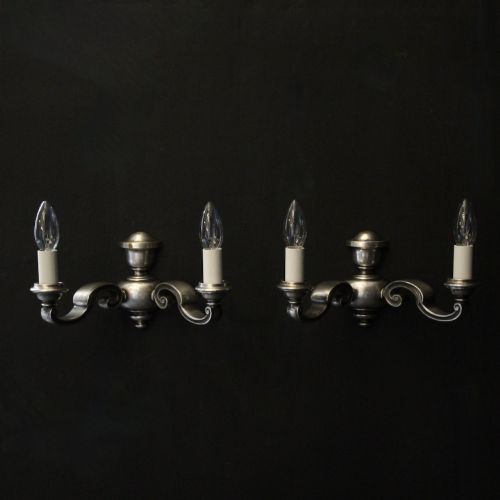
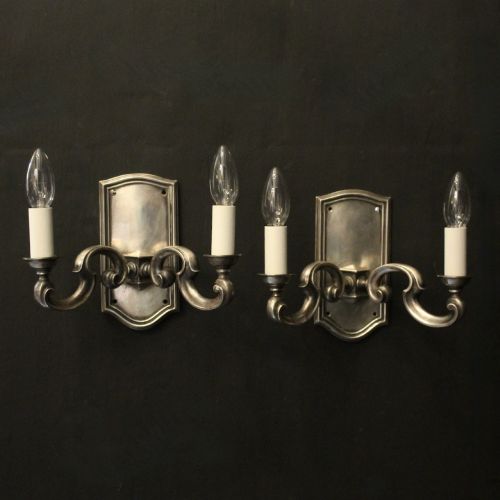
A silver twin wall light mounts directly to a vertical surface, carrying two branches or arms designed to hold candles or electric lamps. These fixtures distribute light across a room while reflecting illumination through their metallic or mirrored surfaces.
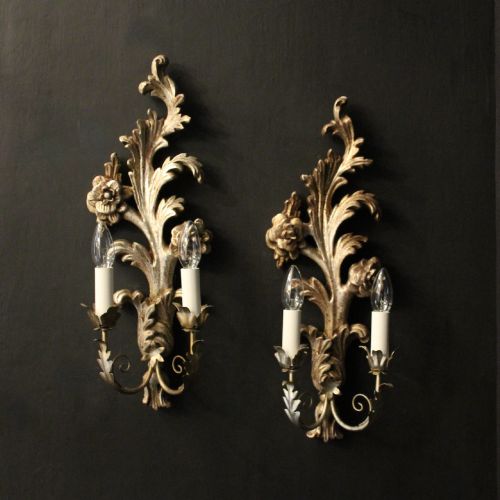
You will frequently meet French silver gilded examples from the 1930s alongside English silver plated pieces from the 1920s. Italian Florentine giltwood and silvered varieties also appear alongside Victorian and Edwardian iterations.
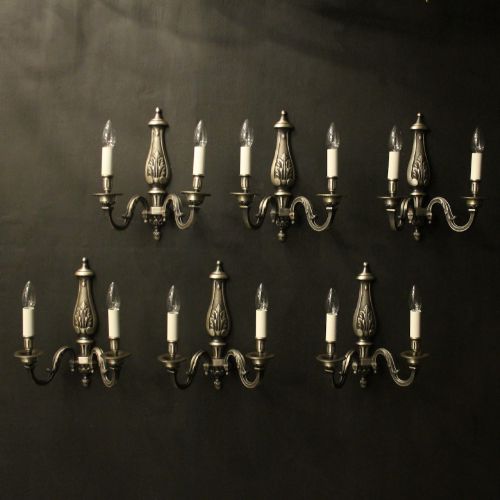
Pairs and sets dominate the records, though single sconces and larger sets of up to six pieces surface in both current listings and historical archives.
How they were made
Maker's workshops utilised metals such as brass and bronze as structural cores, applying silver plate, silver leaf, or silver gilding to create a bright metallic finish. Wood forms, specifically giltwood, provided carved foundations for Italian Florentine and French designs.
Glass components including cut crystal drops, Murano elements, and plain glass plates were integrated to catch and refract the light emitted from the twin branches. Hand-carving and detailed casting defined the ornamentation, featuring motifs like cherubs, mermaids, and neoclassical details.
Listings span periods from the 1860s through the 1930s, featuring materials like bronze, crystal, and silver leaf.
What varies in quality
The depth and execution of the surface finish dictate the visual weight of the piece, distinguishing heavy silver gilding or thick silver plate from thin, worn applications. Superior examples display crisp hand-carving on wooden frames or finely detailed metal casting on arms and backplates.
The integrity of integrated materials, such as the clarity of cut crystal and the preservation of original giltwood or silvered surfaces, separates standard production pieces from exceptionally ornate Italian or French commissions.
The Silver Twin Wall Light Glossary
- Sconce
- A wall-mounted lighting fixture designed to carry candles or electric bulbs. These fixtures project outward to illuminate hallways and parlours.
- Giltwood
- Wood that has been coated with gold leaf or a gold-coloured finish. This material often appears combined with silver details in Florentine wall lights.
- Silver Plate
- A base metal such as brass coated with a thin layer of silver. This technique offered the appearance of solid silver at a lower manufacturing cost.
- Twin Arm
- A configuration featuring two branches extending from a central backplate to hold light sources. This symmetrical layout defines the majority of the sconces in this category.
Silver Twin Wall Light: Frequently Asked Questions
How do I wire an antique wall light?
Many older wall fixtures require professional rewiring to meet modern safety standards while retaining their original brass or silvered backplates.
A qualified electrician can adapt historical fittings to accept contemporary bulbs without altering the exterior metalwork or glass components.
Where should I place twin wall lights?
These fixtures work effectively flanking a fireplace, mirror, or doorway in a hallway or dining room. Placing them at eye level ensures balanced illumination and showcases the reflective silver and crystal details.
Pairs are traditionally hung at equal heights to maintain symmetry across the wall space.
What is the difference between silver plated and silver gilded?
Silver plating involves bonding a thin layer of silver onto a base metal like brass. Silver gilding applies fine silver leaf or liquid silver over a prepared gesso or wood ground.
Gilded finishes frequently appear on carved wooden Florentine and French frames, whereas plating is standard on solid metal English fixtures.