
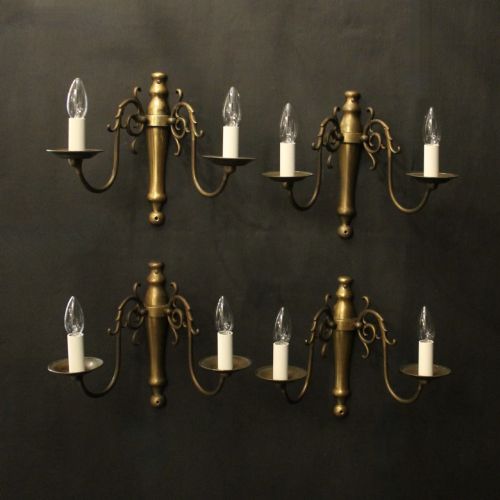
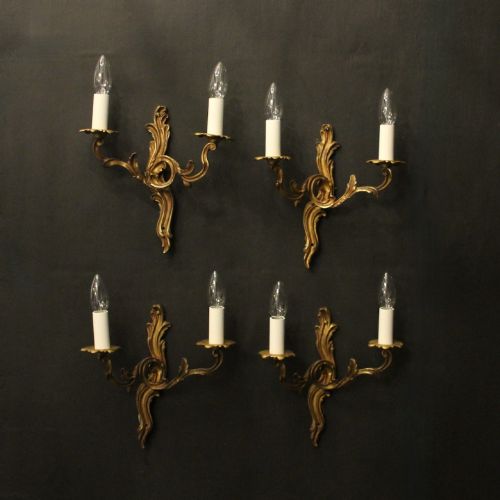
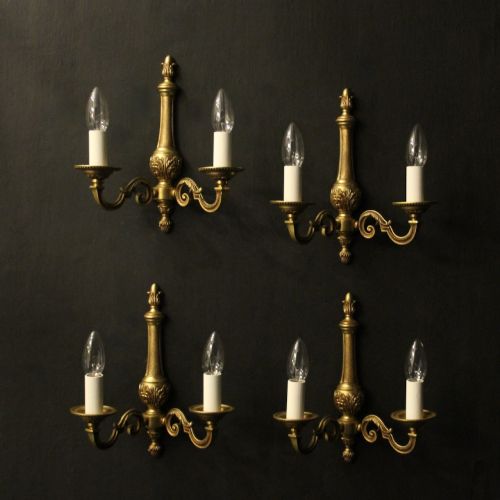
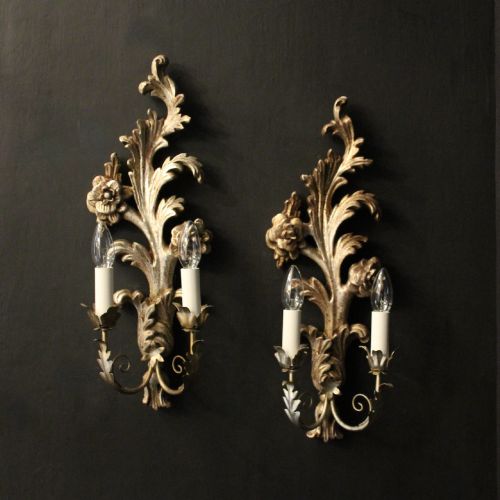
Vintage Twin Arm Lights
These vintage twin arm lights are functional fixtures designed to mount to a wall or sit on a desk, bringing period illumination to a room.
Vintage Twin Arm Lights
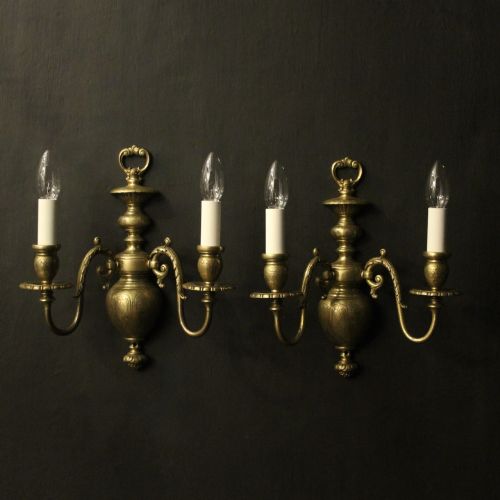
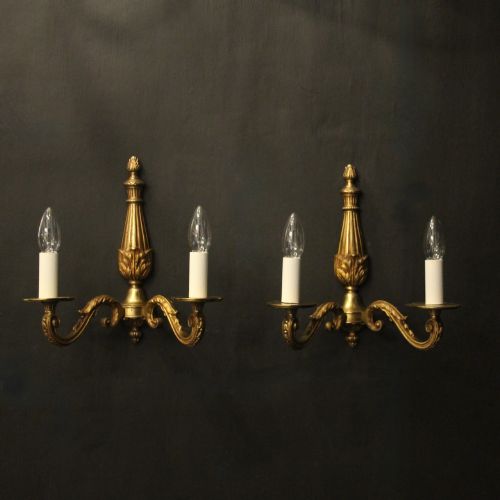
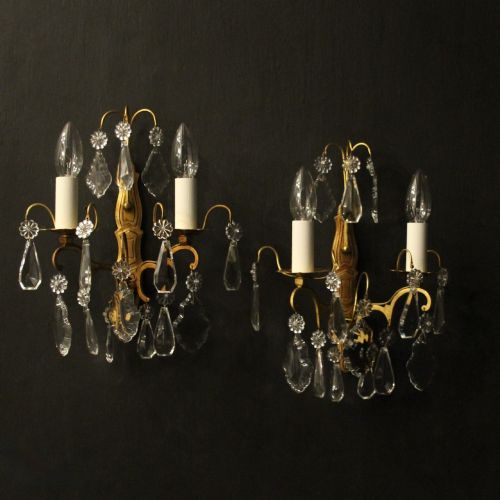
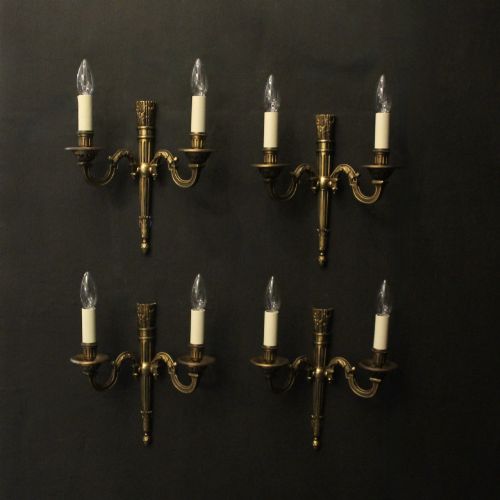
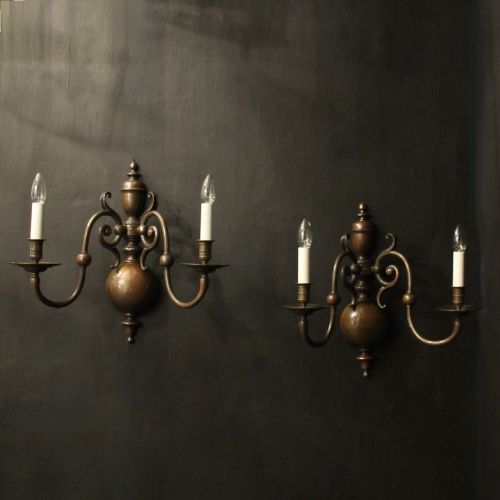
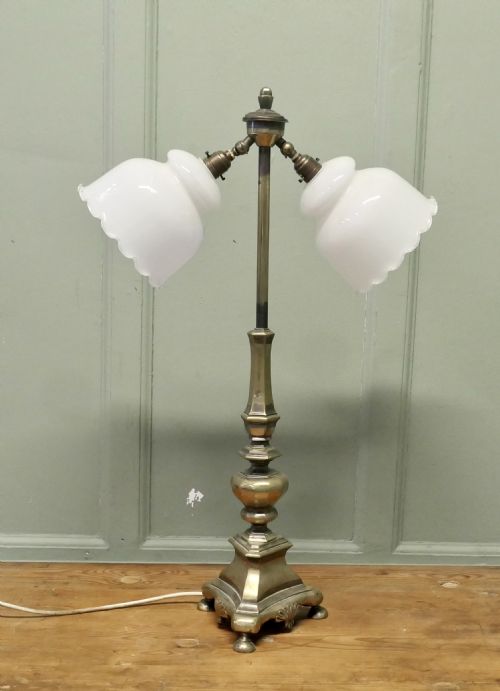
When searching for vintage twin arm lights, you encounter fixtures primarily configured as wall sconces, girandoles, and desk lamps. These pieces branch into two distinct arms designed to hold candles or electric bulbs, originating largely from the nineteenth and early twentieth centuries.
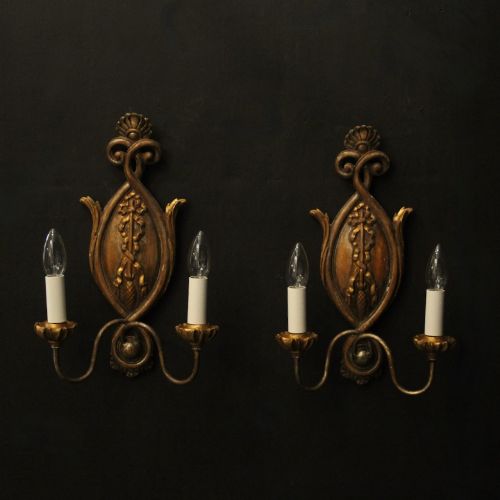
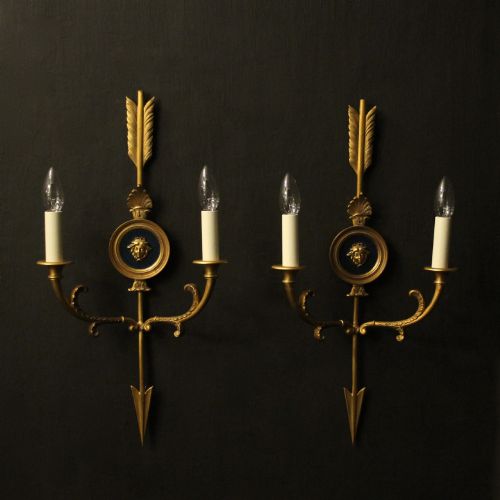
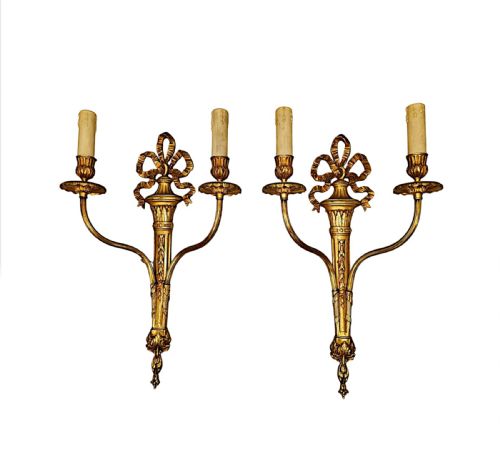
The most common examples on this page are French wall fixtures from the nineteen-thirties, typically rendered in gilded brass or bronze. Alongside these, you find English and Florentine variants spanning the Victorian era through the nineteen-twenties.
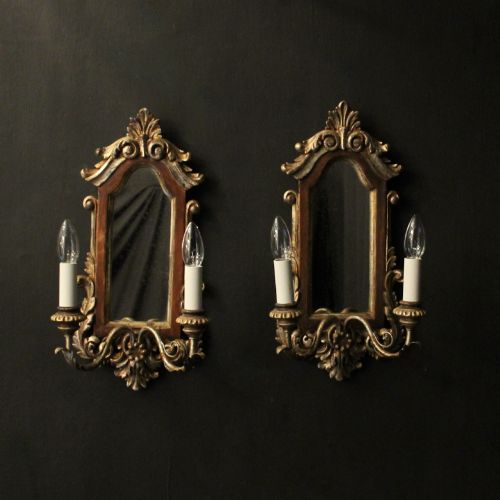
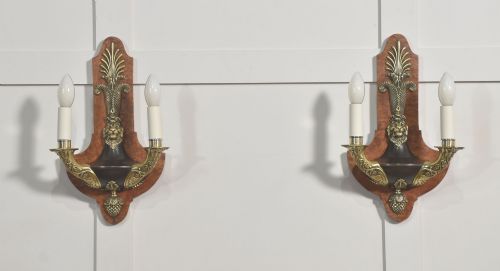
Forms range from structural Empire and Neoclassical styles to ornate Rococo Revival pieces featuring carved ribbons or scrolling foliage. Certain items adapt utility into form, including adjustable students lights, reading lamps, and bouillotte desk lamps with green toleware shades.
Materials and construction
Makers utilised cast and forged metals for the structural bodies of these fixtures, relying heavily on brass, bronze, and silver-plated copper. Many surfaces received a layer of gold leaf or gilt, creating the characteristic gilded brass, gilt bronze, and ormolu finishes seen across French and English workshops.
Wooden elements appear in specific regional pieces, notably Florentine examples carved from giltwood into elaborate frames and girandoles. Crystal drops, burr walnut accents, and painted toleware components supplement the metalwork on select nineteenth-century and Edwardian models.
Assessing craftsmanship and execution
Quality reveals itself in the crispness of the metal casting and the depth of the gilding applied to the bronze or brass substrate. Finer pieces display sharply defined Rococo scrolls, intricate ribbon motifs, and hand-chased surface details rather than soft, mass-produced contours.
The integrity of the construction distinguishes superior examples, from the weight of the cast arms to the stability of the backplates and joints. Material purity matters greatly, separating solid gilt bronze and carved giltwood from simpler plated base metals.
Casier
The Vintage Twin Arm Lights Glossary
- Girandole
- A decorative wall-mounted mirror fitted with candle branches or light arms that reflect the illumination. These pieces often feature carved giltwood frames.
- Ormolu
- Gilded bronze used extensively for decorative mounts on furniture and light fittings during the eighteenth and nineteenth centuries. The technique involves applying a mercury and gold amalgam to the bronze base.
- Toleware
- Painted or enamelled sheet metal items, frequently utilised for shades on period desk lamps and bouillotte lights. The green variant is a traditional library staple.
- Sconce
- A wall-mounted lighting fixture designed to hold candles or electric lamps. In older pieces, the backplate fixes directly to the wall surface.
Vintage Twin Arm Lights: Frequently Asked Questions
How do I install vintage wall lights safely?
Most vintage wall lights require hardwiring into standard electrical boxes by a qualified electrician. Many period fixtures are rewired during restoration to accept modern bulbs while retaining their original brass or bronze frames.
Surface-mounted components should be checked for stability against the wall, particularly heavier gilt bronze or carved giltwood girandoles. Proper anchoring ensures the weight of the double arms does not pull the fixture from the plaster.
Were these lights originally wired for electricity?
Many pieces dating from the nineteenth century and early twentieth century started life holding candles rather than light bulbs. Adaptations occurred as homes transitioned to gas and electricity, leading to the rewiring of arms and sockets.
When inspecting older pieces, look for how the wiring threads through the twin branches. Some retain conversion elements that hint at their original use as candleholders or gas brackets.
How do I distinguish French styles from English ones?
French fixtures frequently lean towards ornate Rococo Revival or Empire styling, utilising cast gilt bronze with elaborate scrolling and naturalistic foliage. The decorative program often includes cast ribbons and floral garlands.
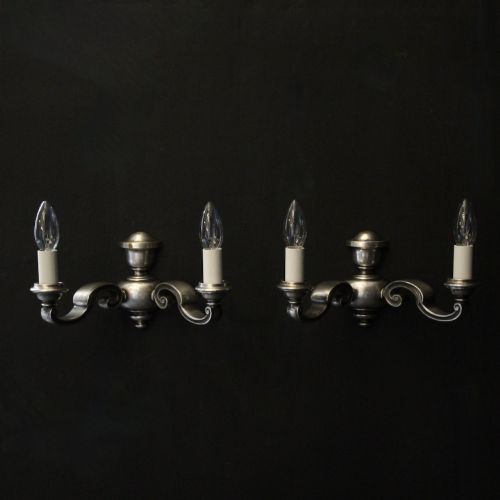
English variants tend to show greater restraint, favouring cleaner lines in polished brass or silver plate. Adam revival and Arts and Crafts examples emphasise geometric balance and functional adjustment over heavy ornamentation.
What is the difference between a girandole and a sconce?
A sconce is a wall light designed purely to illuminate a space from a fixed point on a vertical surface. The primary function is light distribution through candles or electric bulbs.
A girandole incorporates a mirror into the backplate alongside the twin arms. The reflective glass doubles the visual impact of the illumination in the room.