

Vintage Turned Wood Lamp
A vintage turned wood lamp brings warmth and character to a room, offering functional lighting shaped by traditional craft.
Vintage Turned Wood Lamp
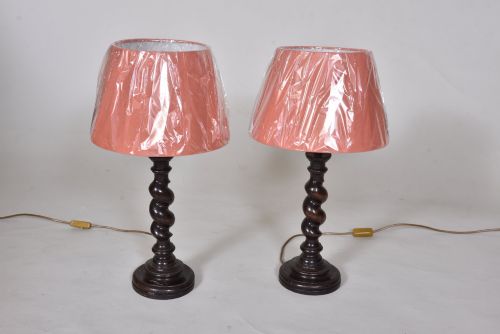
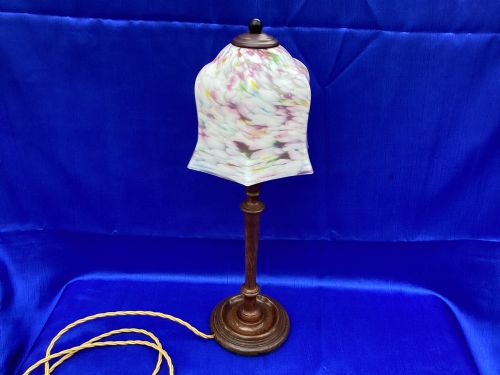
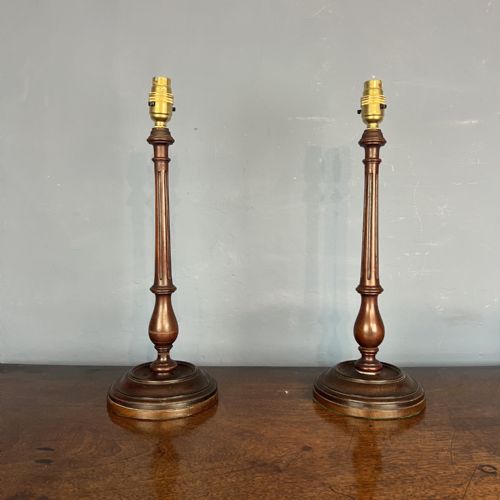
When you search for a vintage turned wood lamp, you encounter lighting fixtures shaped on a lathe from periods spanning the Victorian era through the 1930s. These pieces include both tall floor-standing columns and smaller table-height bases designed to sit upon side tables and occasional tables.
The selection here draws heavily from Edwardian and early twentieth-century workshops, alongside Victorian examples in heavier timbers. Standard lamps and table lamp bases appear frequently, often retaining traces of their original polish or painted finishes.
Makers utilised various domestic and exotic timbers to construct these supports, pairing them with fabric shades or glass elements. They serve practical domestic illumination while functioning as sculptural woodwork within traditional interiors.
How they were made
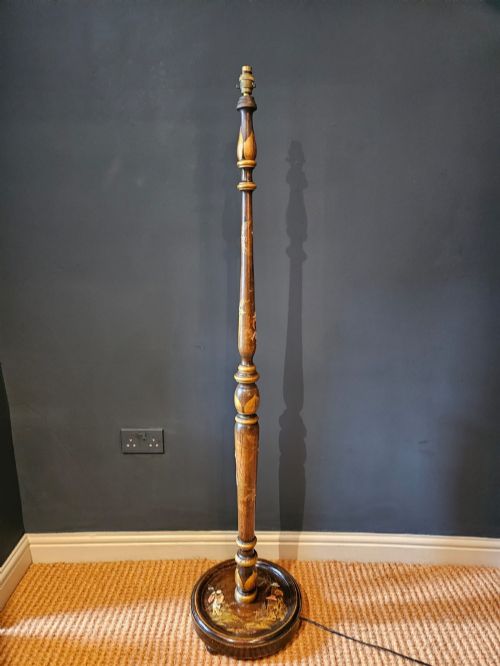
Craftsmen shaped these lamp bodies on lathes using hardwoods such as oak, mahogany, walnut, yew, and lignum vitae. Some examples incorporate brass mounts or parcel gilt details to accent the turned profiles.
Surfaces received various treatments ranging from clear lacquer and French polish to painted finishes and Chinoiserie decoration. Wiring was typically added later during conversion or rewiring to meet modern electrical standards.
Some wooden lamp standards wear their original Chinoiserie coats like faded party frocks from nineteen-twenty.
What varies in quality
Quality rests in the crispness of the lathe work and the selection of the timber grain. Finer examples display balanced proportions and substantial weight, particularly in larger standard lamps.
The integrity of the construction and the subtlety of decorative flourishes, such as hand-painted details or parcel gilding, distinguish standard production from superior pieces.
Druce & Co London
The Vintage Turned Wood Lamp Glossary
- Standard lamp
- A tall floor-standing lamp designed to illuminate a room from a standing position. These fixtures often feature heavy turned wooden shafts for stability.
- Turned wood
- Timber shaped by rotating it on a lathe against cutting tools to create symmetrical columns and decorative rings. This technique defines the profile of the lamp stems.
- Chinoiserie
- European decorative style inspired by Chinese art and design, often featuring painted motifs on lacquered surfaces. This finish appears on specific twentieth-century lamp standards.
- Lignum vitae
- A dense, heavy exotic wood known for its dark colour and durability. Victorian makers utilised this material for robust table lamps.
Vintage Turned Wood Lamp: Frequently Asked Questions
How do I date a turned wood lamp?
Dating relies on stylistic clues, timber choice, and construction methods visible in the turned profile. Earlier Victorian pieces often employ denser woods like lignum vitae, while Edwardian and 1920s versions utilise oak, mahogany, or painted finishes.
Electrical components and cord types can offer additional clues, though many pieces have been rewired for modern use. Comparing the turned details to contemporary furniture styles from the same decade helps narrow the period.
Where should I place a standard lamp?
Floor-standing standard lamps suit corners of living rooms, studies, or reading areas where they provide ambient downward illumination. Their height allows them to anchor a seating group without taking up surface space on side tables.
Pairing a tall wooden column with an appropriate fabric shade balances the visual weight in the room. They work particularly well in traditional English country or period interiors.
What is the difference between a standard lamp and a table lamp?
Standard lamps stand directly on the floor as tall architectural columns, whereas table lamps are shorter and designed to sit on furniture. Both utilise turned wooden construction methods across various periods from the nineteenth and twentieth centuries.
Table lamp bases often accompany side tables or occasional tables in matching timbers like oak and mahogany. Choosing between them depends on the scale of the room and the surface space available.