




Jacobean Style Table Lamp
A jacobean style table lamp brings the rich texture and dark warmth of early seventeenth-century woodwork into a modern room.
Jacobean Style Table Lamp
A jacobean style table lamp draws upon the heavy oak furniture traditions of the seventeenth century, translating vernacular forms into lighting for the home. While the evidence shows that actual seventeenth-century items and later revivals span centuries, most examples you will encounter date from the Edwardian era through the nineteen-thirties, reinterpreting older proportions for domestic use.
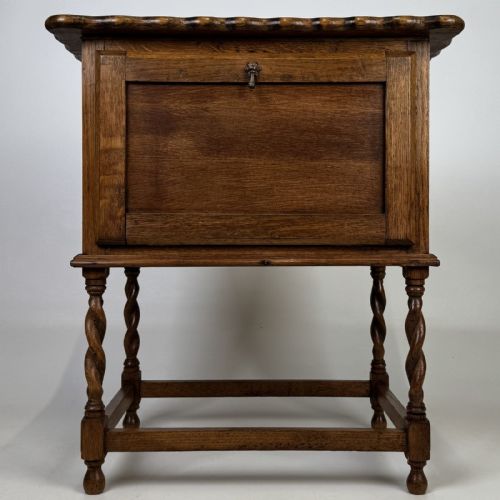
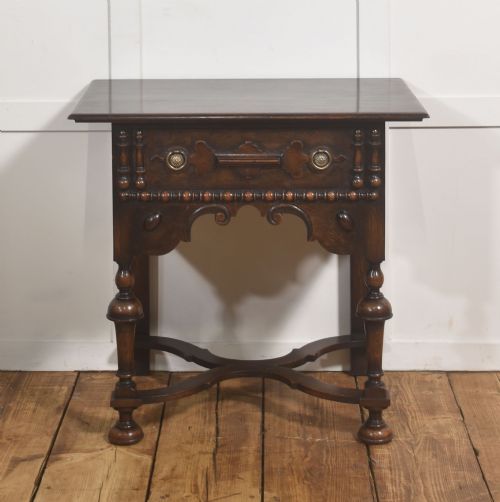
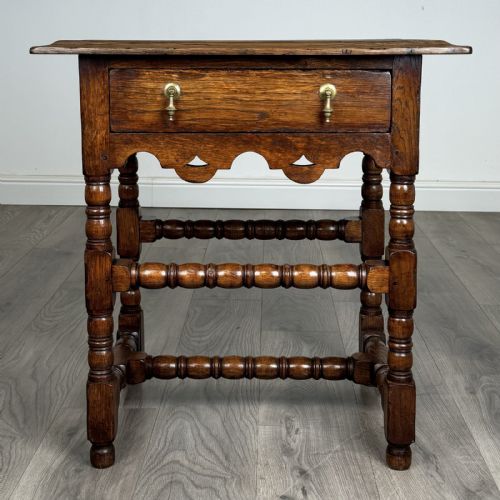
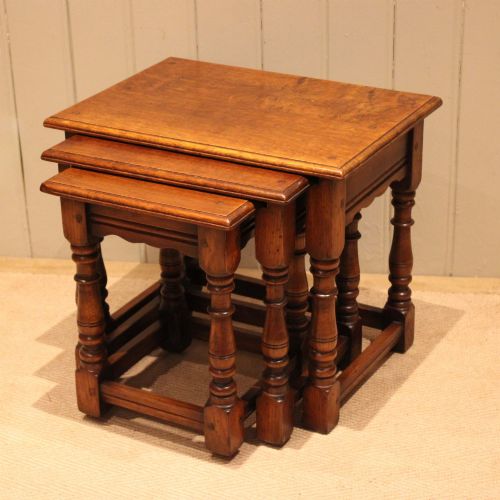
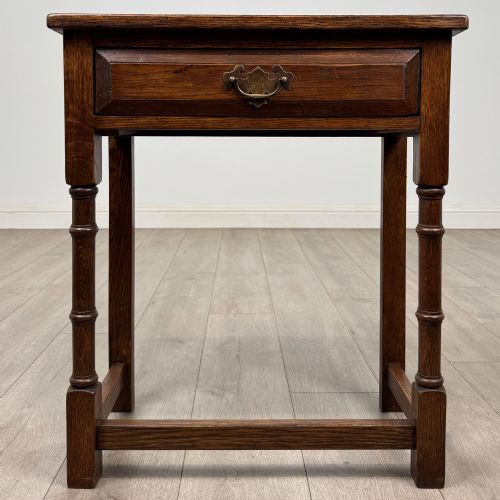
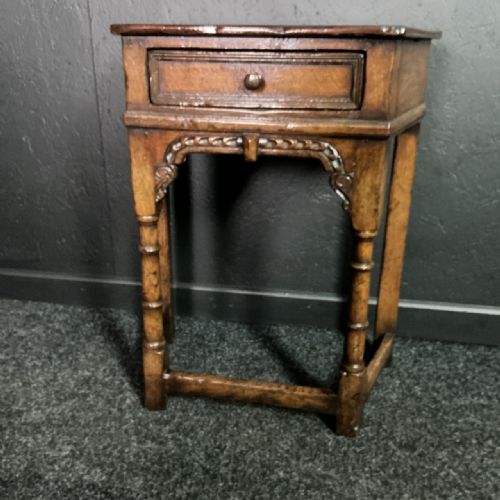
The objects on this page bridge the gap between antique timber furniture and functional illumination, often utilising turned supports and traditional joinery. You will find that side tables, occasional pieces, and dedicated lamp bases dominate the selection, reflecting how earlier forms were adapted into lighting stands over time.
How they were made
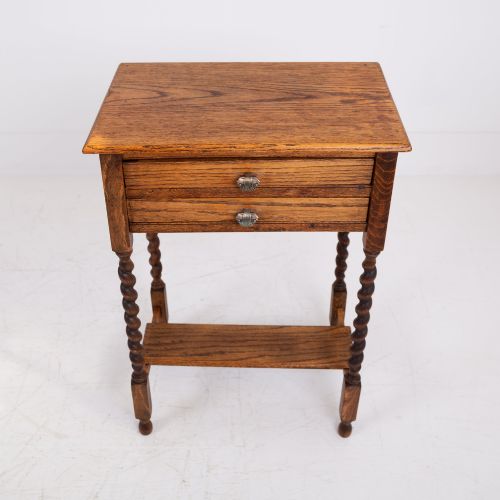
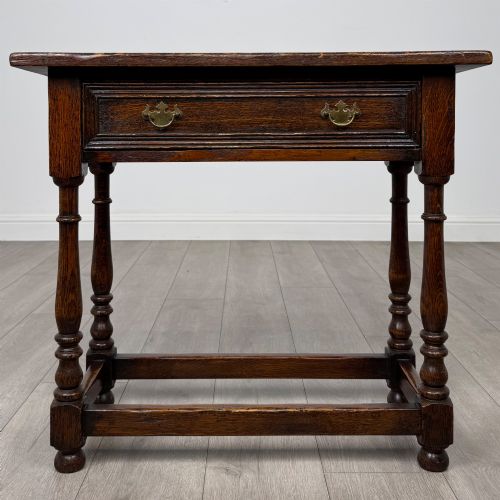
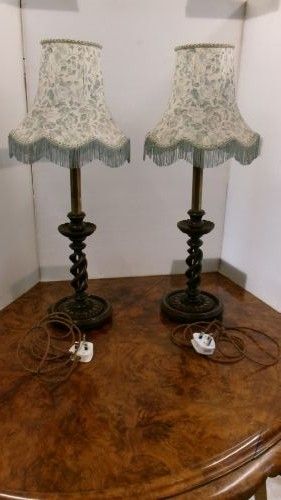
Makers relied primarily on solid oak, walnut, and yew wood, often turning timber on a lathe to create distinctive profiles such as bobbin and barley twist legs. These dense hardwoods provided the structural heft required to support larger lamps and shades without tipping.
Surface decoration frequently involved hand-carving and occasional mixed wood inlay, echoing the ornamentation found on seventeenth-century chests and tables. Fabric shades and fringing complete the construction of the lighting pieces, marrying textile work with turned wooden bases.
Listings span from the seventeenth century through the Edwardian era to the nineteen-thirties, showcasing oak, walnut, yew wood, and fabric elements.
What varies in quality
The distinction between ordinary and superior pieces rests on the choice of timber and the crispness of the turned work. Dense, richly grained oak with deep, uniform twist carvings commands attention, whereas softer secondary woods lack the same tactile depth.
Proportion and integrity of construction dictate the overall merit of an item, distinguishing careful revival pieces from mass-produced imitations. A balanced silhouette and tight joints demonstrate the maker's adherence to traditional furniture standards.
The Jacobean Style Table Lamp Glossary
- Jacobean Revival
- A nineteenth and twentieth-century design movement that copied the heavy oak furniture and architectural motifs of the early seventeenth century. It brought dark timber and turned legs back into fashionable homes.
- Bobbin-turned
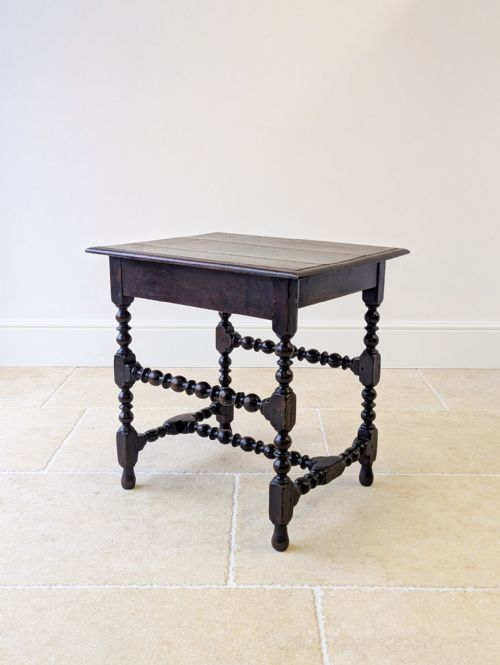
- A method of woodturning that creates a series of rounded, spool-like shapes along the length of a furniture leg or stretcher. This technique was popular in seventeenth-century English joinery.
- Barley twist
- A spiralling carved column resembling a twisted rope, frequently used on table legs and supports during the seventeenth century and later revival periods. It catches the light across its angled planes.
- Marquetry
- The art of applying decorative pieces of veneer to a structure to form intricate patterns or pictures. It appears on some occasional tables and surfaces within these periods.
Jacobean Style Table Lamp: Frequently Asked Questions
Are these lamps original seventeenth-century items?
The selection includes pieces spanning from the seventeenth century through the Edwardian period and the nineteen-thirties. Most revival items date to the early twentieth century.
Craftsmen during this later period utilised older stylistic vocabulary, such as barley twist legs and dark oak, to create lighting and small tables suited for contemporary interiors.
What wood should I look for?
Oak is the predominant material seen across these listings, alongside walnut and yew wood. These dense timbers provide the weight and durability characteristic of the style.
Some pieces also feature mixed wood inlay or carving that highlights the natural grain of the material.
How do I identify a revival piece?
Revival pieces often combine seventeenth-century forms, such as bobbin-turned legs and heavy oak construction, with hardware and wiring indicative of the nineteenth or twentieth century.
Examination of the timber, joinery techniques, and internal construction generally reveals whether an item belongs to the original period or a later revival.
How do I integrate a dark wood lamp?
The rich tones of oak and walnut complement both traditional and modern interiors by adding textural contrast and warmth. Pairing the piece with neutral walls allows the carved details to stand out.
Placing the lamp on a matching side table or occasional surface creates a cohesive period aesthetic within the room.