
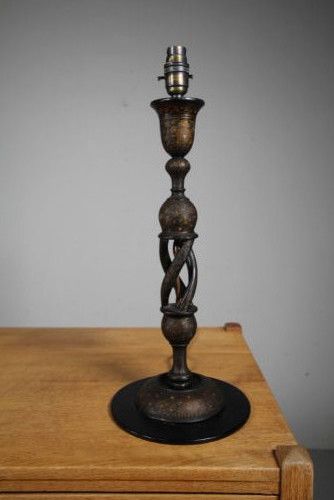
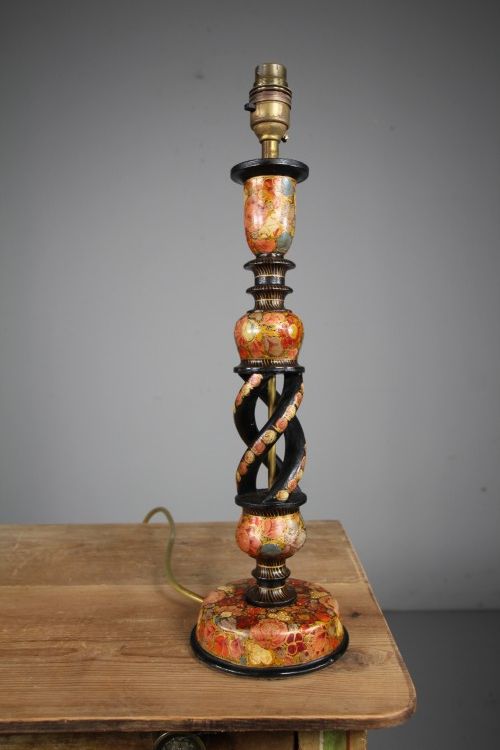


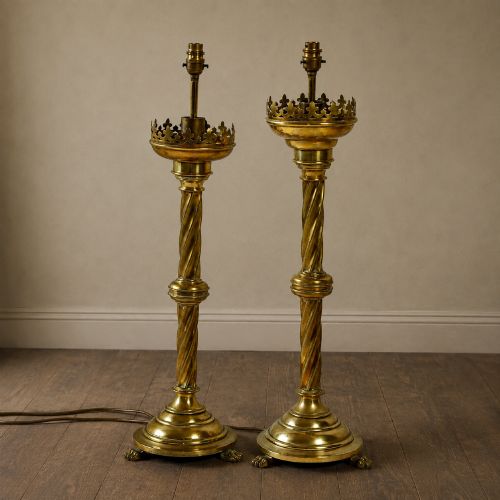


Twisted Column Table Lamp
A twisted column table lamp brings upward motion and rich texture into a room, formed from turned wood or heavy brass.
Twisted Column Table Lamp
A twisted column table lamp takes the architectural form of a spiral or barley twist and scales it down for domestic illumination. Buyers seeking a twisted column table lamp encounter both metal and timber examples originating from the nineteenth and early twentieth centuries.
The selection ranges from tall brass pillars to handpainted wooden shafts and converted oil lamps. These pieces sit comfortably on side tables, desks and pedestals, offering height and a strong vertical line.
Origins span from British workshops to Kashmiri studios and continental European centres. The variety reflects a broad period encompassing the Victorian era, the Regency period and the Edwardian years.
Materials and construction
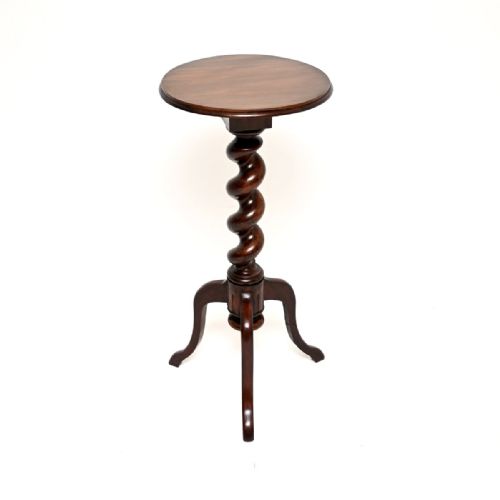
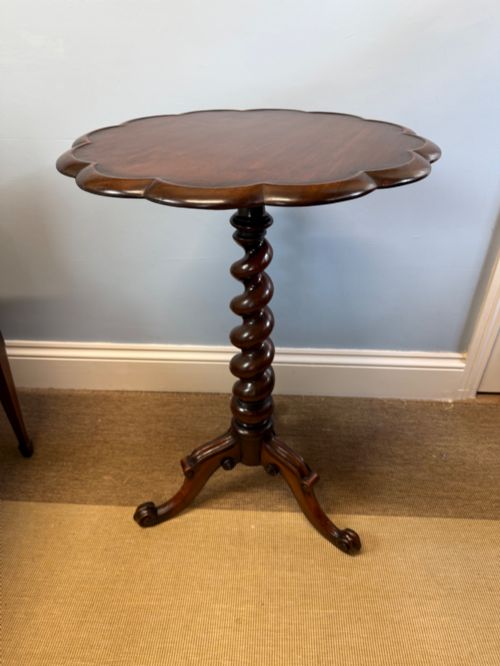
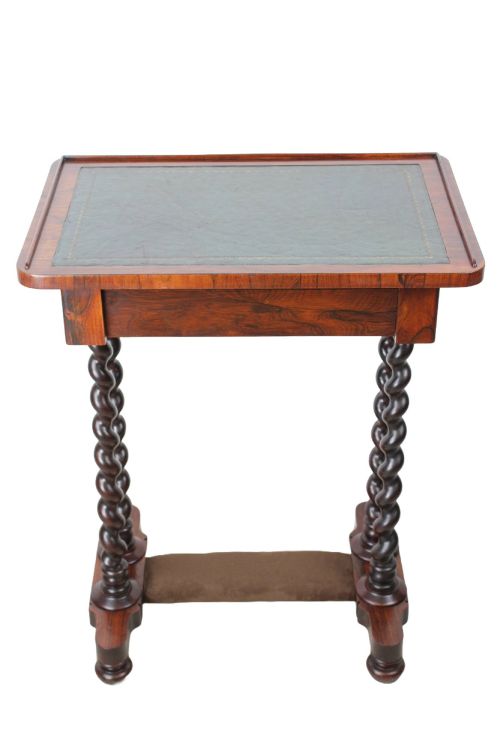
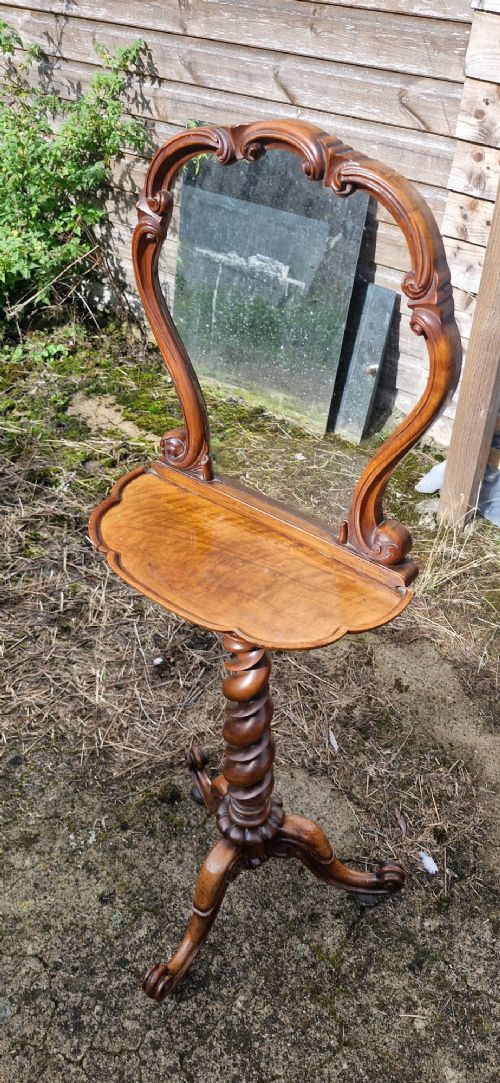
Makers shaped timber such as mahogany, walnut, rosewood and burr elm on a lathe to create deep, fluid spirals. Metal versions utilised cast brass and bronze, sometimes combining glass components or tinted shades for added colour.
Woodturners relied on precise hand chiselling to maintain uniform depth and pitch along the twist. Brass columns often arrived in multiple sections, screwed together securely over weighted bases for stability.
Some twisted columns hide centuries of quiet conversation, having started life as oil lamps before electricity claimed their reservoirs.
Distinguishing quality
Quality rests upon the crispness of the twist and the integrity of the material. A well-turned timber shaft displays sharp, consistent angles without sanding hollows that blur the profile.
Weight distribution determines the balance of the piece, particularly in taller brass or bronze examples. Finer specimens exhibit clean joints, patination appropriate to their age and well-integrated electrical fittings where conversion has occurred.
The Twisted Column Table Lamp Glossary
- Barley twist
- A spiral turning resembling the stalk of barley, popular in furniture and lamp columns from the seventeenth century onward. It creates dynamic light reflection along its facets.
- Corinthian column
- An architectural order featuring an ornate capital decorated with acanthus leaves. This classical form often tops brass and bronze lamp shafts.
- Oil lamp
- A lighting vessel using a wick and oil reservoir, frequently converted to electricity in later periods. Many surviving examples retain original glass shades or burners.
- Tilt top
- A table mechanism allowing the surface to fold vertical when not in use. This clever space-saving design appears on several occasional and wine tables from the nineteenth century.
- Kashmiri
- Pertaining to decorative work from Kashmir, often featuring handpainted floral details on wood. These pieces bring vibrant colour and intricate patterns to lamp bases.
Twisted Column Table Lamp: Frequently Asked Questions
How do I date a brass column lamp?
Dating relies upon the weight of the metal, the method of assembly and the style of the base. Earlier pieces often show heavier casting sand textures inside.
Component parts, screw threads and wiring channels also offer clues to the manufacturing decade.
Where should I place a tall lamp?
Tall columns suit heavy side tables, corners or large sideboards where they provide balanced vertical illumination. Their height allows light to disperse widely across a room.
Ensure the surface is stable and broad enough to support the footprint of the base.
What is the difference between a twist and a column?
A column follows a straight classical architectural shaft, which may be fluted or plain. A twist introduces a dynamic spiral motion wrapping around the vertical axis.
Both forms appear frequently in brass and turned wood lighting designs.