
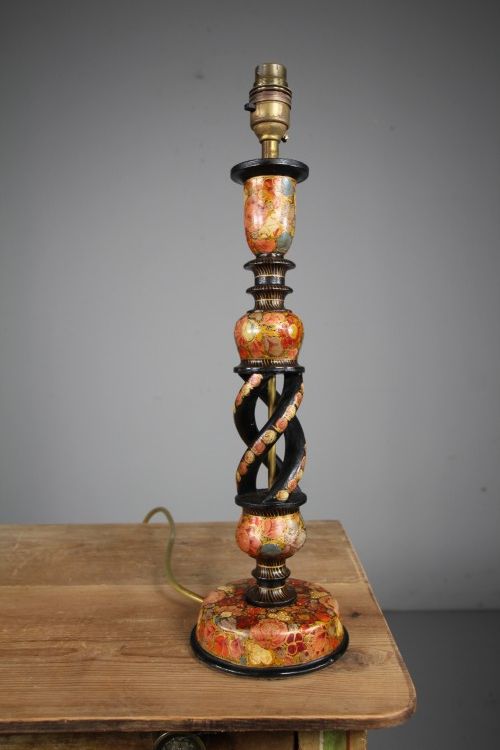


Indian Lacquered Lamp Base
An indian lacquered lamp base brings vibrant colour and pattern to a room, turning functional lighting into a striking decorative focal point.
Indian Lacquered Lamp Base
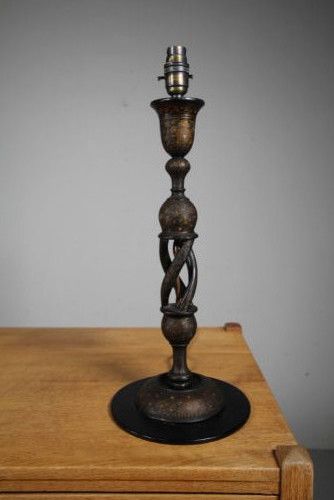
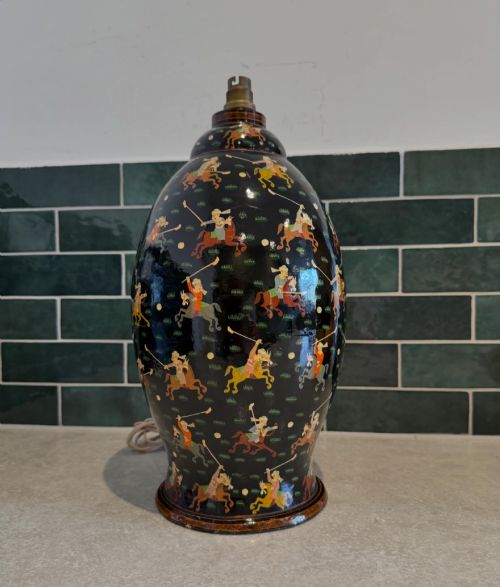
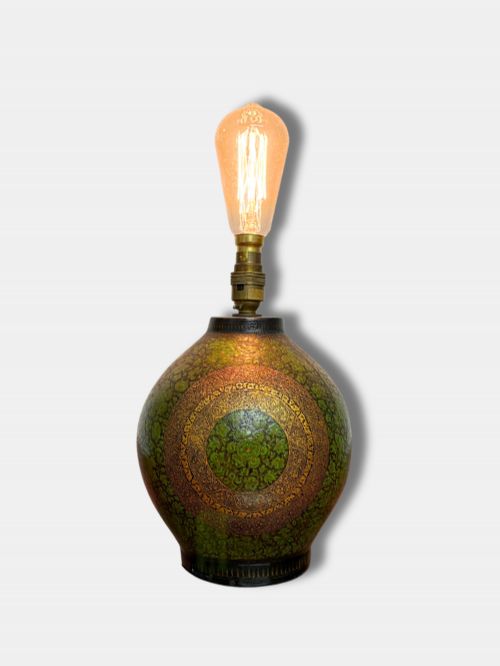
An indian lacquered lamp base takes the form of a table lamp, often displaying the distinctive patterns associated with Kashmiri craft and Anglo-Indian design. These pieces serve as functional lighting while acting as sculptural objects within an interior scheme.
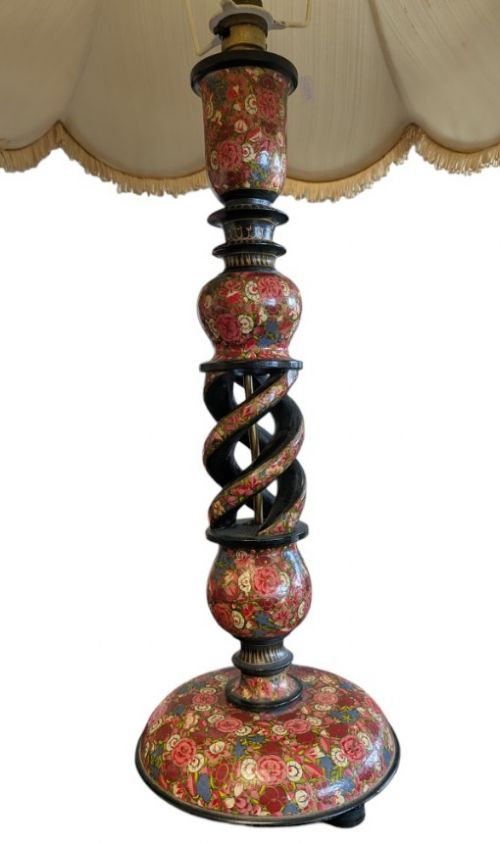
The versions most commonly met on this page date from the nineteenth century through to the 1930s, reflecting periods of strong artistic exchange and trade. They appear in forms ranging from tall twist columns to papier-mache bodies.
Makers utilised traditional regional techniques to ornament these turned wooden or papier-mache structures. Buyers encounter objects finished in gilt gold, green, cream, and intricate painted motifs.
How they were made
Artisans shaped wood and papier-mache into lamp bases, frequently employing a turned twist design to create visual movement along the column. These structural cores provided a smooth foundation for the subsequent application of decorative layers.
Lacquering and hand-painting formed the primary decorative stage, utilising pigments, gilt gold, and protective varnish finishes. Makers applied these surface designs by hand, resulting in detailed Kashmiri folk art patterns across cream, green, and dark grounds.
Materials recorded on this page include brass, lacquer, carved wood, papier-mache, and fabric.
What varies in quality
The distinction between standard examples and superior pieces lies in the precision of the turning and the complexity of the hand-painted ornament. Finer specimens display deeply detailed Kashmiri motifs executed with exceptional control over gilt gold and colour.
Proportion and scale also define the hierarchy of these objects, with taller or more substantial lamp bases commanding greater visual presence. The integrity of the underlying wood or papier-mache core dictates the physical endurance of each piece.
The Indian Lacquered Lamp Base Glossary
- Anglo-Indian
- A descriptive term for decorative arts produced in British India, combining British furniture forms with traditional Indian ornamentation. It bridges two distinct design traditions.
- Papier-mache
- A composite material made from paper pulp or layers of paper bound with glue, then moulded and dried. It forms a lightweight yet sturdy base for detailed lacquer painting.
Indian Lacquered Lamp Base: Frequently Asked Questions
What periods do these lamp bases come from?
The available pieces span from the nineteenth century through the early decades of the twentieth century. Most examples date specifically from the 1880s to the 1930s.
This timeframe captures the height of Kashmiri decorative export work and Anglo-Indian interior pieces.
How do I care for a lacquered lamp base?
Keep these pieces away from direct sunlight and excessive moisture to protect the delicate lacquer and gilt surfaces. Dust gently with a dry, soft cloth rather than using liquid polishes.
Regular care preserves the hand-painted finish and prevents the wood or papier-mache from drying out.
What materials were used to make them?
Makers constructed these objects primarily from turned wood, carved wood, and papier-mache. Artisans then applied lacquer, brass components, and painted finishes including gilt gold.
These materials combine to create decorative table lamps with rich surface textures.