







Vintage Turned Wood Jar
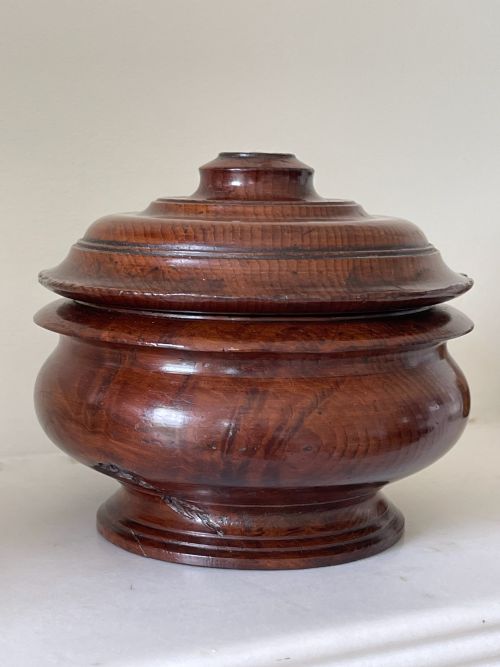
A vintage turned wood jar brings tactile warmth to a room, offering practical lidded storage shaped on a lathe from characterful native timbers.
Vintage Turned Wood Jar
The materials reflect traditional British cabinet timbers, featuring dense fruitwood, boxwood, sycamore, and yew wood alongside mahogany and walnut. These objects originated as everyday pantry or desk items, shaped by turners who prioritized utility and pleasing proportions.
How they were made
Makers fashioned these pieces on a lathe using seasoned hardwoods like beech, boxwood, and fruitwood, relying on hand-held gouges and chisels to achieve precise circular profiles and snug lids. Grain orientation dictated the final strength and appearance, often highlighting the natural rings and figuring of yew or walnut.
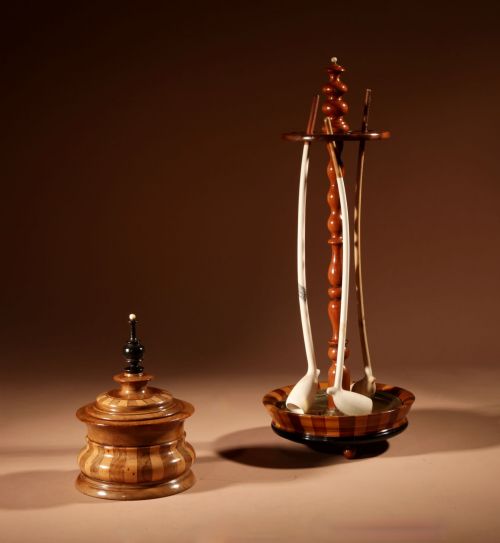
Coopered construction appears in specific tobacco boxes and containers, utilising tight-fitting staves bound securely together. Surface finishes remained simple, typically consisting of wax or natural oils applied over time through handling rather than heavy varnishes.
Vintage Turned Wood Jar Retail Price Guide 2026
Typical asking prices for vintage turned wood jar among the pieces listed under this phrase on Sellingantiques today, from the lower quarter to the upper quarter. They describe what is for sale here now, not the wider market.
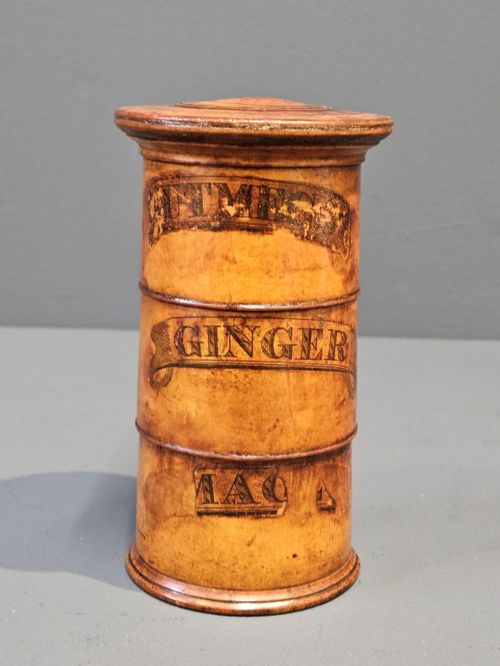
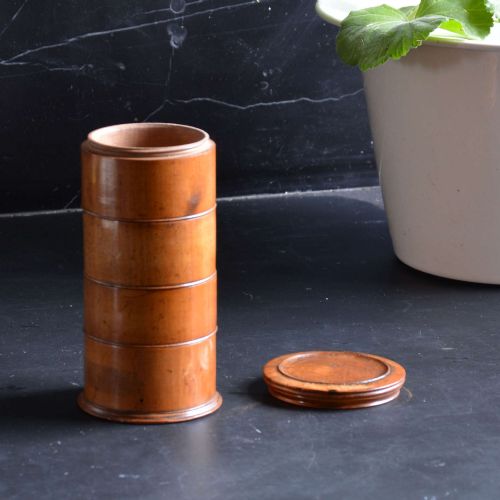
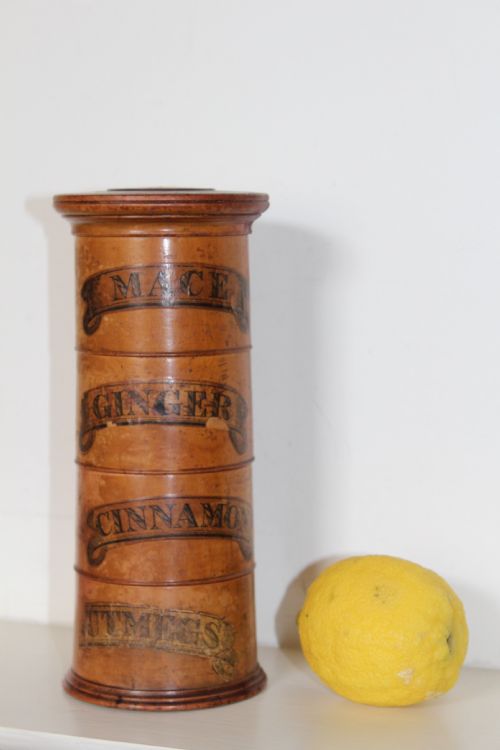
A multi-tier spice tower operates like a tiny wooden skyscraper designed exclusively for nutmeg and cinnamon.
What varies in quality
Quality rests upon the crispness of the turning and the harmony of the timber's natural figure, where superior examples exhibit confident, clean lines without distortion. The proportional balance between the lid, body, and base defines the visual success of a piece.
Patina and surface wear separate exceptional survivals from routine items, with deep, handling-softened patination carrying more visual authority than sterile, overly scrubbed surfaces. Original matching covers and intact multi-tier stacking sections elevate the integrity of spice towers and jars.
The Vintage Turned Wood Jar Glossary
- Treen
- Small handmade wooden household objects. These functional items span domestic utensils, boxes, and spice containers.
- Spice tower
- A multi-tiered turned wooden vessel featuring stacked compartments. Each section nests or screws into the next to hold various culinary powders.
- Coopered
- Made from curved wooden staves joined edge-to-edge. This technique forms cylindrical containers such as tobacco boxes and barrels.
- Boxwood
- A dense, pale yellow hardwood prized by turners. Its fine grain permits intricate detail and smooth finished surfaces.
- Patina
- The surface sheen developed through age and handling. This warm layer accumulates from natural oils and beeswax over decades.
Vintage Turned Wood Jar: Frequently Asked Questions
How were vintage turned wood jars used originally?
These vessels served practical domestic roles in kitchens and parlours, storing commodities like loose tobacco, spices, and snuff. Their tight-fitting lids helped protect dry goods from moisture and air.
Over time, they moved from utilitarian pantry equipment to decorative mantel and tabletop display items. Their compact footprints made them ideal for holding small daily valuables.
What woods should I expect to find?
Turners utilised accessible regional hardwoods including fruitwood, sycamore, beech, and boxwood. More ambitious pieces occasionally employed imported mahogany or rich English walnut.
Each timber brings distinct weight and colouration to the object, from the pale density of boxwood to the dark grain of walnut. Yew wood examples showcase striking natural figuring.
How do I care for turned wood containers?
Keep wooden objects away from direct heat sources and dramatic humidity shifts to prevent timber splitting or warping. Maintaining a stable indoor environment protects the structural integrity.
Apply a microcrystalline wax sparingly when the surface appears dry, buffing gently with a soft cloth. Avoid harsh liquid cleaners that strip the historic patina.
How can I tell earlier pieces from later ones?
Earlier eighteenth and early nineteenth-century examples often display simpler, heavier tool marks and denser native timbers like boxwood or fruitwood. The construction methods reflect traditional hand-turning without modern power machinery.
Edwardian items frequently present lighter woods and more standardised multi-tier joinery. Tool marks and fastener types offer further clues to the manufacturing date.