





Victorian Turned Wood Container
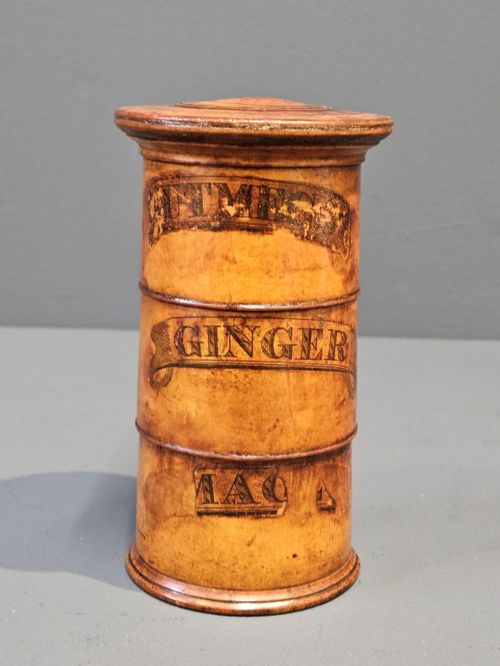
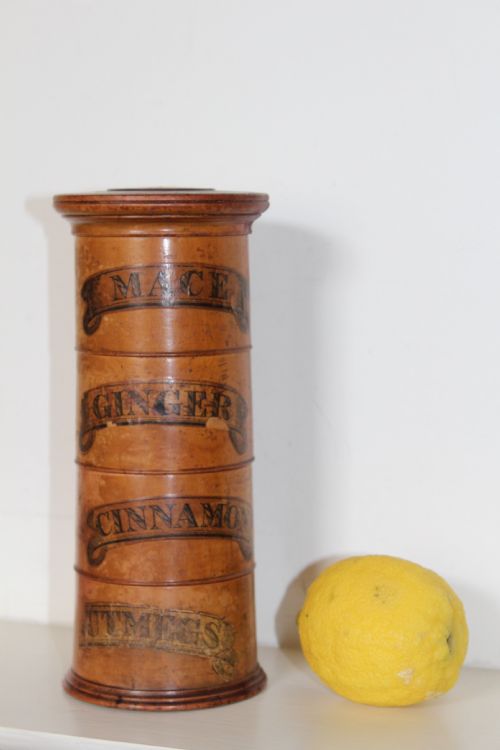
These victorian turned wood container pieces are honest treen items for holding spices or string that bring tactile warmth to any shelf.
Victorian Turned Wood Container
A victorian turned wood container is a utilitarian object shaped on a lathe, ranging from spice towers to string holders and jars with covers. These domestic items served everyday nineteenth-century household functions before surviving as collectable treen.
You are most likely to meet sycamore and boxwood spice towers or lidded jars from the nineteenth century on this page. Multi-tiered spice towers and turned string barrels form the backbone of the available selection.
How they were made
Craftsmen shaped dense hardwoods like boxwood, sycamore, and fruitwood on a lathe to create symmetrical vessels and tight-fitting lids. The turning process exploited the natural grain patterns of the timber to provide decorative surface movement without applied ornament.
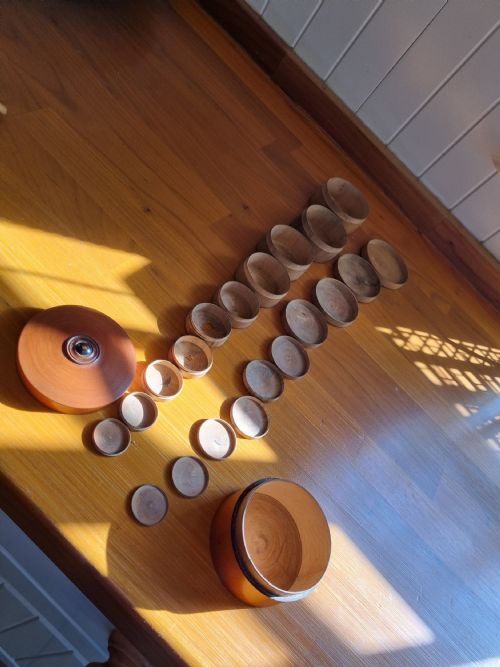
Multi-tiered spice towers relied on precise stacked turning so that individual compartments fitted securely above one another. String holders incorporated central apertures designed to dispense cord cleanly while keeping the ball enclosed.
Victorian Turned Wood Container Retail Price Guide 2026
Typical asking prices for victorian turned wood container among the pieces listed under this phrase on Sellingantiques today, from the lower quarter to the upper quarter. They describe what is for sale here now, not the wider market.
Listings feature items dated across the nineteenth century, including the Victorian and Edwardian periods.
What varies in quality
Quality rests in the crispness of the lathe turning and the fidelity of the proportions, where sharper profiles and balanced tiers distinguish better examples. The choice of timber also dictates the character, with dense fruitwoods and figured boxwood holding finer turned detail than softer woods.
Condition involves surface patina and the integrity of threaded or friction-fit joints between covers and bases. Pieces that retain original paper labels or possess complex multi-tier configurations represent the more accomplished end of domestic treen.
The Victorian Turned Wood Container Glossary
- Treen
- Small wooden domestic objects made by turning or carving. The term derives from an archaic word for tree and covers everything from kitchen collectables to decorative boxes.
- Spice tower
- A multi-compartment stacked container used for holding various culinary spices. These cylindrical treen vessels screw or fit together section by section.
- String holder
- A hollow spherical or barrel-shaped container designed to dispense twine through a small hole. They are frequently turned from sycamore or lignum vitae.
- Fruitwood
- A generic term for timber sourced from fruit-bearing trees such as pear, apple, or cherry. Cabinetmakers valued these dense woods for fine turning.
Victorian Turned Wood Container: Frequently Asked Questions
What were spice towers used for?
Spice towers stored multiple culinary spices in separate stacked compartments within a single vertical treen column. This saved valuable space on nineteenth-century kitchen and larder shelves.
Each tier lifted off or unscrewed to reveal the contents, keeping aromatic powders contained and protected from moisture.
How do I care for turned wood?
Keep turned wood containers away from direct sunlight and sudden temperature changes to prevent the timber from splitting. A light application of microcrystalline wax helps protect the historical surface.
Avoid washing these pieces with water, using only a dry, soft cloth for routine dust removal.
What is treen?
Treen encompasses small, functional wooden objects created for home use rather than grand furniture. It includes items like boxes, jars, string barrels, and kitchen utensils.
Collectors prize treen for its tactile connection to daily domestic life in past centuries.
How can I date these containers?
Dating relies on timber selection, tool marks left by the lathe, and the evolution of domestic forms from the nineteenth century. Earlier pieces often display hand-turned characteristics and specific dense hardwoods like boxwood.
Comparison with documented examples from the Victorian period helps establish a reliable timeframe.