


Vintage Turkish Prayer Rug
A vintage turkish prayer rug brings centuries of Anatolian weaving tradition into a room through distinct architectural mihrab designs and rich regional colours.
Vintage Turkish Prayer Rug
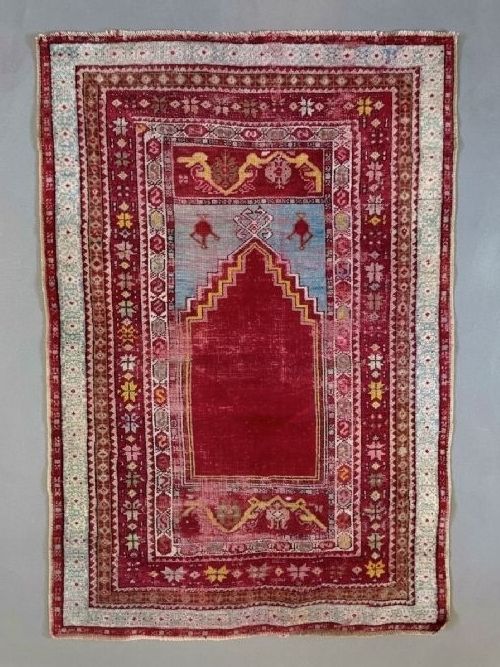
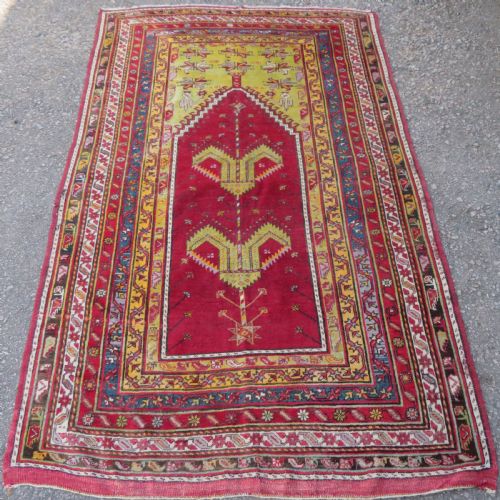
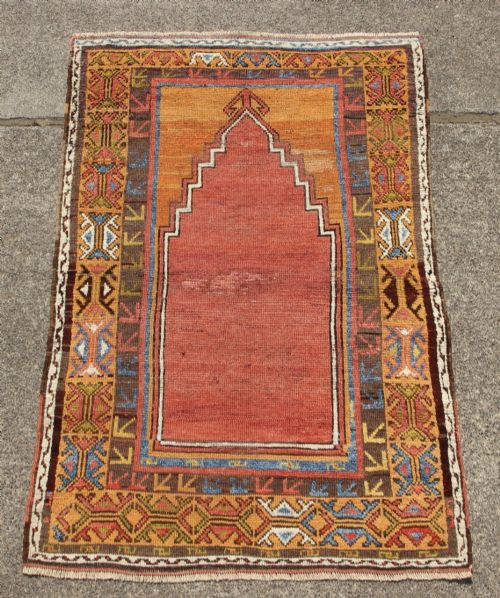
When you search for a vintage turkish prayer rug, you encounter hand-knotted textiles originating from historic weaving centres across Anatolia. These pieces are defined primarily by their niche-shaped prayer arches, known as mihrabs, which directed the placement of the rug during daily devotions.
The selections available span multiple centuries, with nineteenth-century examples appearing frequently alongside early twentieth-century village and town productions. Regional identifiers such as Konya, Kirsehir, Ghiordes, and Ladik dominate the offerings, each bringing distinct tribal or classical design traditions to the surface.
Most items function as portable floor coverings or area rugs, though their decorative impact has long made them suitable for wall display. Buyers typically select these textiles to introduce historical depth, tactile warmth, and intricate symbolic geometry into domestic interiors.
Materials and construction
Weavers constructed these rugs predominantly using hand-spun wool for both the pile and the foundational warps and wefts, occasionally incorporating cotton or silk for finer town pieces. Angora wool also appears in specific regional productions, imparting a distinct lustre to the pile.
Colour comes from natural dyes derived from local plants and minerals, yielding nuanced tones that settle into harmonious palettes over time. Artisans tied symmetrical or asymmetrical knots by hand onto vertical looms, securing the ends with various flatwoven kelim finishes and side cord selvedges.
Some nineteenth-century weavers tucked small protective amulets or symbols directly into the borders to ward off the evil eye.
The spectrum of quality
Quality rests significantly on the precision of the knotting and the density of the pile, which determines how sharply the geometric and floral motifs resolve. Finer town pieces from centres like Kayseri or Panderma achieve intricate detail through high knot counts and delicate silk or wool materials.
Village and nomadic pieces from regions like Bergama or Milas derive their merit from bolder graphic designs, expressive use of natural dyes, and robust wool quality rather than sheer density. The clarity of the palette and the preservation of the original borders and outer edges ultimately separate standard examples from superior survivals.
Tuduc
The Vintage Turkish Prayer Rug Glossary
- Mihrab
- The arched niche design at one end of a prayer rug that mimics the architectural prayer mihrab found in mosques. This focal point is often pointed or stepped to direct orientation.
- Kelim
- A flatwoven textile or flatwoven end finish produced without a pile by tightly interweaving warp and weft threads. These sections frequently frame the knotted field of the rug.
- Warp
- The vertical structural threads stretched tightly on the loom before knotting begins. The exposed ends of these threads often form the fringe at either end of the rug.
- Weft
- The horizontal threads passed alternately over and under the warp threads to bind the knots in place. Multiple weft shots typically follow each row of knots to ensure structural stability.
- Natural Dyes
- Colourants extracted from organic sources such as plants, insects, and roots prior to the advent of synthetic aniline dyes. These substances produce complex, mottled tones that age gracefully.
Vintage Turkish Prayer Rug: Frequently Asked Questions
How do I identify a prayer rug?
A prayer rug is distinguished by its central mihrab or arch motif, which frames the field where an individual kneels for prayer. This architectural layout immediately separates them from standard scatter rugs and carpets.
Additional directional elements, such as hanging lamp motifs or stylized pillars inside the arch, further confirm the devotional purpose of the textile.
Where were these rugs made?
These textiles originate from various historic weaving regions across Anatolia, encompassing both settled towns and nomadic tribal areas. Prominent centres include Konya in central Anatolia, Ghiordes in the west, and Kirsehir.
Each district developed a signature palette and geometric vocabulary, allowing knowledgeable observers to trace a piece's geographical roots.
Can I use these rugs on the floor?
While these pieces were originally utilised for daily use, their vintage status means modern placement requires some care. Placing them in low-traffic areas or mounting them on a wall preserves the wool pile and structural integrity.
Using a suitable underlay prevents slipping and cushions the foundation fibres against hard flooring.
How do I care for antique wool?
Regular gentle vacuuming without a beater bar removes surface dust and prevents grit from cutting the wool fibres. Professional cleaning tailored to antique textiles is recommended for deeper maintenance.
Avoiding direct, harsh sunlight prevents the natural dyes from fading prematurely over the years.