

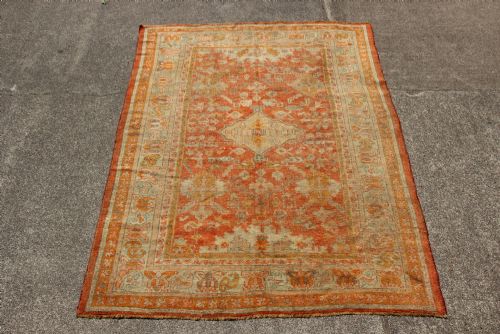


Vintage Turkish Floor Rug
A vintage turkish floor rug brings texture, warmth and deep historic character to an interior through traditional patterns woven across centuries.
Vintage Turkish Floor Rug
When searching for a vintage turkish floor rug, buyers encounter heavy room-size carpets, narrow runners and flat-weave kilims originating from Anatolia and wider Ottoman regions. These pieces span from the late nineteenth century into the early decades of the twentieth century, carrying distinct tribal and village motifs.
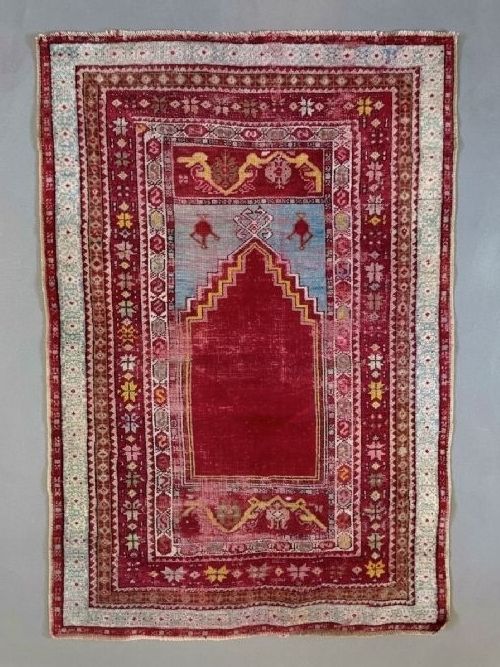
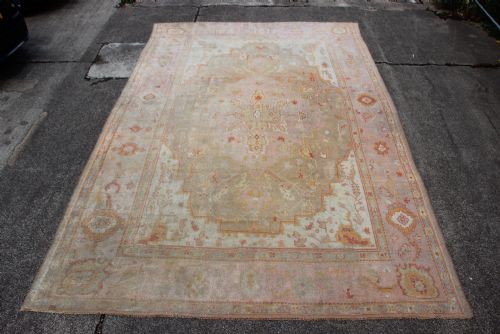
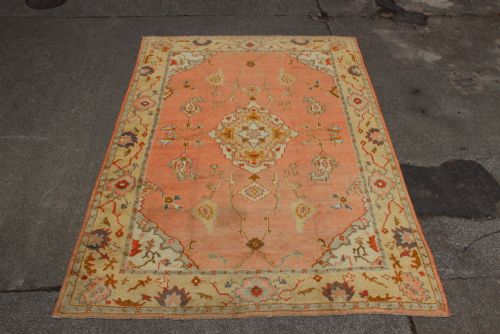
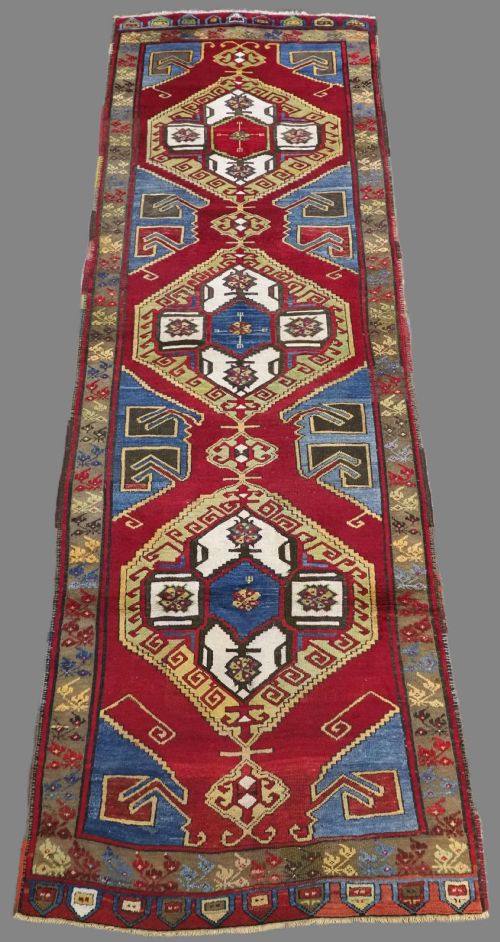
The selection on this page relies heavily on regional types such as Oushak, Ghiordes, Kula, Melas, Bergama, Konya Karapinar and Yuruk. These range from grand decorative carpets down to intimate prayer rugs and runner formats suited for hallways.
Most examples date from the Victorian period through to the nineteen-thirties, reflecting traditional weaving centres and nomadic traditions across Western Turkey. Buyers will find both full-pile wool carpets and lightweight flat-weave kilims among the available forms.
How They Were Made
Weavers constructed these textiles primarily using hand-spun wool and cotton, occasionally incorporating angora wool, art silk, or mercerised cotton for added lustre and texture. Natural dyes and traditional knotting techniques defined the production across Anatolian villages and workshops.
Flat-weave kilims utilised interlaced warp and weft threads without pile to create geometric patterns, whereas pile rugs relied on hand-knotted wool secured onto cotton or wool foundations. These methods produced durable floor coverings designed for heavy daily use.
What Varies in Quality
Quality rests upon the fineness of the knotting, the choice of materials such as hand-spun wool or art silk, and the integrity of the structural foundation. Finer knot counts allow for sharper curvilinear details in Oushak and Ghiordes designs.
The depth, harmony and stability of the dye palette distinguish finer examples from standard commercial work. Superior pieces retain rich tones and balanced compositions that speak directly to the skill of the original weaver.
The Vintage Turkish Floor Rug Glossary
- Oushak
- A prominent type of decorative carpet originating from the town of Ushak in western Turkey, known for soft pastel or muted colour palettes and large-scale floral motifs.
- Kilim
- A flat-woven carpet or rug produced without a pile, relying on interlocking warp and weft threads to form sharp geometric patterns.
- Prayer rug
- A small rug featuring a mihrab or arch design indicating the direction of prayer, traditionally used for daily devotions.
- Anatolian
- Pertaining to the historic region of Anatolia, encompassing modern-day Turkey and serving as the primary source for these traditional woven textiles.
- Warp
- The vertical threads stretched lengthwise on the loom that form the structural foundation upon which knots are tied.
Vintage Turkish Floor Rug: Frequently Asked Questions
How do I clean a vintage turkish floor rug?
Gentle surface vacuuming without a beater bar removes loose dirt from the pile safely.
Professional specialist washing remains essential for deep cleaning to protect natural wool fibres and historic dyes.
Are these rugs suitable for high traffic hallways?
Sturdy wool pile carpets and runner formats withstand regular foot traffic in domestic corridors effectively.
Flat-weave kilims also suit hallways when paired with a quality non-slip underlay for stability.
How can I tell an Oushak carpet from other types?
Oushak carpets display looser knots, softer wool textures and characteristic muted terracotta or saffron colourways.
Their floral medallions often appear larger and more open than the dense geometric fields seen in village rugs.
What is the difference between pile rugs and kilims?
Pile rugs feature a raised surface created by individual knots tied onto the cotton or wool foundation.
Kilims are entirely flat-woven with no pile, producing a lighter, reversible textile with crisp geometric boundaries.