
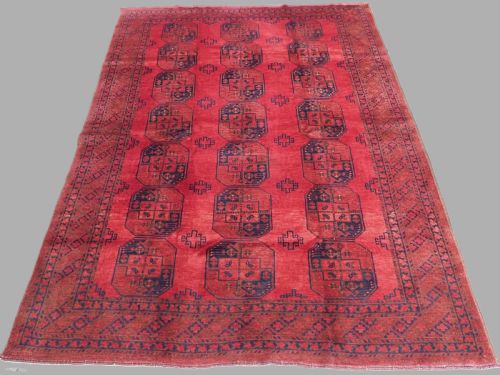
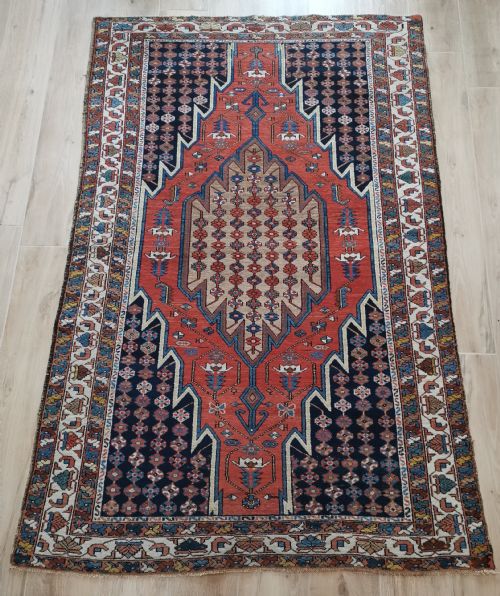


Handwoven Village Carpet
A handwoven village carpet brings domestic Persian, Turkish, Caucasian and Afghan tribal artistry directly onto the floor.
Handwoven Village Carpet
A handwoven village carpet represents nomadic and settled regional weaving traditions originating largely from Persia, Anatolia, the Caucasus and Afghanistan. These pieces typically manifest as rugs, runners and area carpets created by domestic weavers working within specific tribal communities.
The selections encountered here stretch from the late nineteenth century through the early decades of the twentieth century, encompassing periods such as nineteen twenty and nineteen hundred. Regional groups including Afghan, Bakhtiar, Malayer, Shirvan and Turkish village weavers dominate the available forms.
Makers utilise traditional formats ranging from standard scatter rugs to prayer rugs featuring specific designs like the seh mihrab. Each piece reflects the distinct stylistic vocabulary of its geographic origin, from Caucasian geometric patterns to Persian floral motifs.
What Varies in Quality
Structural density and the fineness of the knotting distinguish individual pieces, reflecting the skill and time invested by the weaver. Tighter foundations generally provide greater durability for daily domestic use.
The integrity and depth of the natural dyes dictate the visual resonance of the design over decades. Purity in colour handling elevates an example above standard domestic production.
Clarity and balance in regional design motifs separate standard village output from superior artistic expressions. Distinctive elements such as pictorial birds or complex prayer arches demonstrate higher weaver competency.
Listings feature pieces from the late nineteenth century through nineteen thirty, originating from Persian, Turkish, Caucasian and Afghan workshops.
The Handwoven Village Carpet Glossary
- Pile
- The upright yarn loops that form the soft surface of a carpet. This layer absorbs foot traffic and displays the woven design.
- Kilim end
- The flatwoven section at the terminal edges of a carpet. This portion prevents the knotted pile from unravelling.
- Mihrab
- A arched design motif representing a prayer niche found in Islamic architecture. Weavers frequently incorporate this shape into prayer rugs.
- Warp
- The vertical threads stretched tightly on the loom before weaving begins. These foundational cords support the entire structure of the textile.
- Weft
- The horizontal threads passed alternately over and under the warp threads. This technique secures the rows of knots in place.
Handwoven Village Carpet: Frequently Asked Questions
Where were these carpets made?
These textiles originate from villages and tribal regions across Persia, Anatolia, the Caucasus and Afghanistan. Local communities maintained distinct weaving customs passed down through generations.
Specific towns and nomadic groups such as Heriz, Bakhtiar, Shirvan and various Afghan tribes developed unique palettes and geometric structures.
How do I care for an old wool carpet?
Regular gentle vacuuming without a rotating brush roll prevents dust accumulation within the wool pile. Professional cleaning suited for antique textiles preserves the natural fibres.
Keeping the carpet away from direct, harsh sunlight prevents the natural dyes from fading prematurely over the years.
How can I tell the age of a village rug?
Age is determined by analysing the wool quality, dye composition, structural wear and regional design characteristics. Natural dyes and hand-spun wool typically indicate production prior to the mid twentieth century.
Structural traits such as hand-finished kilim ends and specific regional weaving knots help anchor pieces within periods like the late nineteenth or early twentieth century.