

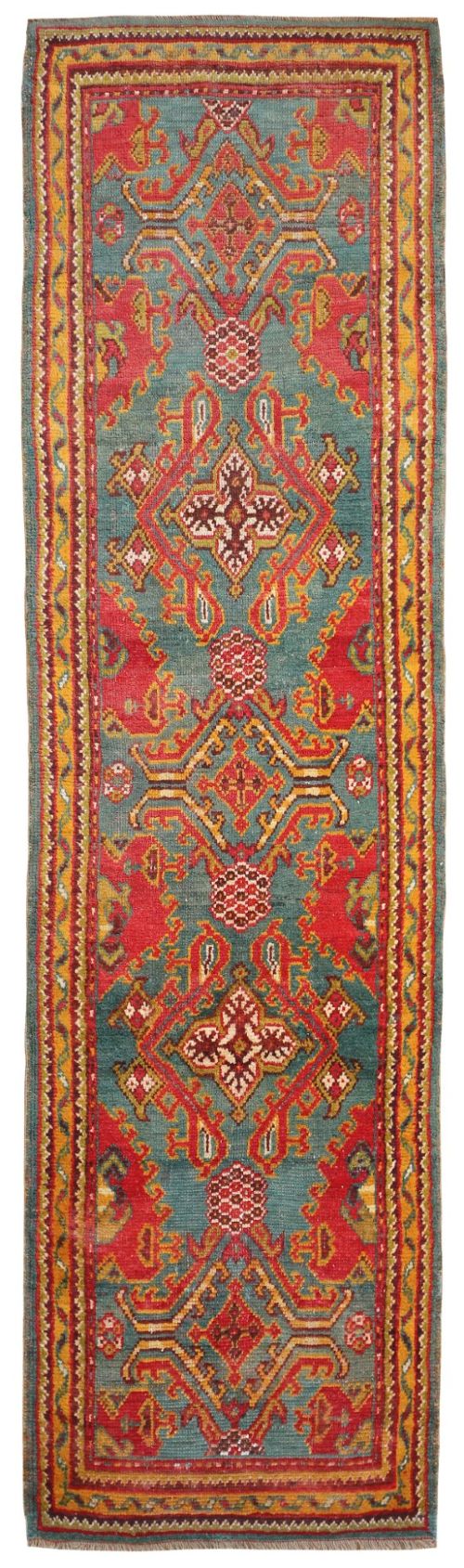
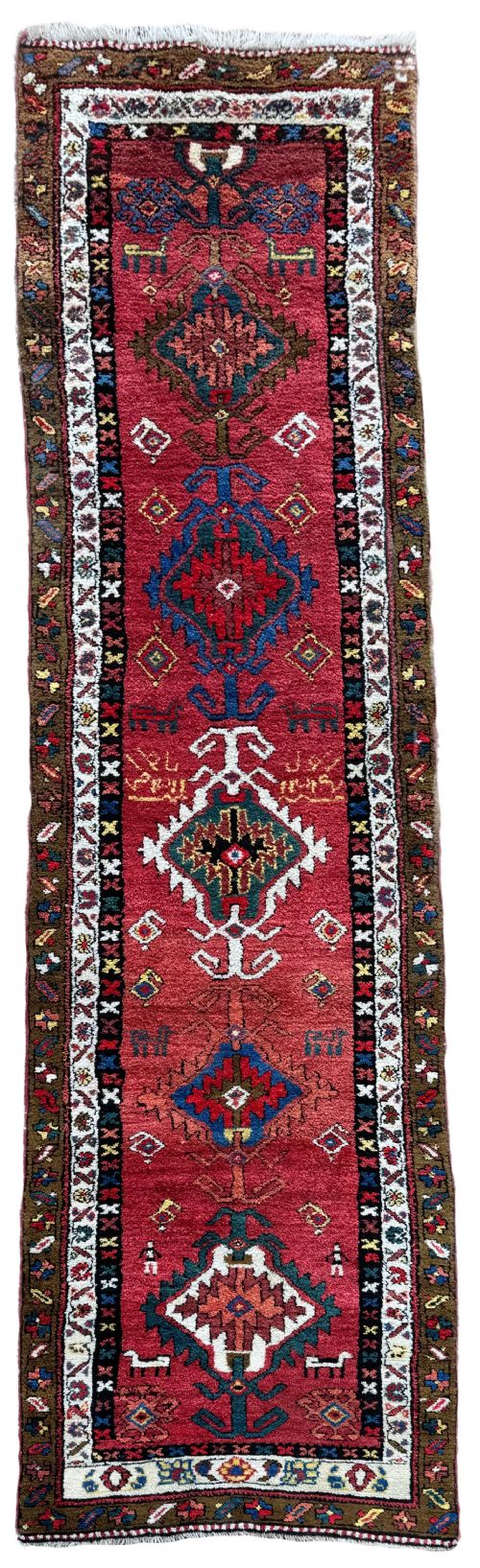
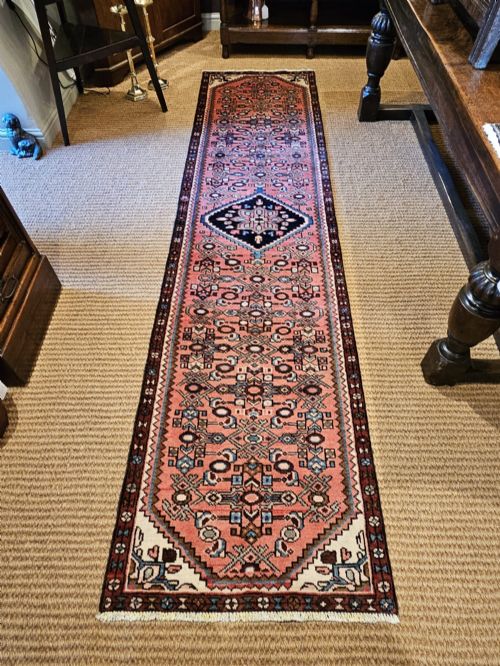
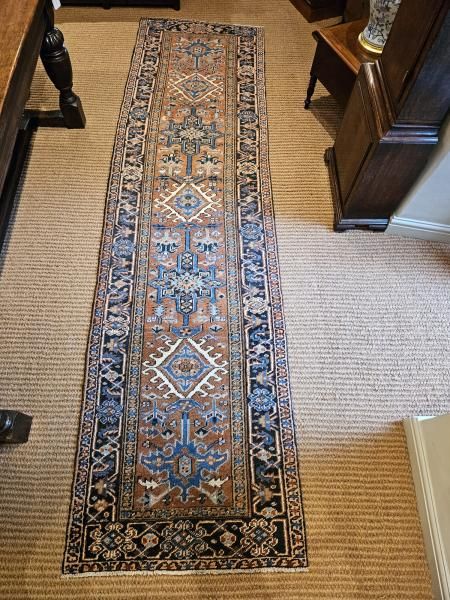
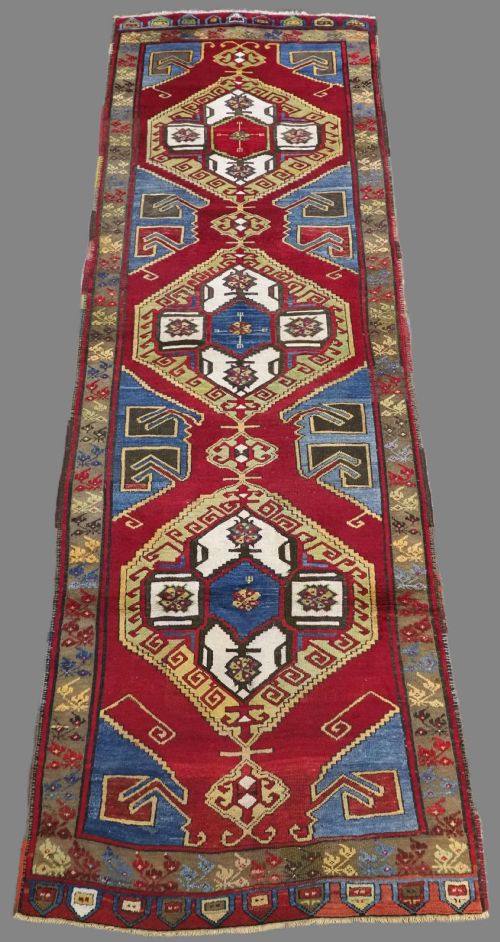
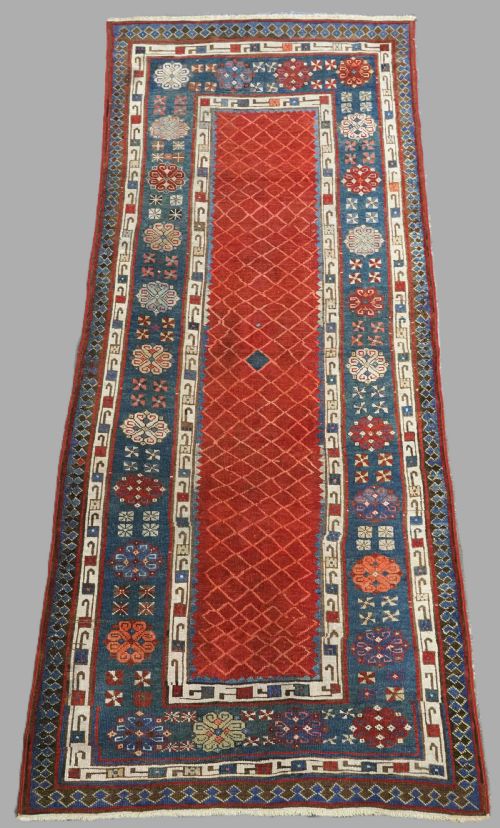
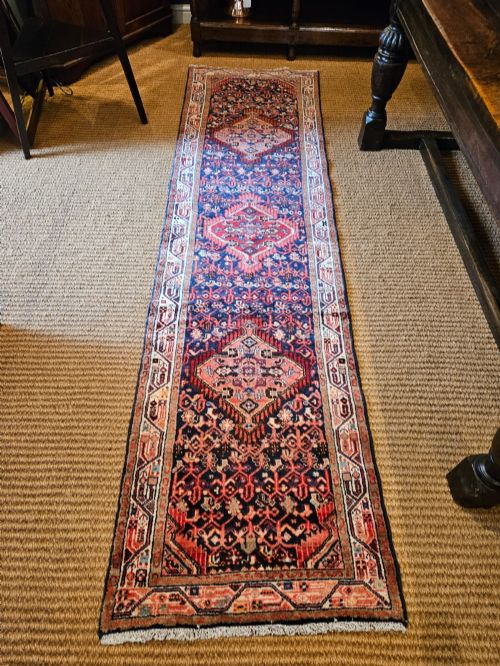
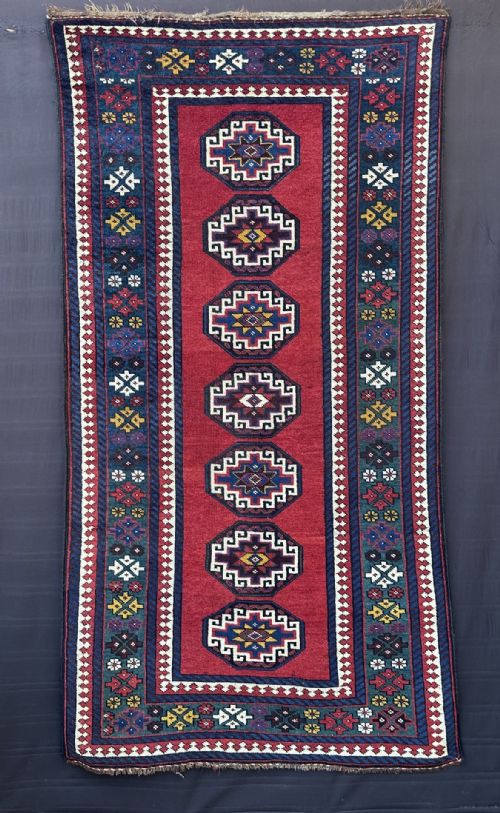
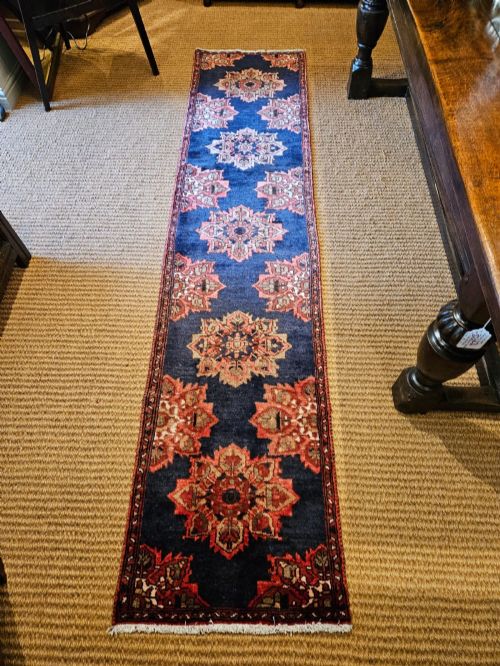
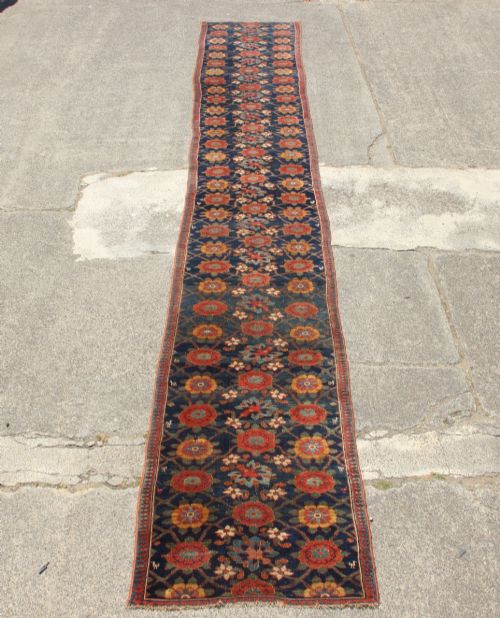
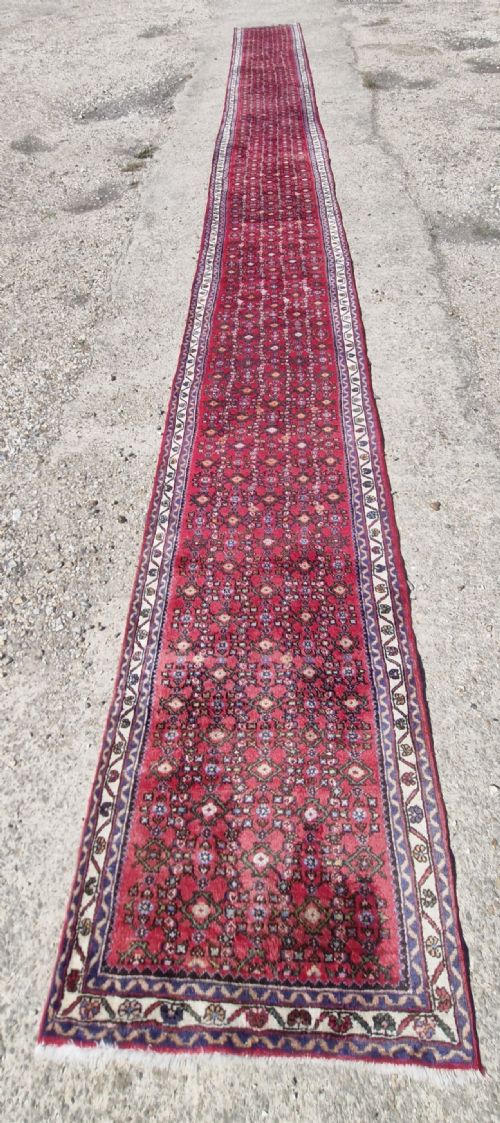
Vintage Tribal Hallway Rug
A vintage tribal hallway rug brings hand-knotted depth and distinct regional patterns to narrow domestic spaces.
Vintage Tribal Hallway Rug
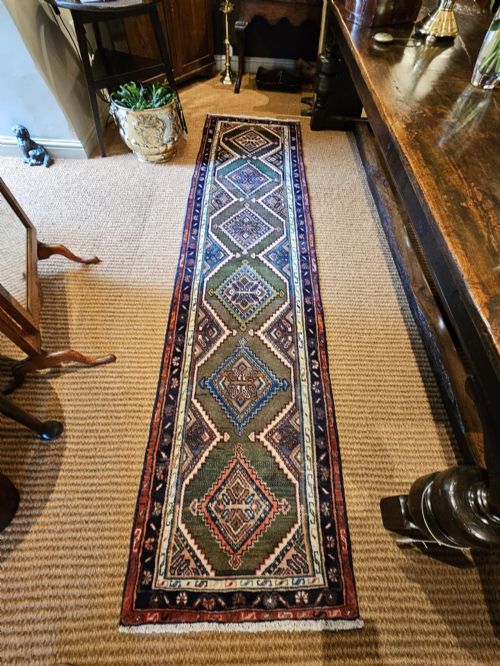
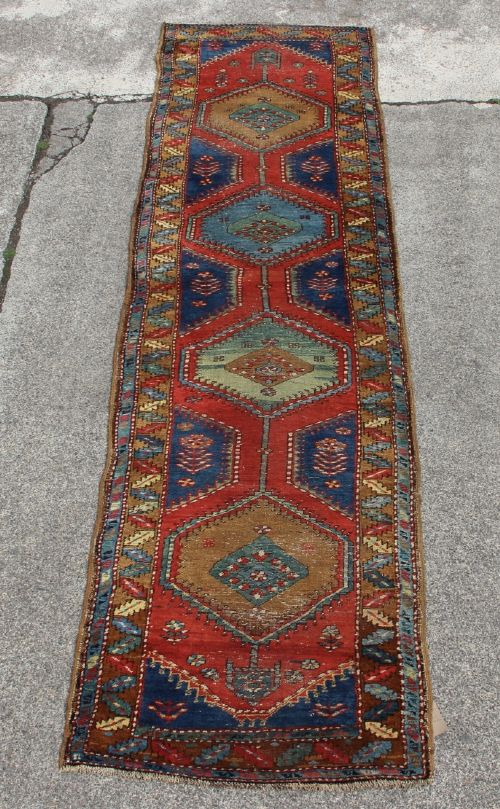
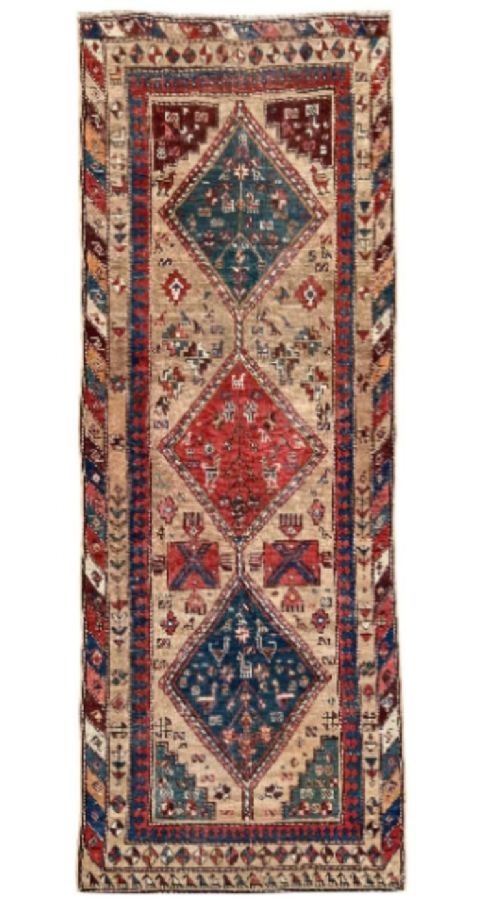
When you search for a vintage tribal hallway rug, you encounter long, narrow formats designed specifically for corridors, halls and landings. These floor coverings span production periods from the late nineteenth century through to the early decades of the twentieth century.
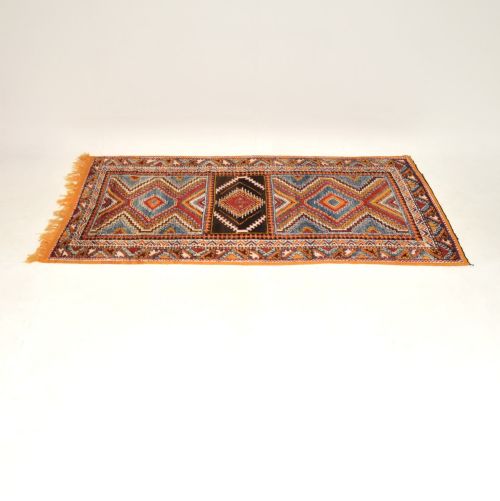
The pieces emerge from diverse weaving traditions across Persia, Anatolia, the Caucasus and North Africa. Styles range from geometric Caucasian village designs to larger Persian Heriz and Kurdish room runners.
Formats vary significantly in proportion, taking the shape of long runners exceeding three metres alongside wider corridor carpets. Each piece reflects the functional requirements of domestic architecture combined with local tribal aesthetics.
Materials and construction
Construction relies primarily on wool, cotton and hand-spun wool utilised for both foundation warps and surface pile. Hand-spun wool introduces natural irregularities in texture and accepts dye absorption with subtle tonal variations.
Weavers knot the pile by hand onto sturdy foundations, creating dense structures designed to endure heavy foot traffic in domestic hallways. Natural dyes yield rich palettes dominated by indigo, madder and earth tones.
Certain antique runners appear delightfully crooked, bearing the charming irregularities of tribal looms worked entirely from memory.
Assessing quality
Quality reveals itself in the fineness of the knotting and the crispness of the geometric or floral motifs. Tighter foundations and well-balanced proportions separate finer village workshops from standard utility weaving.
The integrity of the wool pile and the preservation of original edge bindings determine the structural longevity of the runner. Depth of colour and the complexity of the lattice or medallion design further distinguish superior examples.
Heriz·Ushak·Karaja·Bakshaish·Shirvan
The Vintage Tribal Hallway Rug Glossary
- Runner
- A long, narrow carpet format traditionally used in hallways, corridors and on staircases. These pieces measure significantly longer than their width.
- Warp
- The vertical foundation threads stretched lengthwise on the loom before knotting begins. Wool and cotton serve as the primary materials for these structural elements.
- Pile
- The vertical or diagonal surface of yarn formed by individual knots tied to the warp and weft. This soft upper layer defines the tactile quality and visual depth of the rug.
- Mina Khani
- A traditional repeating floral lattice pattern frequently found in Kurdish and Persian weaving. This design arranges stylized blossoms in a symmetrical grid across the field.
- Natural dye
- Colourants derived from plant, insect or mineral sources used historically to colour wool yarn. These substances create nuanced patination as the textile ages.
Vintage Tribal Hallway Rug: Frequently Asked Questions
How do I choose the correct length?
Measure your hallway while allowing exposed floorboards or stone to remain visible around the perimeter of the rug. Standard lengths in these antique runners often exceed three metres to span entire corridors.
Account for doorways and clearance requirements so doors swing freely over the pile without catching the edge bindings.
Where should I place a long runner?
These narrow formats suit entrance halls, long corridors and stair landings where foot traffic concentrates. Their elongated proportions guide movement through domestic spaces while softening hard flooring.
Avoid damp areas or spaces with direct, unshaded sunlight that might accelerate fading in natural wool dyes.
How do I care for antique wool?
Vacuum the surface gently using suction attachment without a rotating brush roll to protect the hand-knotted pile. Professional cleaning suited to antique textiles removes embedded grit safely.
Use a breathable underlay beneath the runner to prevent slipping and reduce friction between the foundation and the floor.
How do I distinguish Caucasian from Persian pieces?
Caucasian pieces tend to feature bold, highly geometric polygons, stark colour contrasts and angular lattice arrangements. Persian village runners frequently incorporate more curved floral motifs and softer medallion compositions.
Examine the weave density and edge finishing, as regional workshops maintained distinct structural habits.