




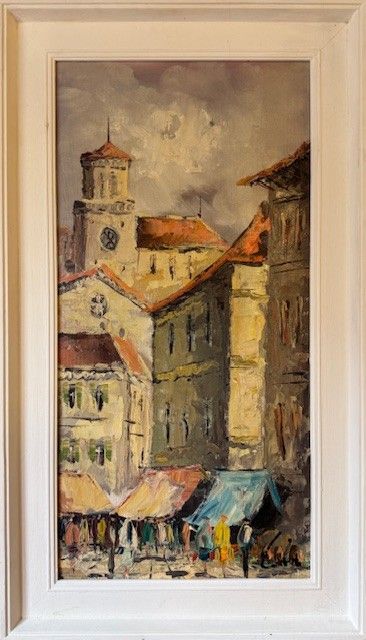


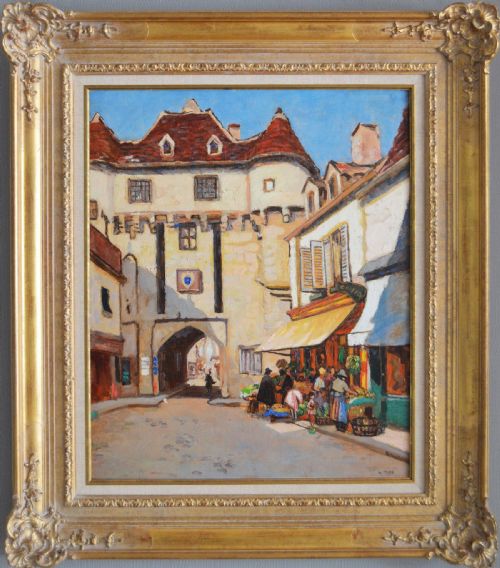


Vintage Townscape Oil Painting
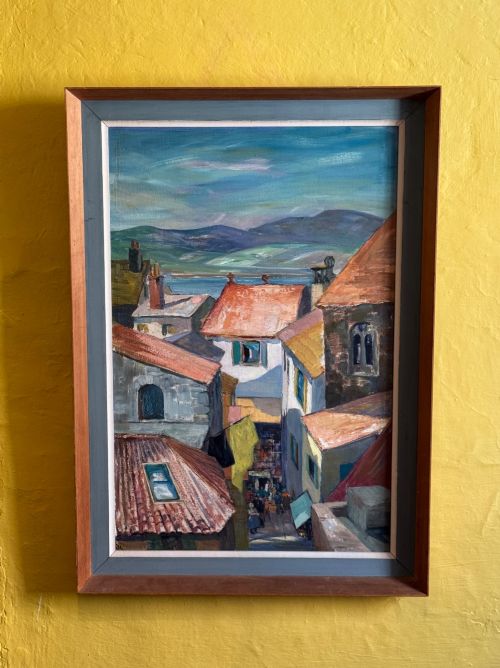
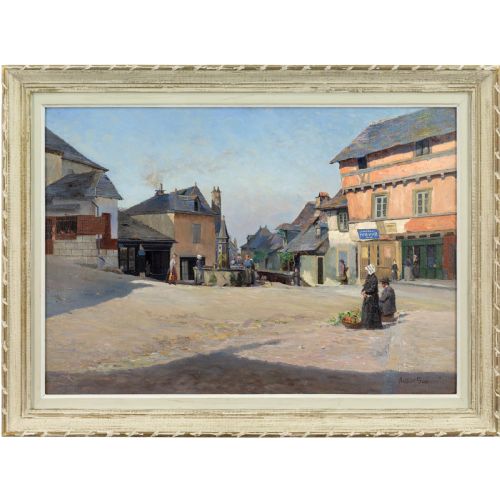
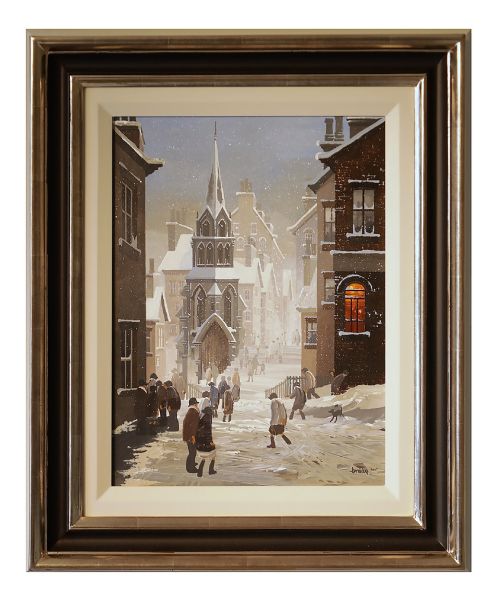
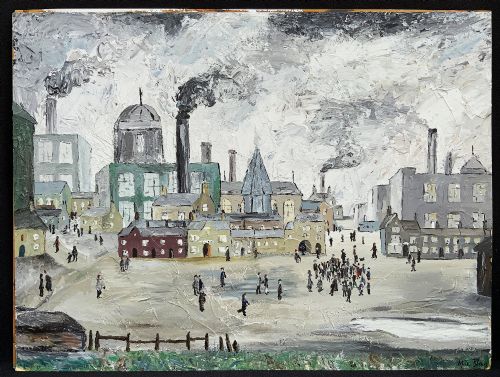
A vintage townscape oil painting brings the character of past streets and squares directly onto a wall, capturing urban life through pigment and brushwork.
Vintage Townscape Oil Painting
A vintage townscape oil painting captures urban views, quaysides, and market squares from periods spanning the late nineteenth century through to the mid-twentieth century. These works range in style from nineteenth-century continental and Victorian academic approaches to impressionism, post-impressionism, and northern school industrial scenes.
The pieces available here lean heavily into European and British subjects, depicting specific locations such as Donzenac, Cannes, Whitby, and Evesham. Buyers will find works executed on canvas, board, and wood panel, reflecting both known painters and capable hands working anonymously.
Materials and construction
These artworks rely on oil paint applied to prepared supports of canvas, wood board, or wooden panel. Pigments are layered to build texture and depth, capturing light on buildings and water.
Many works retain their original framing, including giltwood surrounds that complement the period of the painting. The combination of traditional grounds and oil media ensures lasting stability for the surface.
Vintage Townscape Oil Painting Retail Price Guide 2026
Typical asking prices for vintage townscape oil painting among the pieces listed under this phrase on Sellingantiques today, from the lower quarter to the upper quarter. They describe what is for sale here now, not the wider market.
One unexpected interior scene captures a quiet windowsill filled with flowers, offering a glimpse straight out of the artist's private studio.
Judging quality and execution
Quality rests in the confidence of the brushwork and the artist's command of perspective, light, and atmosphere within the townscape. Stronger pieces convey the bustle of a market square or the heavy air of an industrial street with economy and precision.
The distinction between a standard output and a superior work involves the subtlety of the colour palette and the successful handling of architectural forms against open skies or water.
Arthur Gué·Brian Shields Braaq·Paul-Élie Gernez·A. McDonald·Edward Henry Holder·John Sanderson Wells·George Willis Pryce·Ludwig Hermann·Josephine Haswell Miller·Donald Wood·Augustus William Enness·Letitia Marion Hamilton
The Vintage Townscape Oil Painting Glossary
- Oil on canvas
- Pigment suspended in a drying oil, typically linseed, applied to a stretched woven fabric support. This combination allows for varied impasto and smooth blending.
- Giltwood
- Wood, frequently carved, that has been coated with a thin layer of gold leaf or metallic gilt. It forms the decorative border for many traditional picture frames.
- Post-Impressionism
- An art movement extending Impressionism while rejecting its limitations, focusing on more symbolic content and heavier structure. Works in this vein emphasise bold colours and distinct linear boundaries.
Vintage Townscape Oil Painting: Frequently Asked Questions
How do I hang an oil painting?
Use a secure picture hook rated for the weight of the frame, mounted directly into wall studs or with proper plaster fixings. Hang the centre of the canvas at approximate eye level.
Keep the painting away from direct sunlight and sources of extreme heat or dampness to protect both the canvas and the original pigments.
How do I date a townscape painting?
Examine the style of architecture, clothing worn by figures in the scene, and transport methods depicted, which often anchor the view in a specific decade. The materials of the support and stretcher frame also offer chronological clues.
Signatures, exhibition labels, and inscriptions on the reverse of the canvas or board frequently provide the exact year or a tight date range.
What is a board support?
A rigid flat panel made from wood, masonite, or cardboard used instead of a stretched fabric canvas. Artists often preferred boards for smaller plein-air studies.
These supports offer a firm surface that resists the slackening common in older woven canvases, though they require stable humidity conditions.