


Vintage Torchere Pair
A vintage torchere pair brings classical vertical display into a room, offering matched stands and lights crafted for height and presence.
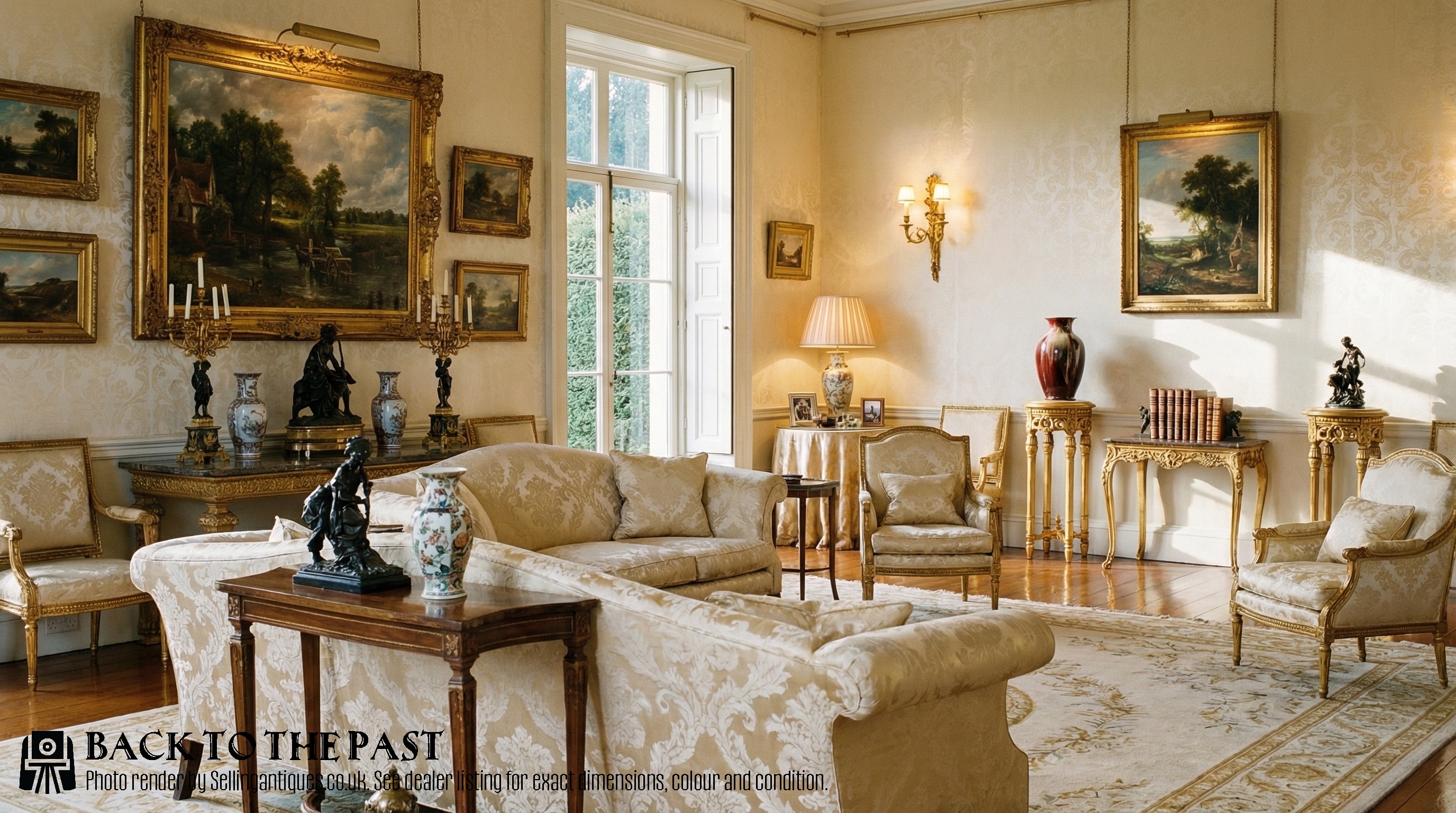
Vintage Torchere Pair
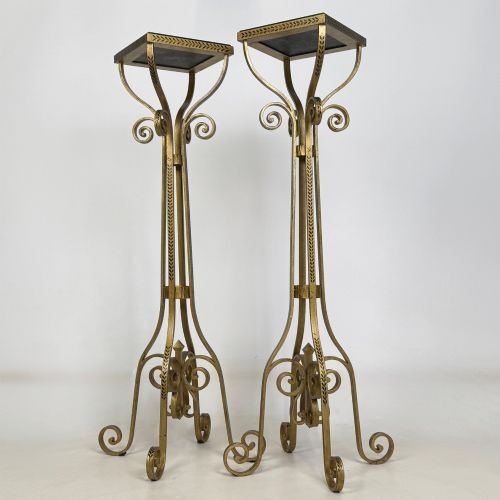
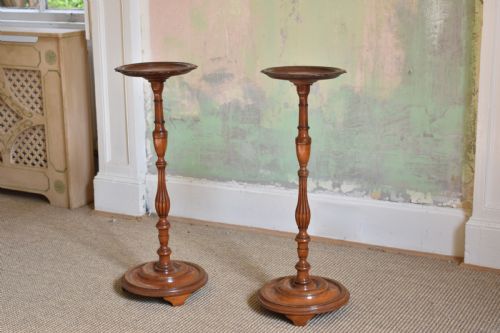
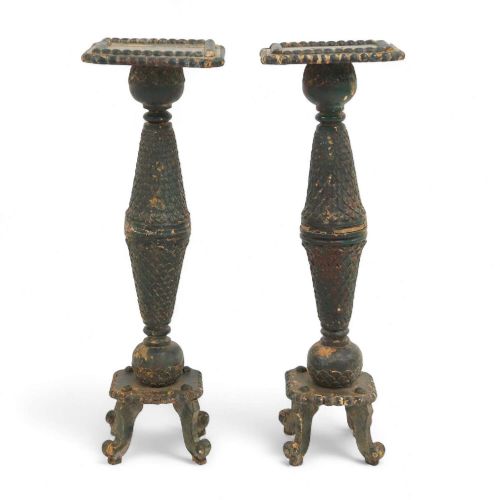
A vintage torchere pair comprises tall stands, wall lights, and display columns originating from periods such as the Edwardian era, the Victorian age, and the nineteen-thirties. These pieces function primarily as elevated surfaces for plants, busts, or lamps, or as direct sources of illumination.
The selections span freestanding wooden columns, metal wall sconces, and marble-topped plant stands. Buyers encounter styles ranging from French Rococo Revival and Neoclassical designs to streamlined Art Deco forms.
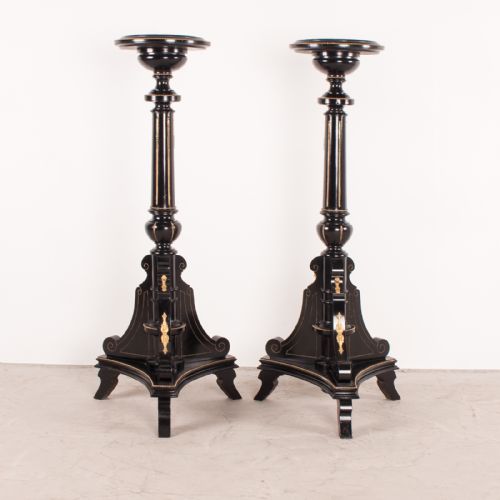
Origin and material dictate the visual weight of each piece, moving from dark ebonised wood to bright chrome and giltwood. Each pair demonstrates the specific proportion and height required for corner placement or flanking furniture.
Distinguishing quality in construction and design
Quality rests on the crispness of the carving, the selection of figured veneers, and the integrity of original surface treatments such as paint or gilding. Superior examples maintain strict symmetry between both items in the pair.
Weight distribution determines practical utility, particularly in tall freestanding stands where a heavy base prevents tipping. Finer pieces exhibit careful joinery and authentic period mountings rather than later replacements.
Listings feature nineteen-thirties Art Deco designs alongside nineteenth-century ebonised wood and Georgian mahogany pieces.
The Vintage Torchere Pair Glossary
- Torchere
- A tall ornamental stand intended to carry a lamp, candle, or decorative object. Originating from lighting supports, the form evolved into general display furniture.
- Giltwood
- Timber treated with gold leaf or a gold-coloured metallic finish. This technique highlights carved details on Neoclassical and Revival pieces.
- Ebonised
- Wood stained or treated to imitate ebony. This dark finish provides high contrast against gilt highlights or light-coloured walls.
- Satinwood
- A durable, lustrous timber native to India and Ceylon, prized for its pale yellow colour and natural sheen. Cabinetmakers used it extensively for veneered inlay work.
- Bakelite
- An early synthetic plastic utilised in nineteen-thirties lighting design. It offers heat resistance and a smooth, coloured surface.
Vintage Torchere Pair: Frequently Asked Questions
How do I style a torchere pair?
Place freestanding stands in empty corners or flanking a doorway to add vertical interest to a room. They suit displaying ceramics, urns, or sculptural lamps.
Keep surrounding furniture lower to let the height of the stands remain the visual focal point. Ensure the finish complements existing wood tones or metal accents in the space.
Are these wall lights or floor stands?
The category includes both freestanding floor columns and wall-mounted sconces. Listings distinguish between tall pedestals and electrical wall lighting.
Check the object type in the description before purchase to confirm whether the pieces require floor space or wall installation.
How do I date a torchere?
Dating relies on stylistic markers, construction techniques, and materials characteristic of specific eras. Edwardian and Victorian pieces often show traditional timber carving, while nineteen-thirties examples favour chrome and bakelite.
Examine the underside and joints for clues regarding manufacturing age and tool marks.
Can these hold heavy items?
Freestanding wooden and marble-topped stands offer substantial weight capacity for plants and sculptures. However, stability depends on the width of the base.
Wall-mounted sconces require secure fixing into solid masonry or studs to support their specific weight safely.