
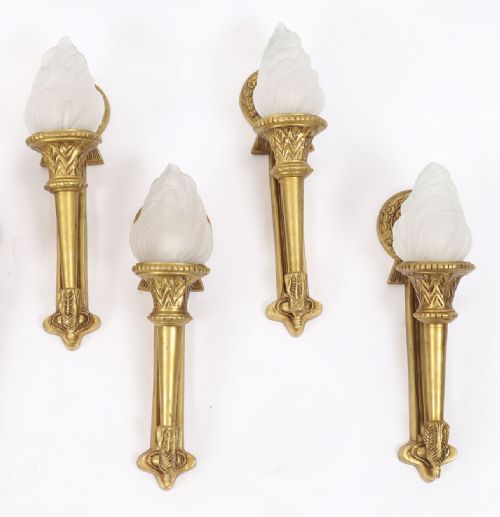


Vintage Torchere Lights
These vintage torchere lights bring vertical illumination and classical presence to a room, drawing the eye upward with sculptural form.
Vintage Torchere Lights
When you search for vintage torchere lights, you encounter tall floor lamps, standard lamps, and wall-mounted sconces designed to cast light upward. The selection spans floor-standing figures, slender pedestals, and architectural wall fixtures that originated as candle holders before adapting to electricity.
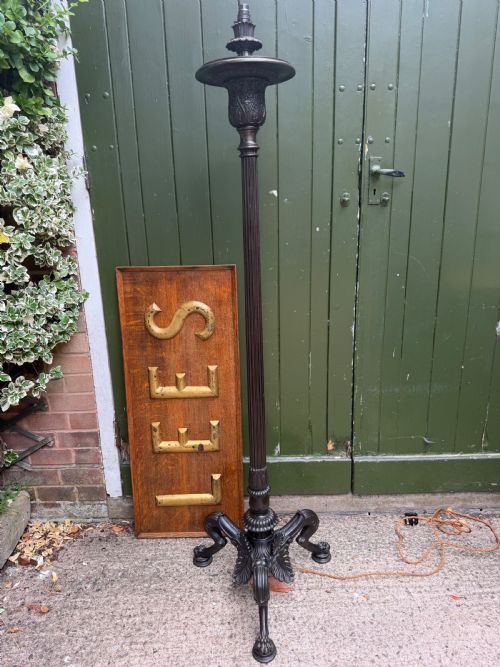
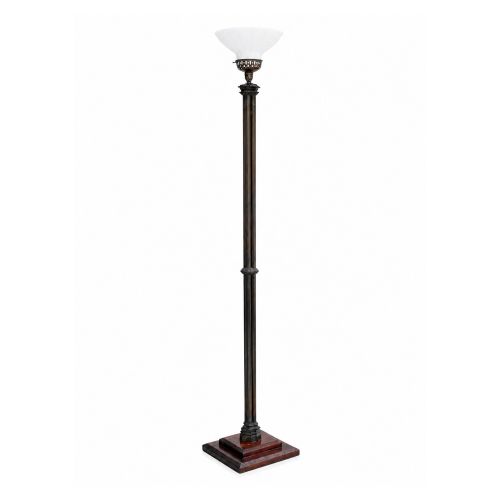
The pieces on this page appear in periods from the nineteenth century through the nineteen-thirties, taking forms such as standard lamps, uplighters, and wall sconces. You find sturdy iron floor candle holders alongside carved wood pedestals and slender metal stems.
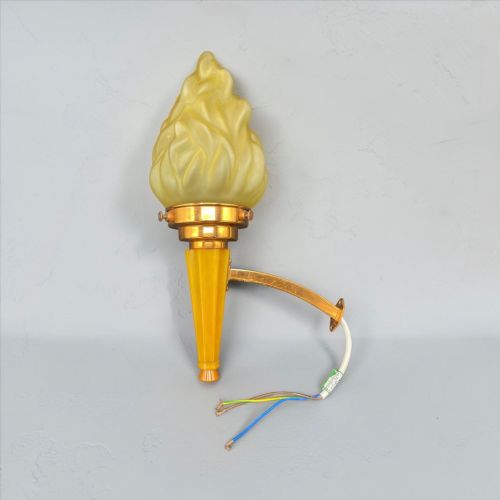
Makers and designers from various European traditions shaped these objects in styles ranging from Gothic Revival and Neo-Classical to Art Deco and French Rococo Revival. The most frequent meetings on this page include nineteen-thirties Art Deco chrome or flame fixtures and nineteenth-century classical brass and cast-iron standard lamps.
How they were made
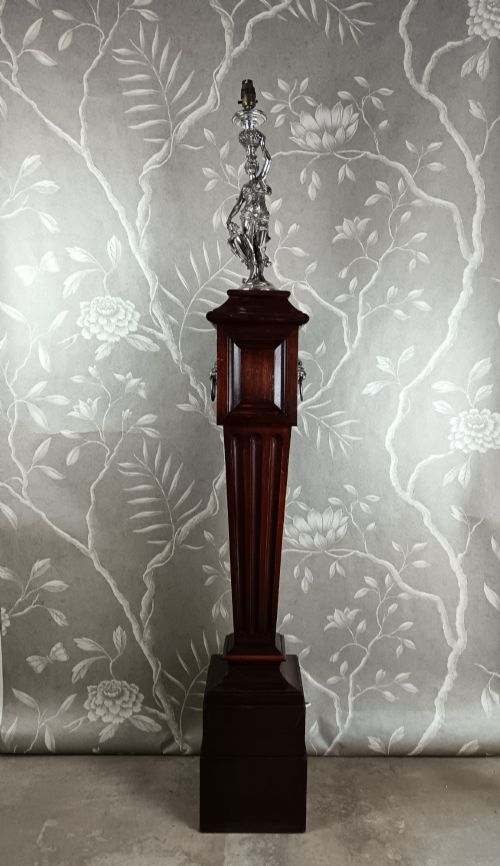
Makers utilised cast iron, bronze patinated metals, and spun brass for the structural stems and wall mounts, often pairing them with heavy weighted bases for stability. Woodwork involves carved mahogany, ebonised timber, and giltwood with original polychrome or gesso surfaces.
Lighting components incorporate frosted glass, moulded glass, and specialised flame or tulip shades designed to direct illumination upward. Silver plating, ormulu, and gold leaf finish the decorative surfaces of figural statues and neoclassical wall lights.
Several pieces feature carved Venetian figures holding aloft stands, bringing watchful wooden companions directly into your hallway.
What varies in quality
The distinction between tiers rests upon the crispness of the original carving, the weight of the cast metal, and the integrity of surface finishes such as giltwood, ormolu, and polychrome paint. Finer examples retain their original figural detailing and specialised glass shades without replacement.
Proportion and material execution separate standard production items from ambitious sculptural pieces, particularly where hand-carved wood figures or heavy cast-iron Gothic elements are concerned. The preservation of authentic patination and maker marks indicates superior provenance.
WMF
The Vintage Torchere Lights Glossary
- Torchere
- A tall stand, floor lamp, or wall fixture originally designed to hold a torch or candle and later adapted for electric bulbs. These pieces typically direct light upward toward the ceiling.
- Standard Lamp
- A floor-standing lamp with a vertical shaft supported by a heavy base. They appear in materials like brass, carved wood, and cast iron.
- Uplighter
- A lamp designed to project illumination straight up toward the ceiling rather than diffusing it outward. Art Deco and Edwardian examples frequently utilise this configuration.
- Ormolu
- Gilded bronze applied to decorative mounts and light fixtures. This technique appears on Neo-Classical wall lights and standard lamps.
- Polychrome
- Decoration employing several colours on a single surface, frequently found on Venetian figures and carved wood stands. It provides a rich, painted finish to wooden sculptures.
Vintage Torchere Lights: Frequently Asked Questions
How do I place a torchere in a room?
Floor-standing torcheres work well in corners or beside large pieces of furniture where their vertical height adds balance to a room. Wall-mounted versions suit hallways, reception rooms, and spaces flanking mirrors or fireplaces.
Because they direct light upward, they create ambient glow rather than focused task lighting. Pairing them with dimmer switches allows you to control the intensity of the upward wash.
How do I identify Art Deco torcheres?
Art Deco torcheres, typically dating around nineteen-thirty, feature geometric lines, chrome, bakelite, and catalin materials. They often incorporate frosted glass tulip or flame shades that emphasise streamlined modern forms.
Unlike nineteenth-century revival pieces with ornate carvings, these twentieth-century lamps rely on sleek metallic surfaces and clean silhouettes. They frequently appear as matching pairs of wall lights or uplighters.
What materials are common in these lamps?
The listings feature a range of materials including brass, cast iron, bronze patinated metal, and wrought iron. Wooden examples showcase carved mahogany, ebonised timber, and giltwood with gesso.
Decorative surfaces often include gold leaf, silver plating, and ormolu mounts. Shades and diffusers are typically formed from frosted or moulded glass.