
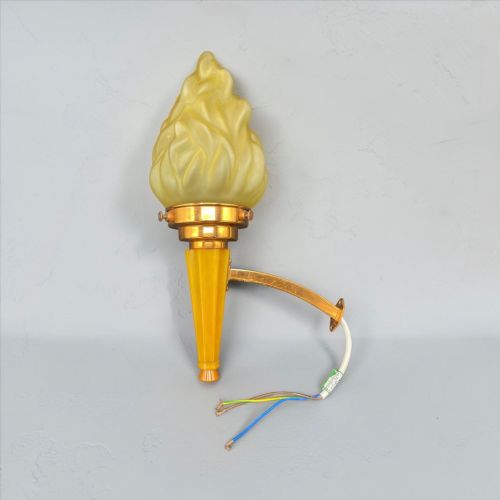


Glass Flame Shade
A glass flame shade brings a warm, sculptural glow to a room, channelling the distinct design energy of the early twentieth century.
Glass Flame Shade
When you search for a glass flame shade, you are looking at decorative lighting elements designed to mimic flickering fire or torch forms. These pieces often top table lamps, wall lights, and ceiling lights.
The versions you are most likely to meet on this page hail from the Art Deco and Art Nouveau periods, frequently paired with metal bases. They date primarily from the early decades of the twentieth century, specifically around nineteen thirty.
Makers shaped these components to integrate with torchere standards, wall sconces, and figural lamp sculptures. They form a distinct category of period illumination that relies on sculptural glasswork.
Materials and construction
Makers utilised frosted glass and plain glass to diffuse light effectively, capturing the literal shape of a flame. These glass components sit atop structural elements made from chrome, chrome plating, nickel, and brass.
Further support and decorative mounting relied on materials such as bakelite, resin, and spelter. Bronzed and silvered finishes frequently coated these base metals to achieve a heavier, more tactile presence.
Materials recorded across the inventory include frosted glass, chrome plating, nickel, bakelite, resin, and silvered spelter.
Judging quality and finish
The distinction between standard examples and superior pieces rests on the crispness of the glass moulding and the integrity of the secondary materials. Heavier metal mounts in spelter or heavy chrome indicate a sturdier build.
Artistry in the surface treatments, such as silvering, bronzing, or the integration of moulded bakelite elements, separates mass production from finer decorative items. The weight and uniformity of the frosted glass play a vital role.
The Glass Flame Shade Glossary
- Frosted glass
- Glass treated to diffuse light by acid-etching or sandblasting. This creates a matte surface that softens the glare from an internal bulb.
- Spelter
- An alloy of zinc and lead, often painted or electroplated to resemble bronze. It was commonly used for sculptural lamp bases during the nineteenth and early twentieth centuries.
- Bakelite
- An early form of thermosetting plastic. It appears frequently on electrical fittings and switchgear from the Art Deco era.
- Torchere
- A tall standing lamp or a wall sconce styled to resemble a classical torch. The glass flame shade frequently serves as the flickering fire atop these mounts.
Glass Flame Shade: Frequently Asked Questions
What rooms suit a glass flame shade?
These pieces fit naturally into hallways, living rooms, and studies where period illumination is desired. Their upward-pointing design casts ambient light onto ceilings and upper walls.
They pair well with period furniture, particularly items featuring metalwork or dark wood finishes from the early twentieth century.
How do I identify Art Deco lighting?
Art Deco lighting relies on geometric symmetry, streamlined metals like chrome, and materials such as bakelite. Pieces from this era often feature stepped bases and machine-age influences.
The glass elements tend to have structured, stylized forms rather than the organic, flowing lines seen in earlier styles.
What is spelter metal?
Spelter is a zinc-based alloy that mimics the appearance of bronze or brass when treated with surface finishes. It allowed makers to cast intricate figural sculptures at a lower cost.
You will find it frequently used for nineteenth and early twentieth-century lamp bases and decorative figures.
How do I mount a wall light?
Wall lights require secure fixing to wall studs or masonry using appropriate brackets and professional wiring. Sconces and torch wall lights must bear the weight of both the metal arm and the glass shade safely.
Consult a qualified electrician to ensure the vintage fittings comply with current safety standards before installation.