





Vintage Topographical Print
These vintage topographical print pieces record landscapes, towns and monuments on paper using ink and watercolour, offering a direct window into past places.
Vintage Topographical Print
A vintage topographical print records specific locations, buildings and regional maps on paper, functioning as both historical record and wall art. Buyers search for these pieces to bring framed views of cities, rural estates and foreign landmarks into an interior.
The selections available span periods from the mid-eighteenth century through the Edwardian era and the nineteen-twenties. Forms range from framed engravings and hand-coloured etchings to wall maps and delicate watercolours.
Origins stretch across British counties, London views, Scottish scenes, Caribbean maps and continental European landmarks. Works by named artists sit alongside anonymous county maps and monochrome photographs of alpine views.
How they were made
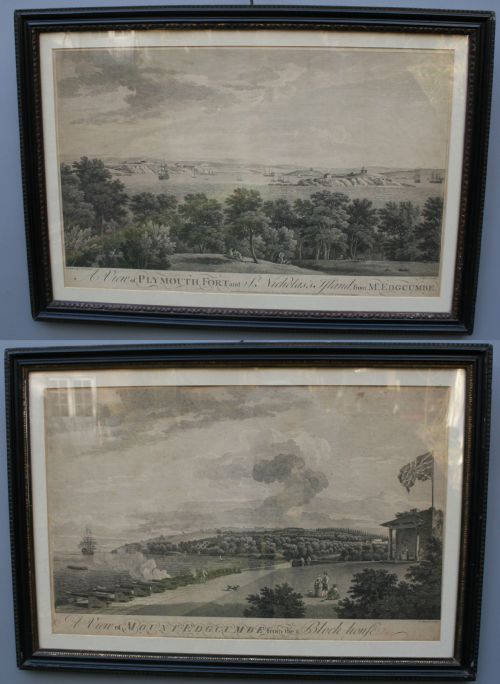
The creation of these works relies fundamentally on paper as the primary support, combined with ink and watercolour for graphic lines and washes of colour. Hand-colouring transforms monochrome engravings and etchings into vibrant visual records.
Printmaking techniques such as drypoint etching, aquatint and lithography allow for fine detail and repeated impressions. Frames utilise wood, glass and giltwood to protect and present the works for display.
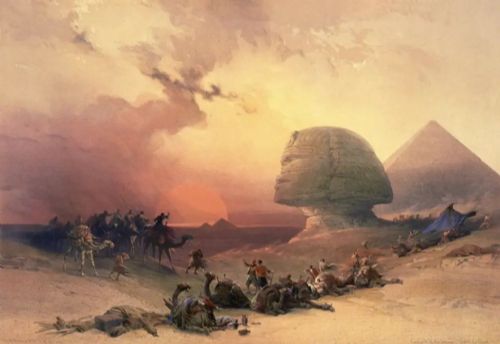
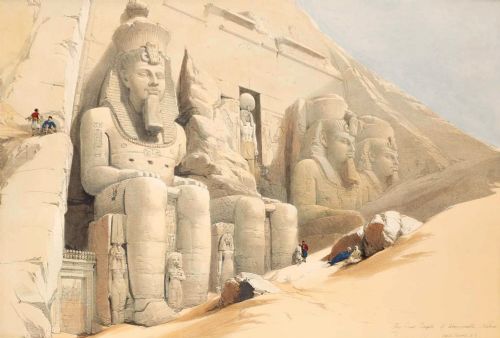
Even distant deserts and alpine glaciers found their way onto Victorian parlour walls, brought home by travellers who traded grand tours for framed ink views.
What varies in quality
Quality rests upon the precision of the draughtsmanship and the clarity of the printed line or brushwork. Pieces by documented artists and engravers display superior command of perspective and detail compared to anonymous works.
The preservation of the paper support and the retention of original hand-colouring or pigment vibrancy distinguish finer examples. Contemporary framing materials and the integrity of the underlying paper also influence the overall character of the piece.
David Roberts·T.A Prior·Robert Morden·T.M Baynes·Joseph Farrington RA·Joseph Constantime Stadler·Edgar J. Maybery·R. Creighton·Mason·T Fairfax
The Vintage Topographical Print Glossary
- Engraving
- A printmaking technique where an image is cut into a metal plate with a burin. The resulting lines hold ink to be transferred under pressure onto paper.
- Aquatint
- A variant of etching that produces tonal areas resembling watercolour washes. Resin is dusted onto a plate and heated before acid bites the surface.
- Lithography
- A planographic printing process based on the repulsion of oil and water. An image drawn on limestone or metal plate is inked and transferred.
- Drypoint
- An intaglio printmaking process where a design is scratched directly into a copper plate with a sharp needle. This creates a raised ridge of metal called burr that yields a soft, velvety line when inked.
- Cartography
- The study and practice of making maps. Antique cartography encompasses engraved county maps, town plans and regional charts.
Vintage Topographical Print: Frequently Asked Questions
What is a topographical print?
A topographical print depicts a specific physical location, such as a city street, a country house, a monument or a regional map. These works record actual geography and architecture rather than imagined or abstract scenes.
They serve as historical documents that capture how landscapes and towns appeared in past centuries. Collectors use them to document local history or display familiar places.
How should I hang these framed pieces?
Keep framed paper works out of direct sunlight to prevent the watercolour pigments and ink from fading over time. Stable indoor humidity levels protect both the antique paper and the wooden or giltwood frames.
Display them at eye level on walls where temperature fluctuations remain minimal. Proper placement ensures the longevity of delicate washes and early paper supports.
How do I identify the date of a print?
Dates often appear within the printed margin alongside the publisher details, artist name or engraver signature. Stylistic clues in the depicted architecture, clothing of figures and typography also help narrow down the period.
Comparison with documented works by the same maker provides further chronological accuracy. Paper characteristics and framing styles can offer supportive evidence for the era of production.
What is the difference between an engraving and a watercolour?
An engraving is a printed multiple produced from a carved metal plate, whereas a watercolour is a unique, hand-painted artwork on paper. Many prints feature added watercolour washes applied by hand after the printing process.
Engraving lines show precise, mechanical uniformity under magnification, while watercolours display fluid brushstrokes and pigment pooling. Both forms appear frequently within historical topographical collections.